A termite colony of 250,000 can chew through two feet of a 2×4 in five months. The pace depends on the termite type, colony size, and wood, so early signs of termite damage in Florida homes deserve attention even when the surface looks sound.
Warped wood, bubbling paint, or a hollow sound can look like ordinary wear, especially when termite activity is hidden. Knowing what to look for can help you spot a developing problem before damage spreads.
This guide explains how termites can affect a home and the clues that may reveal their presence, from mud tubes and discarded wings to damaged wood and changes in floors, walls, or ceilings. It also covers why structural damage can be harder to spot than surface signs and which details deserve attention.
Key Takeaways
- Reduce termite-friendly conditions by managing drainage and moisture, improving airflow, sealing possible entry points, and storing wood away from the home.
- Look for clues such as pellet-like droppings, damaged or hollow-sounding wood, and changes to floors, walls, or ceilings.
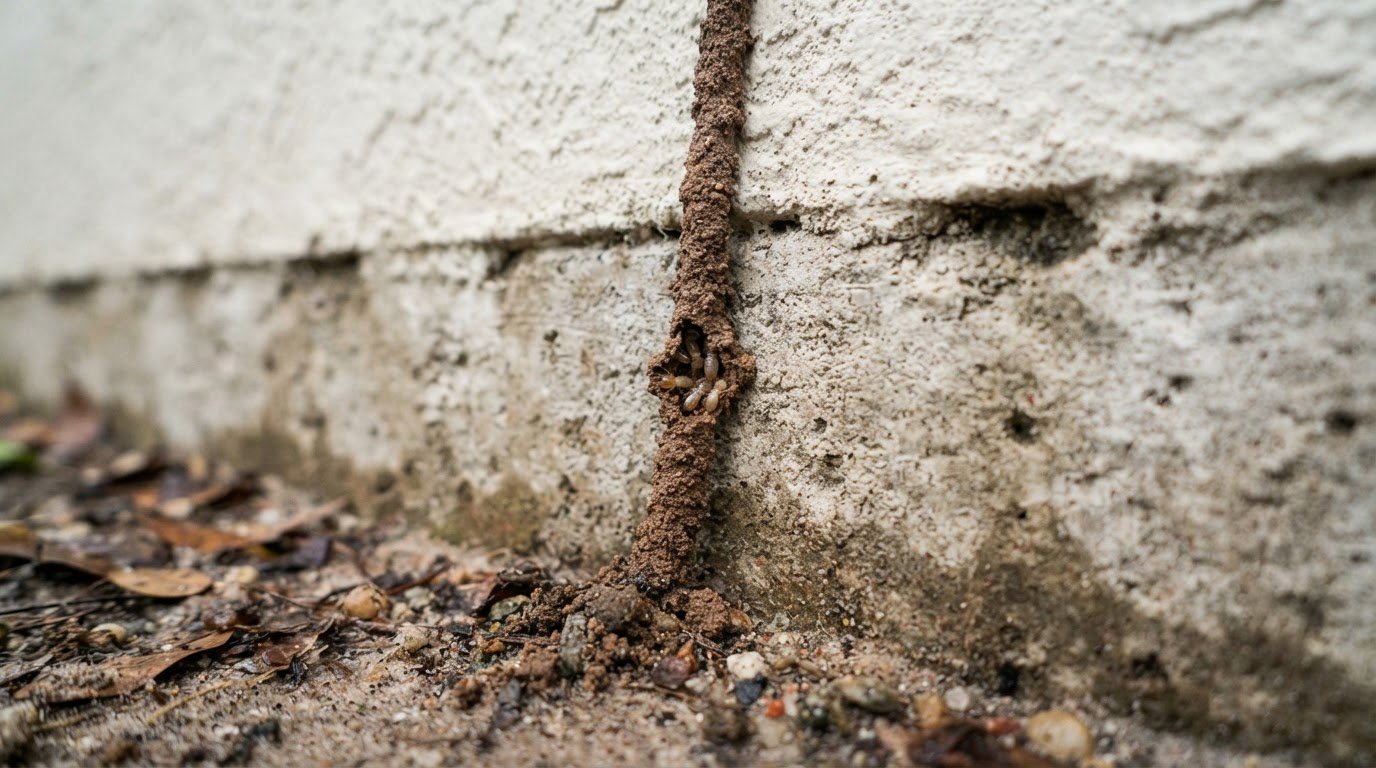
- Pencil-sized mud tubes along a foundation can signal that subterranean termites are traveling between soil and wood.
- Discarded wings near windows or baseboards may point to a nearby termite swarm and warrant closer attention.
- Termites can damage wood from the inside, so arrange a professional inspection when signs appear rather than relying on surface appearance alone.
Table of Contents
1. How fast can termites cause damage?
A termite colony of 250,000 can chew through two feet of a 2×4 in five months. Termites feed 24 hours a day, seven days a week, so activity continues between inspections. The actual pace depends on termite type, colony size, and wood. A small, concealed area can therefore worsen before damage becomes visible. In Florida, inspect water-damaged wood closely, especially around leaks, damp framing, and swelling near plumbing.
Watch for buckling wood, swollen floors or ceilings, warped walls, and paint that bubbles without an obvious surface cause. These signs can resemble water damage, so consider where they occur and whether they form a pattern. Termites may leave small holes, change the texture of wood, or make it sound hollow when tapped. One clue alone doesn’t identify the cause, but several changes in one area call for closer assessment. An uneven floor above a damp spot deserves attention to both moisture and possible termite activity.
Water and termite damage can occur together. Leaks can soften wood, while termites tunnel through structural wood as they feed. Termite galleries may leave a thin outer layer over hollowed timber; water-damaged wood is more likely to show moisture-related swelling, staining, or decay. Carpenter ants also hollow wood, but their galleries are typically smoother and cleaner than termite galleries. Mud tubes or packed material inside damaged wood point more strongly to termites.
Florida’s practical prevention steps begin outdoors. Direct roof runoff and irrigation away from the foundation, repair leaking pipes, and keep gutters clear so water doesn’t linger beside the home. Seal visible gaps around utility penetrations and foundation openings to reduce possible entry routes. Store firewood and mulch at least 20 feet from exterior walls. Maintain ventilation in crawlspaces and other enclosed areas, and reduce persistent moisture where possible. These changes make the setting less conducive to termite activity, but they can’t rule out an existing colony.
For Florida homeowners, an annual termite inspection is recommended as part of a protection plan. This is not a universal legal requirement for every homeowner to obtain a yearly inspection or report. A wood-destroying organism report records inspection findings; whether a transaction requires one depends on its specific terms. If floors begin to sag or hollowed wood appears near a leak, a pest control professional can assess whether termite treatment is needed and how extensive the damage may be.
2. What are early warning signs of a termite infestation?
Common clues include mud tubes, discarded wings, drywood termite droppings, and damaged wood. Indoors, look for small holes, changes in wood texture, hollow sounds, or maze-like tunnels beneath cracked veneer. Damage can remain hidden for months or even years, so surfaces may look intact while concealed wood deteriorates. Spotting signs of termite damage in Florida homes means noticing small changes, such as pellets beneath a wooden cabinet or a new soft spot in trim.
Different clues may point to different termite types. Drywood termites can leave small mounds of wood-colored pellets, called frass, on floors or windowsills. Subterranean termites may leave mud tubes near foundations, creating sheltered routes between soil and wood. Shed wings near a window can indicate a swarm, while bubbling paint alone has several possible causes. Consider where clues appear and whether different signs occur nearby. Their pattern can help distinguish a concern from an isolated household mark.
A professional inspection and termite treatment serve different purposes. An inspection assesses accessible areas for activity, damage, and conditions that may support termites. Treatment aims to control an identified infestation. During an assessment, vulnerable areas include attics, basements, and places beside wooden structures. A professional can consider moisture, visible evidence, and the likely termite type. This distinction matters because treatment decisions depend on where activity is found and how the colony is established.
Detecting termites takes more than a quick glance at visible surfaces. A professional examines exposed wood, foundation edges, and likely entry routes, looking for galleries, pellets, wings, or mud tubes. A room that looks undisturbed can conceal feeding behind trim or inside a cabinet. In Florida, termite activity is a year-round concern, so don’t wait for obvious structural changes. When several clues appear together, note their locations and describe any changes you’ve observed since they first appeared.
Schedule an inspection if you find evidence such as frass beneath a wooden cabinet, nearby damaged trim, or a mud tube along the foundation. An annual inspection is recommended as part of a termite protection plan. Some signs of termite damage in Florida homes may indicate activity that isn’t visible elsewhere, so a professional assessment can help determine its extent. Treatment options can include baiting systems, localized termiticide, or heat or cold applications. The termite type, location, and spread help determine the appropriate approach.
3. Subterranean termite mud tubes
Subterranean termites live in loose, damp soil and build mud tubes to travel while concealed. These narrow passages connect underground nests to food sources above ground, including a home’s wood framing. A tube is often pencil-sized and may appear on a foundation, concrete slab, or stone surface. Check where the foundation meets siding, near utility openings, and beside wood that touches soil.
What do termite mud tubes look like, and where are they commonly found? They look like thin, earthen tunnels, often climbing a foundation or extending over concrete toward wood. Termites build them from mud, saliva, and feces to create a sheltered route between soil and food. A small tube climbing a concrete or stone foundation can signal that termites are reaching wood inside.
Florida homes can have more than one route for termites to enter. Mud tubes may lead from soil to a structure, but exterior wood in direct contact with soil can provide access without visible tubes. Termites can also travel through plaster or metal siding to reach wood behind it. Check around the foundation and look for soil contact near wooden trim, steps, or other exterior features.
How can you identify subterranean termite damage versus drywood termite damage? Subterranean termites typically connect soil and wood with mud tubes, while drywood termites establish colonies inside the wood they consume. Drywood activity may leave small mounds of wood-colored pellets; subterranean activity may leave concealed galleries connected to a route from the soil. These clues can help distinguish the patterns, though one sign may not identify the termite type.
Damage can stay hidden inside cabinets, floors, ceilings, walls, and furniture. Subterranean termites tunnel through structural wood as they feed, sometimes leaving the surface deceptively intact. Hollow-sounding or weakened wood near a foundation tube deserves attention, even if it looks undisturbed. Conehead termites occur in isolated parts of south Florida, while subterranean termites are common across the state; a tube’s location alone doesn’t identify the species.
Where do termites commonly cause hidden damage in Florida houses? They can feed inside structural wood and reach cabinets, floors, ceilings, walls, and furniture, including areas behind plaster or metal siding. If a tube appears beside damaged wood, note its location and don’t assume that removing the visible section resolves the infestation. A professional assessment can determine whether activity continues inside and guide appropriate termite treatment.
4. Discarded termite wings near windows and baseboards
In Florida, a spring swarm can bring flying termites close to a home. A swarm near the property may indicate a mature colony nearby, and the termites may have lived in the area for several years. After swarming, termites shed their wings as they establish new colonies. Wings beside a window, baseboard, or other access point can therefore be an early clue, even when nearby wood looks undamaged.
What are the signs of drywood termite frass, discarded wings, and swarmers? Drywood termites can leave small mounds of wood-colored pellets, called frass, on a windowsill or floor. Swarmers are flying termites, and their discarded wings may remain near windows or baseboards after a swarm has passed. Frass and wings are different clues, but either one calls for a closer look at nearby wood and openings.
Florida termites swarm most actively in spring to form new colonies. Wings commonly appear then, but heavy rain can precede swarming at other times of year. A pile of wings found after a storm shouldn’t be dismissed just because it isn’t spring. Timing provides context, not a definitive identification of the species or source.
To assess the clue, note its exact location before cleaning it up. Check the windowsill, floor beneath the window, baseboards, and nearby wood trim for pellets, small holes, or visible damage. A few wings beside a closed window differ from repeated findings at several entry points around the home. Record when and where they appeared; that pattern can help a professional assess termite activity and distinguish a nearby swarm from activity inside the home.
Don’t rely on wings alone to determine whether termites have entered. A swarm outside can indicate a mature colony nearby, while wings found indoors near a window or baseboard raise concern about access to the structure. Drywood termite colonies live inside the wood they feed on, so check nearby furniture and trim for frass or damage. In Florida’s warm, humid environment, termite activity can continue year-round. If wings reappear or accompany pellets or damaged wood, arrange a professional inspection to identify the likely species and assess the location.
5. Signs of structural termite damage
Termites can consume wooden components from the inside out, leaving a thin outer layer intact. The surface may look sound while galleries weaken the material underneath. Subterranean termite damage can remain hidden until an infestation is extensive. A hollow sound, weakened trim, or wood that crumbles under light pressure can signal more than a cosmetic flaw. The key question is whether damage reaches framing or other structural wood.
Look for patterns across connected surfaces. Uneven floors, sagging ceilings, warped walls, and bubbling paint or wallpaper can accompany termite damage. One warped board doesn’t identify termites, but several changes near hollowed wood deserve attention. For example, a floor that dips beside damaged baseboards is more concerning than an isolated scuff on a door. Note where each change appears and whether nearby wood feels soft or sounds hollow.
Termites may leave the outer layer intact, making surface checks incomplete. Inspect accessible wood around doorframes, window trim, cabinets, floors, and ceilings. Look for small holes, cracked veneer, or maze-like tunnels exposed beneath damaged surfaces. Discarded wings nearby can add context, but they don’t show how far the damage extends. A visible clue marks a place to investigate, not the full boundary of an infestation.
Florida’s warm, humid climate supports termite activity throughout the year, so don’t dismiss structural changes as seasonal wear. Water staining and termite damage can overlap, especially near a leak. Follow the affected area: check adjacent wood and the nearest wall, floor, or ceiling for other changes. Termite feeding can compromise a structure’s strength and safety; collapse is a worst-case outcome. Don’t wait for a ceiling to sag before taking hollowed or weakened framing seriously.
When you find possible structural damage, distinguish inspection from repair. A pest professional can assess termite activity and the likely extent of an infestation; a qualified building professional can evaluate damaged structural components and needed repairs. Termite treatment addresses the infestation, but it doesn’t rebuild wood already weakened by feeding. Note the location and appearance of each clue, then share those details during an assessment. The record can help connect changes across rooms.
If a floor feels uneven, a ceiling sags, or framing sounds hollow, arrange a professional assessment before planning repairs. Describe the exact location and any nearby mud tubes, pellets, or discarded wings. A careful evaluation distinguishes surface damage from compromised wooden components and helps determine the next step. Early attention can clarify both the extent of termite activity and the scope of structural repairs.
Landscape By Design Of Palmetto
Landscape By Design Of Palmetto helps homeowners plan outdoor spaces and irrigation after termite concerns have been assessed. If you’re reviewing your yard’s layout or where sprinkler systems serve the landscape, the company’s Landscape Design and Irrigation and Sprinkler Systems services can support a considered plan. These services complement, but don’t replace, an inspection or treatment for termite activity. For retaining walls, hardscapes, or landscape lighting as part of a broader property plan, the team can help create a cohesive outdoor setting. Contact Landscape By Design Of Palmetto to discuss your landscape plans.
Plan the Next Step With Confidence
Once signs of termite damage in Florida homes have been identified, keep the home’s structural needs separate from outdoor plans. Termite assessment and repairs address the building itself; landscape planning can shape how the surrounding space functions. If inspection findings suggest changes outside, such as revisiting water flow or the yard’s layout, include those needs in a broader property plan.
Landscape By Design Of Palmetto helps homeowners plan outdoor improvements around how they use and care for their property. Share your goals for the space and the practical concerns you want the design to address. A thoughtful plan can bring outdoor elements into better harmony with the home without confusing landscaping with termite treatment.
Discuss your property plans with Landscape By Design Of Palmetto, and take the next step toward a more considered outdoor space.
Frequently Asked Questions
How fast can termites cause damage?
The pace varies with termite type, colony size, and the wood being consumed. A colony of 250,000 can chew through two feet of a 2×4 in five months, but that example doesn’t predict damage in every home. Termites feed continuously, so concealed activity can keep progressing between visible clues. Focus on newly changing areas, such as a doorframe that becomes soft or a floor that starts to dip.
What are early warning signs of a termite infestation?
Look for clues in combination, such as pellets beneath wooden furniture, wings on an interior sill, or a mud tube near the foundation. Check whether nearby trim or flooring has changed texture or sounds hollow when tapped. One mark may have another cause, but several nearby clues deserve attention. Note their locations and whether they recur, so an inspection can consider the pattern.
When should I fix my termite problem?
Arrange an assessment when you notice suspected termite activity, rather than waiting for visible structural changes. A new pile of pellets beneath a cabinet or a mud tube at the foundation deserves prompt attention. Treatment should follow identification of the termite type and affected area. Repairing weakened wood is a separate step, since treating an infestation doesn’t restore damaged framing.
Can termites move from a neighbor’s property into mine?
Subterranean termites can travel underground between a colony and its food sources, so activity near a neighboring property may be relevant to nearby homes. They can reach wood through soil contact or sheltered routes, including mud tubes. A neighbor’s finding doesn’t establish that your home is infested. Pay attention to signs on your property, especially around foundation edges, wood touching soil, and entry points.
How do you know if you have termites?
No single clue proves an infestation, but several signs in the same area strengthen the concern. For example, discarded wings beside a window combined with pellets beneath nearby wood call for closer assessment. A professional can examine accessible areas for evidence that helps identify termite activity and type. Keep a record of where clues appear, especially if they return after cleaning.
Is a termite inspection necessary for newer homes?
A newer home can still have conditions that support termite activity, so age alone doesn’t rule out a problem. Soil contact around exterior wood, damp areas, or signs near a foundation are good reasons to arrange an inspection. An annual inspection is recommended as part of a termite protection plan. It can help identify activity before hidden damage becomes visible in finishes or structural wood.
What does a termite look like?
Adult termites are typically about one-quarter to one-half inch long, though appearance varies by species and caste. Swarmers are winged reproductive termites seen during dispersal; afterward, they shed their wings. A termite’s size or appearance can be hard to judge from a quick glimpse, particularly beside other insects. Photographing a specimen or noting where it appeared can help a professional assess its identity.
What termites are in Florida?
Eastern subterranean termites are the most common species invading Florida homes, and Formosan termites are also present. Conehead termites occur in isolated parts of south Florida. The type matters because species can differ in where they establish colonies and how they leave evidence. Mud tubes, pellets, wings, and the location of damaged wood provide useful context, but identification should take the full pattern into account.