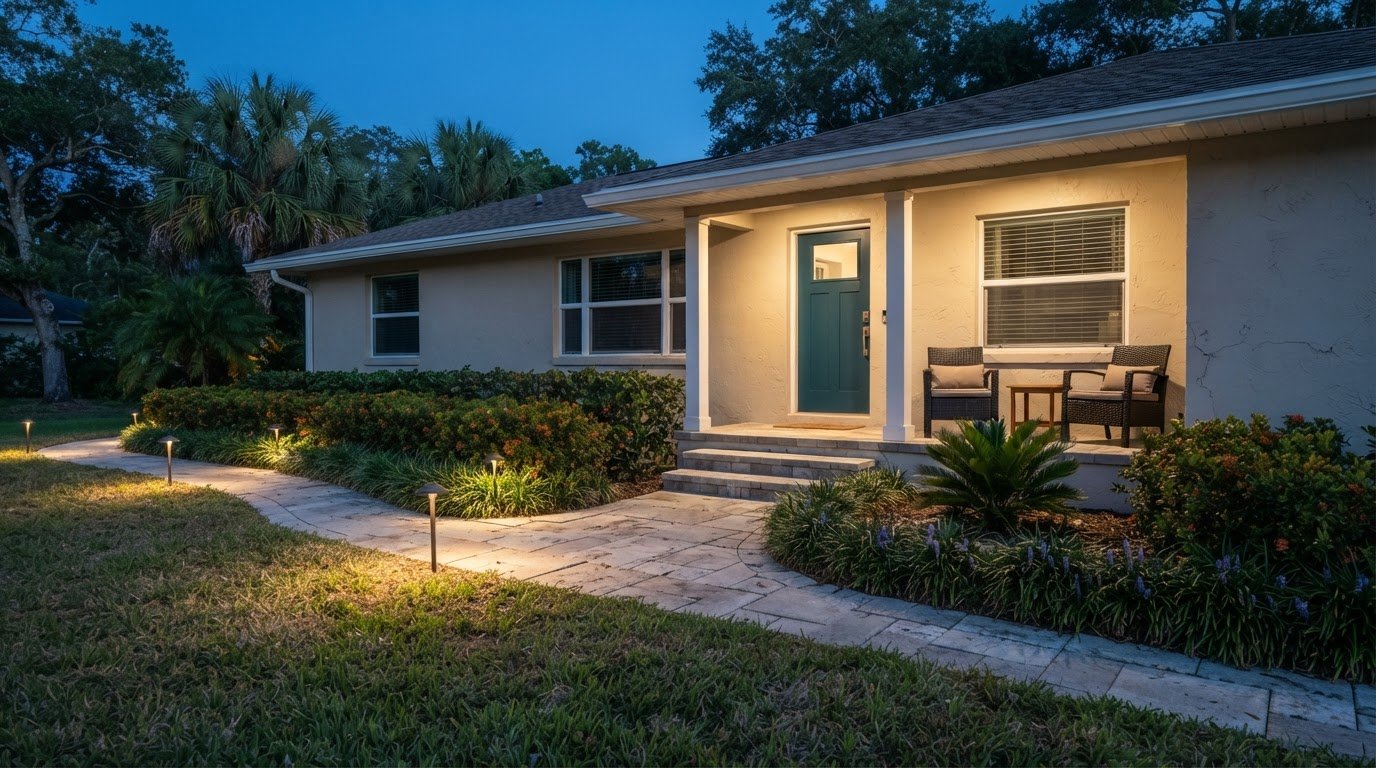
A welcoming ranch-home entry can come into its own after dusk, when thoughtful lighting and a few well-chosen porch details give the doorway a clear presence. The best curb appeal ideas for ranch homes in Florida combine layered landscaping, an easy-to-follow walkway, a visible front door, and greenery trimmed to frame rather than hide the home.
It’s easy to focus on planting beds or paint color, but an entry feels complete when these elements work together in daylight and after dark. This guide shows how to soften a long, low façade with varied planting heights, shape a walkway that leads naturally to the door, and use color and lighting to draw the eye. You’ll also find ways to keep trees and shrubs from obscuring windows and arrange porch accents for a calm, welcoming finish.
Key Takeaways
- Layer planting from low ground cover to taller accents to soften long exterior walls without obscuring the home.
- Use a contrasting front door, a clear path, and carefully placed lighting to make the entrance easier to notice.
- Choose a walkway shape and materials that guide visitors naturally toward the porch while adding interest to the façade.
- Prune trees and shrubs to reveal windows and architectural details, keeping the landscape’s structure balanced.
- Finish the entry with subtle accent lighting and porch furnishings that create a welcoming feel after sunset and in daylight.
Table of Contents
Layering landscaping by height and distance
Layering gives a ranch house depth without hiding its long, low lines. For return on investment, prioritize visible improvements: a clear route to the entry, balanced planting, and an unobstructed front door. These changes shape the first impression without relying on one dramatic feature.
Start beside the walkway with low ground cover, then place compact shrubs closer to the house. Set taller plants farther back, especially where they can soften a blank exterior wall. This sequence gives each layer room to show its texture and keeps the garden from reading as one dense row. In a Bradenton yard, adapt the layout to the windows, entry, and available planting space.
Choose Florida-friendly plants to suit the site’s sun and drainage. Bromeliads can work in full-sun landscaping, while peanut grass and mondo grass are examples of ground covers. Use plants selectively: a low border can soften a hard walkway, and varied foliage can add texture without competing with the front door.
A rain garden can bring planting and water management together. The U.S. Environmental Protection Agency explains that a rain garden collects rainwater from roofs, driveways, or streets and allows it to soak into the ground. Place one where runoff naturally gathers, and shape it as an intentional feature rather than an isolated patch.
Consider a Bradenton-style layout with a bare wall beside the driveway and a porch that needs more definition. Add taller shrubs or small trees in front of the blank wall, then use lower plants nearer the walkway. This arrangement softens the wall, keeps the path visible, and gives the entrance a more distinct frame.
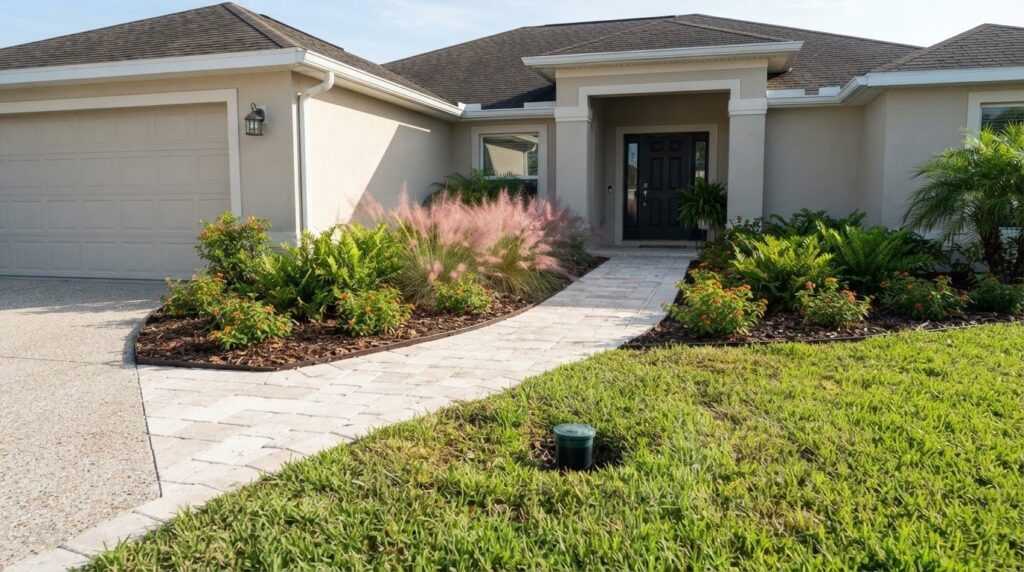
Let the walkway guide the planting plan. Follow its curve with a low border, then reserve taller accents for the far side or a blank wall. This keeps the path visually clear and breaks up the ranch house’s boxy silhouette. A consistent planting edge can also connect the garden to the arrival route.
At the porch, use containers to add height without crowding the entry. A suspended fern draws the eye upward, while compact planters can frame the doorway. Keep the walking area clear, and repeat a foliage texture near the path to link the porch with the front garden.
For hurricanes and flooding, keep the entry path clear, avoid dense planting where water needs to pass, and bring loose porch containers indoors before a storm. Plan planting with drainage in mind, and keep taller greenery from obstructing windows or the doorway.
Making the front door more visible with color and lighting
A ranch home’s long façade can make its entrance easy to overlook. Give the front door a distinct visual role with contrasting color, a clear walkway, and considered lighting. In Bradenton, look at how the doorway stands out against the home’s siding or masonry from the street. Deliberate contrast can distinguish the entry without changing the home’s overall character.
Start by identifying the doorway from the street. A porch or overhang can frame the entrance, while wood accents add warmth beside painted siding or brick. If the façade has shutters, repeat the door color sparingly, or choose a complementary shade to connect the elements. Keep the palette focused so the door remains the clearest point of arrival.
Brick calls for a thoughtful approach. Its natural variation already adds texture, so an update might focus on the door, shutters, trim, or porch rather than covering the masonry. On a painted exterior, carry one color across different materials to bring the façade together, then use a contrasting hue on the door. This creates definition without adding competing color blocks.
Planting can reinforce the color palette. Arrange colorful annuals near the walkway for an immediate accent, then use perennials and grasses for recurring color and movement. Keep taller forms out of the doorway sightline. A low bed beside the path can lead the eye toward the door, while porch containers echo its color.
Lighting strengthens the visual route after sunset. Place fixtures to illuminate the approach and distinguish the entry from the garage or picture windows. A centered porch, contrasting colors, and well-planned lighting can work together to emphasize the door. Keep the effect balanced: the walkway should remain easy to see, and fixtures should complement the home’s architectural style.
For a practical sequence, choose the door color first, coordinate shutters or trim, then finish with planting accents. An unexpected hue on the porch, door, or window trim can introduce contrast. If the façade is already colorful, choose a restrained door shade and let annuals provide seasonal variation.
Florida HOA documents and local requirements can affect landscaping, paint colors, fences, and exterior changes. Restrictions depend on the property and the rules that apply to it, so account for them in the design before exterior work begins.
When the entry needs a unified plan for planting and illumination, landscape lighting can help connect the walkway, porch, and doorway into one welcoming composition.
Breaking up a ranch home’s boxy exterior with a walkway
A walkway can create a strong line across a ranch home’s broad, low exterior. Instead of directing visitors straight from the street, a gently curving route adds movement and draws attention to the entry. Pavers, bricks, or stamped concrete can define the route while complementing the home’s architectural style.
Plan the path around how people arrive. Trace a clear connection from the driveway or parking area to the front door, then shape the surrounding garden to frame it. A winding walkway can soften the straight lines common in ranch-style homes. Avoid 90-degree angles along the route, which can make a curve feel abrupt instead of natural.
Material choice helps set the mood. Brick can suit a traditional ranch house, while concrete pavers offer a more tailored pattern. Stamped concrete adds a patterned surface, and gravel creates a looser, more informal impression. Consider the façade, porch, and garage together so the walkway feels connected to the house, not like a separate feature.
At a Bradenton home with limited parking space, the driveway and walkway may need to work together. Extending a brick path into a defined parking pad can connect the entry route with the area used by cars. The result is a unified arrival space, with a recognizable pedestrian route and a designated place for vehicles.
This approach can help when a driveway dominates the front yard. Extending the path into a parking area can make the transition from garage to entry feel intentional. Keep the route easy to follow by distinguishing its direction, surface, or planting border rather than blending it into one broad expanse.
For a winding design, first identify the destination, such as the porch or front door. Then guide the curve past a planting bed or toward a visible architectural feature. A stone walkway with wood columns, for example, can help a ranch home blend with its natural surroundings. Keep the route visually connected to the entrance, not hidden behind planting.
In Bradenton, consider how the walkway meets the street, driveway, and front porch. A brick path that continues into a parking pad can unify those arrival points, while a curved paver route can soften a long façade. Choose a layout that makes the front door easy to find and keeps the garage in a supporting role.
A winding walkway made from pavers, bricks, or stamped concrete can add curved lines to a ranch home’s landscaping. In Jacksonville, Florida, homeowners extended a walkway into a brick parking pad to make room for cars while preserving the home’s character.
One commenter describes concrete pavers as fairly inexpensive compared with other options.
Trimming trees and shrubs to reveal the home and windows
A ranch home’s horizontal layout gives it a broad, low profile. Overgrown shrubs can make the silhouette feel heavier by hiding windows and crowding the front porch. Identify the features the planting should frame: the entry, visible windows, and any distinctive roofline or columns. Then trim greenery that blocks those views to preserve a clear visual connection between the street and the home.
Short shrubs, such as boxwoods, can add color beside a ranch home without covering its low windows. Keep planting below the window sightline, and shape shrubs so their upper edges don’t merge into one continuous wall. This keeps the glass visible and creates a defined border. Near the porch, use the same principle to keep the doorway and steps easy to see.
A broad shrub hiding a window can make that part of the façade disappear. Selectively trim the plant back from the glass, then shape its sides to follow the window rather than conceal it. The result is a clearer architectural feature and a more balanced view. Repeat this approach along the front elevation, adjusting each shrub to the nearby window or wall.
Taller trees can frame the entrance or garage and draw the eye upward. Place paired trees to establish a visual frame, keeping branches clear of the doorway and roofline. A single tree beside the garage can also soften that large exterior plane. In either arrangement, trees should support the house’s layout, not compete with its entry.
Grasses can break up a long roofline without creating another dense hedge. Position them in distinct clusters near a porch corner or along an open stretch of wall. Their fine texture contrasts with the house’s solid horizontal lines. Leave space between groupings so the windows, siding, and landscaping remain visually distinct.
Use a simple pruning sequence: clear the view to the front door, reveal each low window, then refine the outline of shrubs and trees. Step back toward the street after each area to assess the whole façade. If a tree frames the garage but hides the porch, adjust its branches or nearby shrubs until the entry remains the focal point.
Balance matters more than matching shapes. A ranch house with a wide window on one side and a porch on the other may need different planting heights. Keep the window side lower, then use a taller tree near the porch or garage to lift the composition. This contrast preserves the home’s horizontal character while giving its key features room to show.
Accent lighting and porch furniture
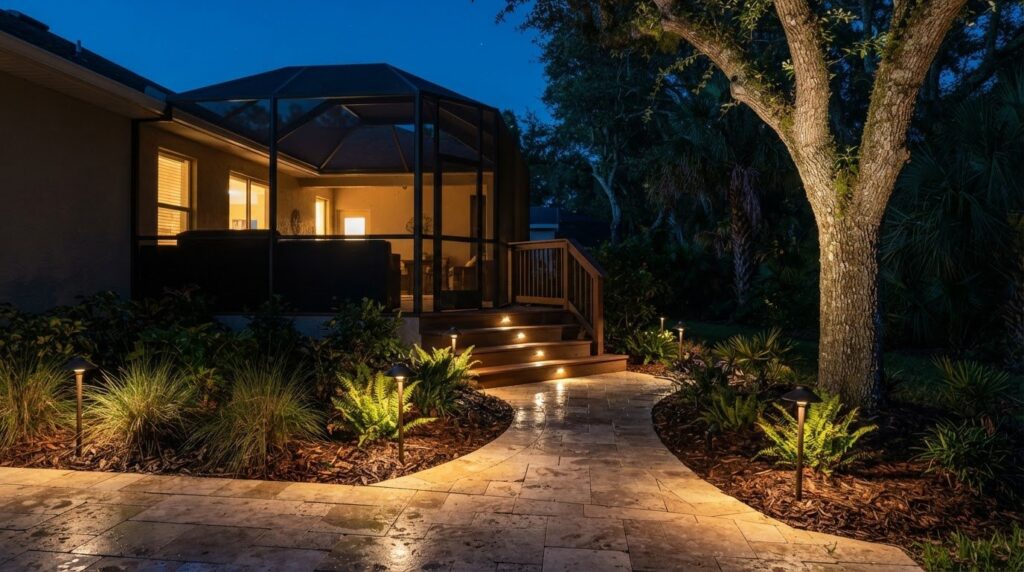
After dark, landscape lighting can add visual interest and make a ranch-style home feel composed. Treat the porch as the destination, not just another bright spot. Layer lighting to guide the eye from the front approach to the doorway, then reveal a porch chair or architectural detail. The result feels intentional rather than uniformly lit.
Start with the view from the street. Identify the front door, porch columns, and any feature that gives the façade character. Use lighting to draw attention to one or two elements, such as a warm glow near the entry and a softer accent on a column. Avoid aiming every fixture at the house, because contrast helps focal points stand out.
Next, consider how lighting works with the landscaping. A low accent near a planting bed can reveal the texture of grasses or shrubs, while a fixture near the path can make the route visible. Aim light away from windows and neighboring views. This creates a calm nighttime scene rather than making the entire exterior bright.
Furniture gives the porch a welcoming scale. Choose pieces that fit the available floor area, leaving the doorway and walking route clear. On a compact porch, one chair and a small side table can create a resting place without crowding the entry. A broader porch may fit a pair of chairs arranged to face the garden or street.
Choose materials and colors that relate to the home. A wood chair can soften a crisp, modern exterior, while a dark metal frame may complement simple lines. Add a cushion or planter as a restrained accent. For example, a pale porch with dark trim can balance one vivid cushion with quieter furniture and greenery.
Consider the evening scene as a whole. A bright porch fixture beside a dim garden can feel disconnected, so coordinate it with subtle landscape accents. Keep the brightest point near the door and let the surrounding planting recede gently. This makes the entrance easy to recognize without overpowering the ranch home’s horizontal form.
Before choosing furniture, consider how the porch will be used. Leave room for the door to swing, keep steps clear, and place seating where it won’t block a window. Then position lighting to support those uses and highlight a chosen feature. A chair beside a softly lit column, for instance, creates a welcoming corner without competing with the entry.
For a balanced evening composition, plan landscape lighting around the porch, walkway, and garden accents as one connected scene.
Landscape By Design Of Palmetto
Landscape By Design Of Palmetto can bring a ranch home’s entry, planting, walkway, and lighting together in a considered plan. Turn to the team when separate upgrades feel disconnected, the front approach needs a clearer layout, or you’re ready to shape the landscape as a whole.
Landscape Design can coordinate planting with the home’s low profile and visible entry. Hardscapes and Retaining Walls can add structure to outdoor spaces, while Irrigation and Sprinkler Systems support the landscape’s watering needs. Landscape Lighting can extend the welcoming effect into the evening. The right combination depends on the features you want to improve and how they work together around your home.
For a cohesive approach to your Bradenton home’s curb appeal, contact Landscape By Design Of Palmetto.
Shape a Welcoming Entry That Feels Like Home
An exterior refresh doesn’t have to happen all at once. Start by deciding what you want visitors to notice first, then let that choice guide the scale and character of future changes. Taking a thoughtful approach helps preserve the home’s original personality while giving the entrance a more intentional presence.
When considering curb appeal ideas for Florida ranch homes, look beyond individual upgrades and imagine the experience of arriving home. A cohesive design feels considered from the street, suits the home’s proportions, and remains welcoming in everyday use. Let that overall vision guide what to do now and what can wait.
Landscape By Design Of Palmetto can help translate that vision into an outdoor plan shaped around your home. Contact Landscape By Design Of Palmetto today to discuss a considered next step for your entry and enjoy creating a homecoming that feels distinctly yours.
Frequently Asked Questions
What are the best curb appeal ideas for a Florida ranch-style home?
The strongest curb appeal ideas for ranch homes in Florida make the entry easy to recognize and the façade feel balanced. Start with one focal point, such as the front door or porch, then let nearby details support it. At a Bradenton home with a wide garage, for example, a distinct entry accent can keep the garage from dominating the street view. Make updates in stages so each change suits the home’s proportions.
Which Florida-native plants and low-maintenance landscaping suit ranch homes?
Choose plants to suit the light and moisture in each planting area, then group plants with similar needs. Florida-friendly landscaping can include bromeliads in sunny beds, while peanut grass and mondo grass are examples of ground covers. These examples don’t guarantee low maintenance or mean every variety is Florida-native. For a Bradenton planting plan, consider mature size and how each plant will fit beside windows, paths, and the porch.
How can front doors, shutters, trim, and house numbers update a ranch home’s façade?
Use contrast and clear placement to make the entry easier to identify. A front door can stand apart from the main exterior color, while shutters and trim can repeat or complement that accent. Choose house numbers with a distinct shape and strong contrast against their background, and place them where visitors can see them from the approach. Coordinating a door accent with a small trim detail, for instance, creates a connected look without adding another competing color.
What driveway, walkway, and porch improvements boost curb appeal for Florida ranch homes?
Give each arrival area a clear purpose: the driveway accommodates vehicles, the walkway directs visitors, and the porch marks the destination. A defined edge between parking and path can make the front yard feel more composed, while porch furniture should leave the door and steps unobstructed. At a Bradenton home with a broad paved approach, a planting border or coordinated surface detail can distinguish the pedestrian route from parking.