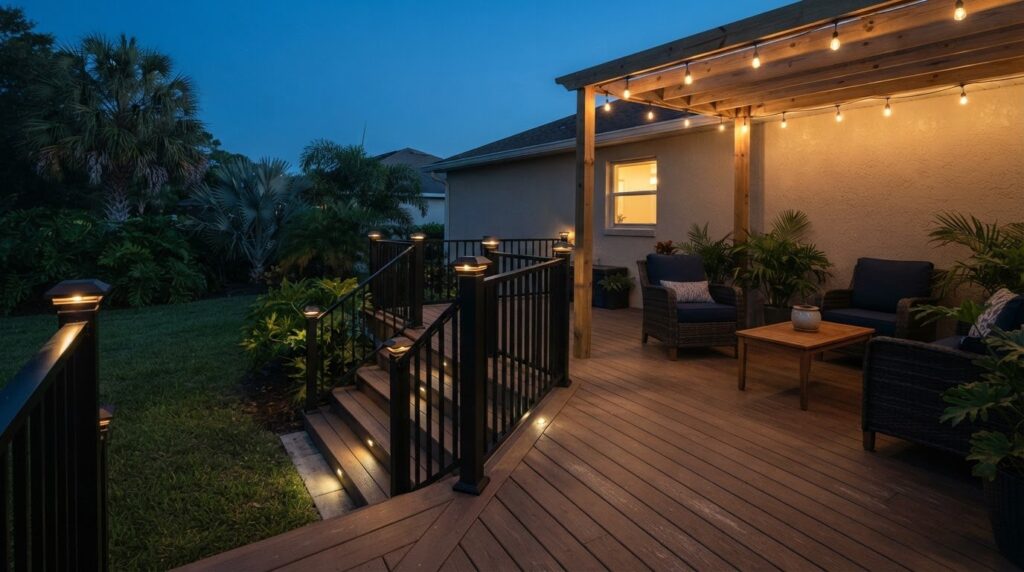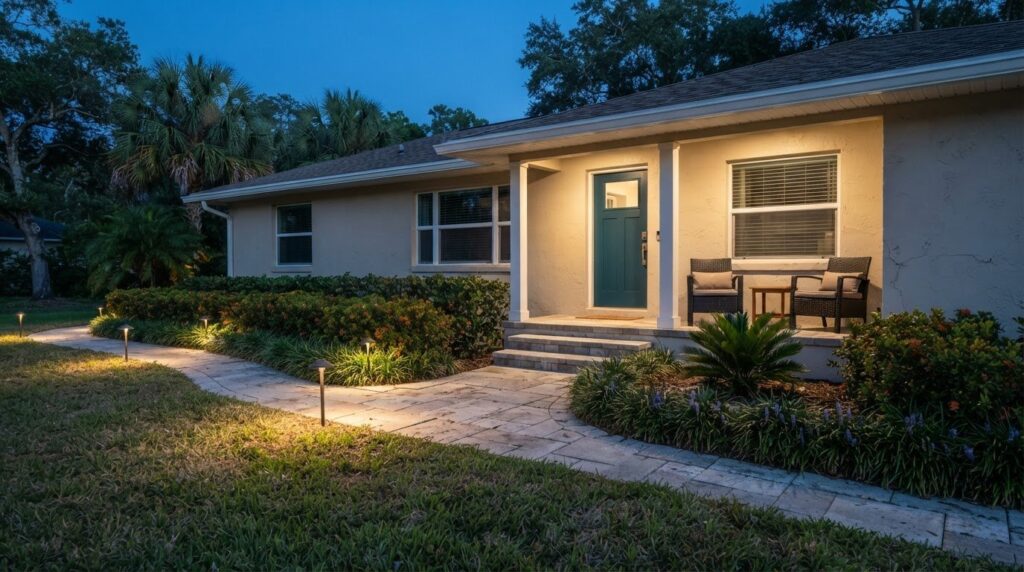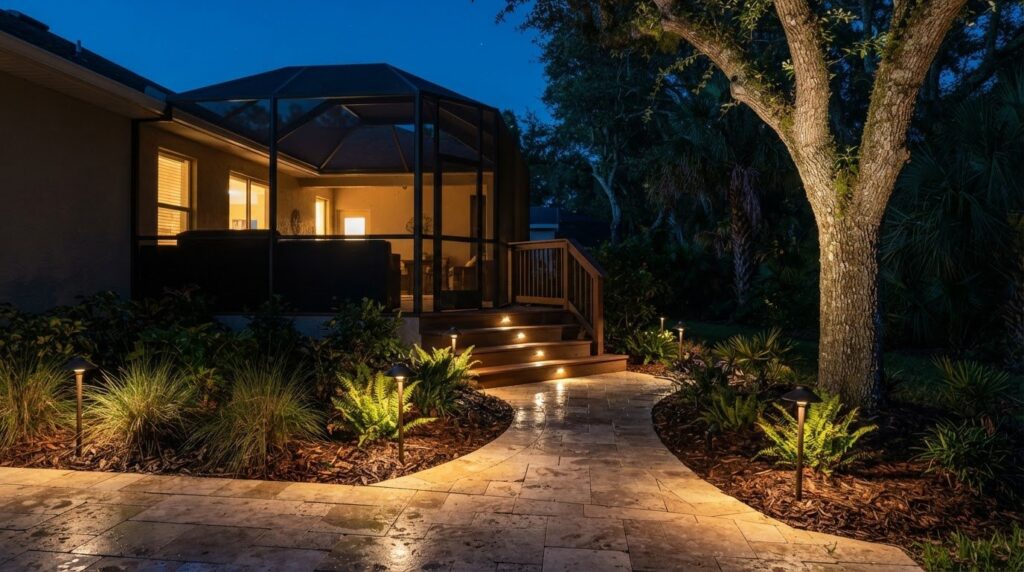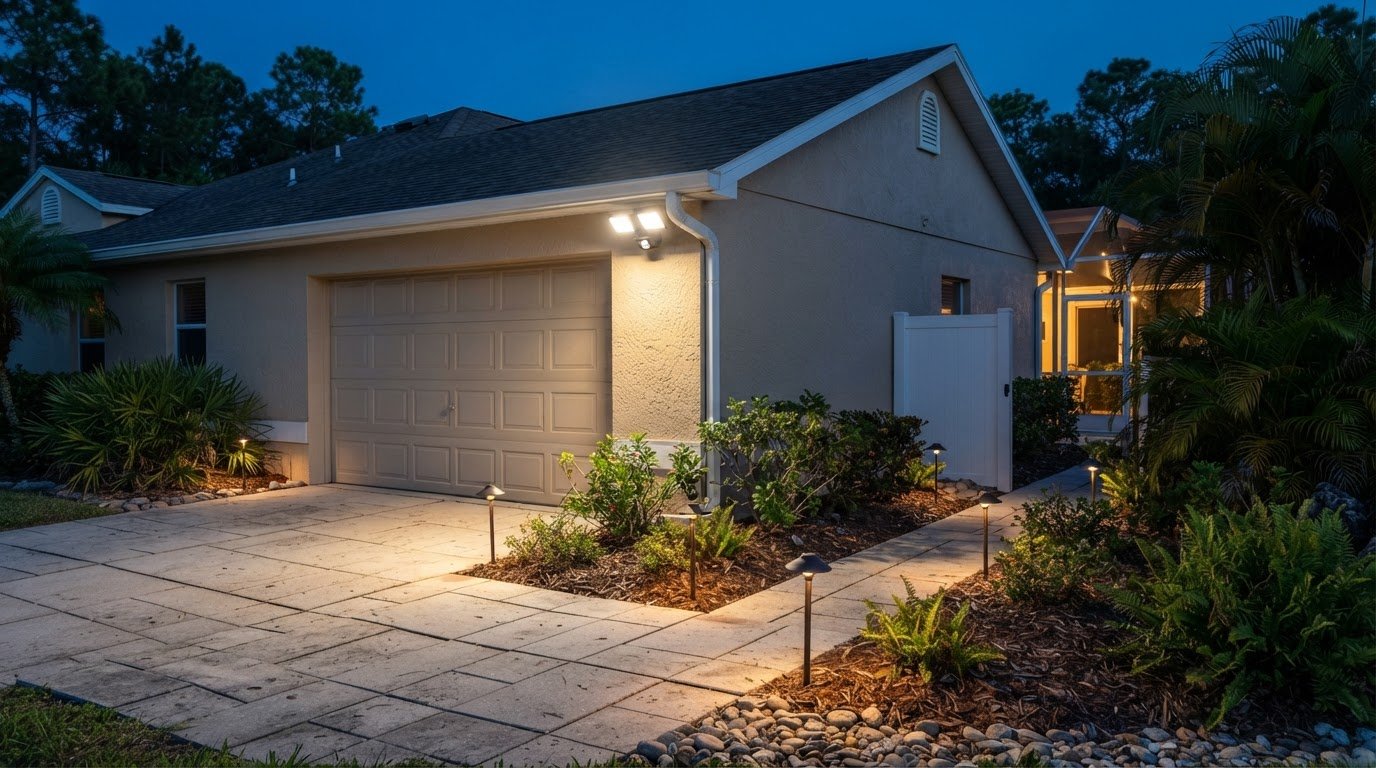
A well-lit home should feel welcoming, not exposed. Security lighting for homes in Parrish can combine motion-activated or photocell fixtures with illumination for entrances, driveways, and perimeter areas. The Federal Energy Regulatory Commission notes that exterior lighting can help deter intruders and support CCTV monitoring.
It’s reasonable to want lighting that improves visibility without overwhelming your home’s appearance. The right setup depends on where light is needed, which fixtures you select, and the installation involved. Pricing depends on the layout, fixture choices, wiring needs, and installation complexity, and is provided after a quote request.
This guide explains common fixture options, factors that shape project costs, and when professional installation or repair can help. It also covers weather-ready lighting for Parrish conditions, so you can plan a practical result that complements your home.
Key Takeaways
- Match fixture placement and activation to the areas where added visibility matters, from entrances to perimeter spaces.
- Flickering, intermittent outages, or damaged fixtures are signs that professional repair may be needed.
- Project costs depend on the layout, fixture choices, wiring requirements, and installation complexity.
- Flood and security lights can cast wide beams of 60 to 120 degrees, helping illuminate broader areas.
- Choose weather-resistant fixtures suited to Parrish’s humidity, heavy rainfall, and salt air.
Table of Contents
Electrical fixture installation and repair
Professional outdoor lighting combines careful placement, secure mounting, and electrical planning. In Parrish, fixture choice and installation details shape visibility, reliability, and how comfortably light sits around your home.
Outdoor Installation Planning
A professional begins by identifying dark approaches, entry doors, and places where fixtures could create glare. The plan considers beam direction, mounting surfaces, existing wiring, and whether the system uses low-voltage lighting. Strategic placement can reduce dark hiding spots and improve visibility around the home. The goal is to illuminate useful areas without flooding every window or path.
Permanent outdoor lighting can use an existing suitable 120-V outdoor GFCI-protected receptacle. New or repaired line-voltage wiring requires a licensed electrician. Low-voltage lighting reduces electrical shock risk compared with high-voltage alternatives. A residential installation plan should make these electrical choices clear before fixtures are mounted, so the system and its power source suit the property.
Installation Process and Duration
Installation typically moves from layout decisions to mounting, wiring, aiming, and system testing. The work may include securing fixtures to suitable surfaces, routing connections, and directing each beam toward its intended area. Installation time depends on the number and placement of fixtures, access to mounting locations, existing electrical conditions, and whether wiring needs repair. These details determine the schedule.
Repair work starts with symptoms such as flickering, intermittent outages, or physical fixture damage. These signs call for prompt attention because they can point to a connection, fixture, or wiring problem. Testing the system after repairs helps confirm that the affected lights operate consistently. The specific repair steps depend on what an inspection reveals.
Glare and Neighbor Considerations
A bright fixture can still perform poorly if it points toward a window, street, or neighboring yard. Common mistakes include aiming lights above the area of interest, choosing beams that spread too broadly, and placing fixtures where direct glare reaches people. A professional can adjust fixture placement and direction to focus illumination on entrances, paths, or other intended locations.
Outdoor lighting requirements can depend on local rules and HOA covenants. They may affect fixture placement, brightness, or operating choices, so account for the rules that apply to your property. To limit disturbance, aim beams downward where appropriate and avoid unnecessary spill across boundaries. Motion or photocell activation can also provide light when needed.
For reliable upkeep, regularly clean outdoor fixtures, inspect wiring and connections, and replace worn or burnt-out bulbs promptly. A weatherproof controller enclosure used in permanent outdoor lighting is approximately 8.6 × 6.6 × 4.3 inches. Keep fixture condition and enclosure placement in the installation plan. If lights flicker, fail intermittently, or show physical damage, arrange prompt professional repair rather than relying on inconsistent illumination.
Which Permanent Outdoor Lighting System Is Right for Your Home?
Choose a lighting system based on the areas you want visible, the power source, and your home’s exterior. In Parrish, fixture durability and carefully directed beams matter alongside security and curb appeal.
Security and Visibility Needs
Start with places where clear visibility supports everyday arrivals, such as an entry, driveway, or side approach. A well-positioned fixture can reduce dark hiding spots without casting light indiscriminately across the property. The Federal Energy Regulatory Commission notes that exterior lighting can help deter intruders and support CCTV monitoring.
For security lighting in Parrish, Florida, consider how each beam works with your home’s architectural features. The aim is useful visibility, not simply maximum brightness.
Motion-Sensor and Dusk-to-Dawn Lights
Motion-activated lights illuminate an area in response to movement, while photocell-activated fixtures respond to changing daylight. Choose between these controls based on whether an entrance needs light on approach or an exterior area needs a more consistent lighting pattern. Both options can support security, but beam direction and placement still determine where light falls.
There isn’t one best control for every home. Match the activation method to the location and how you use that space.
Wired, Solar, and Battery Options
Wired, solar, and battery-powered fixtures differ in how they receive power, so the choice depends on the installation location and the desired lighting system. Permanent outdoor lighting can use an existing suitable 120-V outdoor GFCI-protected receptacle. New or repaired line-voltage wiring requires a licensed electrician. Solar and battery options avoid that particular connection, but don’t assume every fixture suits every placement.
A professional can weigh the power source, mounting location, and intended use together. This makes the comparison more useful than choosing by fixture appearance alone.
Weather-ready fixtures matter in Florida, where humidity, heavy rainfall, and salt air can affect outdoor equipment. Choose weather-resistant fixtures suited to the conditions around your home; an LED label alone doesn’t establish weather suitability. A coordinated arrangement can balance security lighting with architectural detail and curb appeal.
Lighting can complement cameras, alarms, and smart-home systems by improving visibility around monitored areas. The Federal Energy Regulatory Commission says exterior lighting can support CCTV monitoring. Plan light placement around the area being monitored and the system’s intended view.
Flickering, intermittent outages, and physical fixture damage are signs that outdoor lighting needs prompt repair. A professional can assess the fixture and electrical connections, then restore consistent operation. For a considered layout that suits your home’s exterior, explore professional landscape lighting.
Lighting system costs and quote factors
A useful estimate starts with the property’s layout, not just a fixture count. For a Parrish home, the design may include entry lighting, driveway coverage, or landscape accents. Each location affects fixture selection, mounting access, wiring needs, and the work involved. Those details shape the project scope and price.
For residential landscape lighting, the cost depends on the project and is provided after a quote request. The estimate considers the layout, fixture choices, wiring requirements, access, and installation complexity. A plan with suitable existing power differs from one requiring electrical work. Fixture selection and placement also influence the scope.
What an Estimate Should Clarify
A clear estimate connects the proposed work to specific areas of the property. It should describe which locations will be lit, the fixture approach, and any electrical work included. For example, an entrance accent and a driveway fixture serve different purposes. Defining those goals helps explain why each element belongs in the plan.
Landscape details can also shape the work. A mature tree, retaining wall, or narrow planting bed may affect fixture placement and access. Lighting near windows requires careful direction, so beams illuminate the intended landscape feature without shining into living spaces. These site conditions influence labor and installation planning, rather than creating a universal per-fixture price.
Residential and Commercial Electrical Scope
Commercial electrical work is a separate scope from residential landscape lighting. Its costs depend on complexity and materials, while a home project estimate reflects its own layout and installation requirements. A commercial per-fixture figure should not be treated as a quote for a Parrish residence. The work type, property, and requested lighting plan all matter.
Before approving a residential estimate, review the listed fixtures, placement, electrical requirements, and included installation work. Ask for proposed changes to be reflected in the scope, especially if the plan adds an accent near a window or extends lighting into another landscape area. A defined scope makes the estimate easier to understand and compare with the finished design.
Consider the balance between the intended effect and the project’s full scope. A focused plan may prioritize an entry, driveway, or selected landscape features instead of lighting every exterior area. For each proposed fixture, the estimate should connect its placement to a practical purpose. This clarity helps homeowners make informed choices without relying on unsupported averages or cost assumptions.
Entry, driveway, and perimeter illumination
A clear layout separates arrival routes from broader perimeter areas. At an entry, a fixture should illuminate the door and approach, helping residents see visitors and find the threshold. A driveway needs a different coverage pattern, especially where vehicles turn or walkways meet. This zoning gives each light a defined role instead of letting nearby fixtures compete.
Flood and security lighting fixtures use wide beams ranging from 60 to 120 degrees. The appropriate spread depends on the area being illuminated and nearby surfaces. A broad beam can cover an open driveway, while a narrower focus may better highlight an entry or feature. Fixture direction also matters: aim light toward the intended space, not toward windows or neighboring properties.
Perimeter planning works best when the property is considered in sections. A professional can identify dark approaches, boundary paths, and transitions between the house and landscape. For example, a side gate may need different placement from the front entry. Mapping these locations first helps create consistent illumination without treating every wall or planting area as an equal priority.
Wiring and voltage choices influence fixture placement and installation scope. Permanent outdoor lighting may use an existing suitable 120-V outdoor GFCI-protected receptacle. A professional considers the power source alongside mounting surfaces and the lighting plan, so the fixtures can be installed where they serve the entry, driveway, or perimeter effectively.
Integration also deserves attention during planning. Lighting near a camera can improve visibility in the monitored area, while a poorly aimed beam may shine into the lens or obscure the view. The Federal Energy Regulatory Commission notes that exterior lighting can support CCTV monitoring. Positioning lights and cameras as complementary elements helps each perform its intended function.
For a driveway, the plan should account for vehicle access, pedestrian routes, and your home’s architectural lines. A fixture that highlights the driveway entrance may not illuminate the full walking path. Separate placements can address those distinct needs. At the front door, light should reveal the approach and hardware without spilling directly through nearby windows.
Perimeter fixtures should serve specific locations, such as a side passage or rear access point. The installation plan can coordinate their direction, activation, and wiring with the rest of the exterior system. This integration creates a composed result: useful visibility at key approaches, a considered landscape highlight, and less unnecessary glare across the property.
Weather-resistant fixtures for Florida conditions
In Florida, outdoor fixtures face humidity, heavy rainfall, and salt air. Weather-resistant lighting matters because these conditions can affect exposed equipment over time. For a Parrish home, fixture selection should account for where each light will sit, what it needs to illuminate, and how exposed that location is. These details shape a durable, cohesive plan.
Begin with placement. A fixture under a covered entry faces different exposure from one along an open driveway or garden edge. The installation plan should consider rooflines, nearby walls, planting beds, and the direction rain reaches each location. These site details help determine which fixture suits the setting and how to mount it securely.
Next, match the fixture to its role. An entry light should reveal the approach and door area, while a landscape accent can highlight a tree, wall, or planting feature. A perimeter fixture serves another purpose, illuminating a passage or access point. In each case, the fixture should suit outdoor exposure and direct light toward its intended area.
Weather-resistant does not mean every fixture belongs in every location. A sheltered mounting point and an exposed garden edge create different conditions. A professional considers that difference alongside the fixture’s placement, mounting surface, wiring, and intended beam. This assessment helps the system perform consistently while preserving a composed look across your home’s exterior.
Installation complexity also depends on the property. Existing mounting locations, wiring access, and nearby landscape features can influence the work. A fixture near dense planting, for example, may need placement that keeps its beam clear as the landscape changes. Planning the lighting and surroundings together helps prevent blocked illumination and awkward fixture positions.
Ongoing care helps keep the system in working order. Clean outdoor fixtures regularly, inspect wiring and connections, and promptly replace worn or burnt-out bulbs. After heavy rainfall or visible damage, flickering, intermittent outages, or a damaged fixture call for prompt repair. Addressing these issues helps restore dependable illumination instead of leaving a dark gap along an entry or path.
For a Parrish property, weather-ready lighting should unite resilience, considered placement, and a clear purpose for each fixture. Plan weather-ready landscape lighting for your home’s outdoor spaces.
Landscape By Design Of Palmetto: Landscape Lighting
Landscape By Design Of Palmetto provides landscape lighting to create a more visible, considered exterior. Turn to this service when planning new security illumination, updating existing fixtures, or coordinating lighting with your landscape design.
A thoughtful plan can balance practical visibility with your property’s character. Entryways, paths, and selected landscape features each call for purposeful placement. Where outdoor lighting meets hardscapes, retaining walls, or irrigation, coordinated planning helps the finished design feel cohesive.
For a Parrish home, share the areas you want illuminated and any concerns about existing fixtures. This gives the project a clear starting point for discussing layout, installation, or repair needs.
Contact Landscape By Design Of Palmetto to discuss landscape lighting for your home.
Shape a More Considered Exterior
The next step is to define what you want your outdoor spaces to do after dark. For security lighting in Parrish homes, that might mean a clearer arrival, an easier-to-see path, or lighting that complements the landscape. Consider the effect you want, then let it guide the project’s scope and priorities.
Landscape By Design Of Palmetto can incorporate landscape lighting into a broader property plan. Landscape design, hardscapes and retaining walls, and irrigation and sprinkler systems can all shape how outdoor areas function and feel. Coordinating these elements helps lighting sit naturally within the setting rather than appear as an afterthought.
Share the areas you want to improve and the atmosphere you hope to create. A focused conversation can help turn those priorities into a practical direction for your home. Contact Landscape By Design Of Palmetto to discuss your landscape lighting plans and take the next step toward a more welcoming exterior.
Frequently Asked Questions
Need a pro for your exterior lighting service project in Parrish, FL?
Yes. Landscape By Design Of Palmetto provides landscape lighting for residential properties, including homes in Parrish. Professional help is useful when a project involves new fixture placement, electrical planning, or repairs to existing outdoor lights. The service also fits broader landscape plans in Palmetto, Bradenton, and Sarasota. Share which outdoor areas you want illuminated and what you want the lighting to accomplish.
What Determines Your Installation Quote?
An installation quote depends on the project’s layout and the work needed to achieve the requested result. Illuminating a front entry, for example, differs from extending a coordinated plan around a home’s exterior. Fixture selection, mounting conditions, access, and electrical requirements also shape the scope. A clearly defined plan identifies the areas included and the installation work required, so you can understand what the estimate covers.
What Is Flood & Security Lighting?
Flood and security lighting uses broad illumination to make an outdoor area easier to see. A fixture might cover a driveway entrance, a rear access area, or an open section beside a home. Its purpose is practical visibility, rather than a subtle accent on a single plant or architectural detail. Careful direction keeps the beam useful for its intended area and avoids unnecessary light spill.
What wattage do flood fixtures need to be effective?
There isn’t one wattage that suits every flood fixture or property. Wattage describes electrical power use, but it alone doesn’t establish how well a fixture illuminates a particular space. The target area, beam spread, mounting position, and fixture design all affect the result. A compact entry and a broad driveway need different lighting plans, even when both use flood-style fixtures.
How many lumens and what color temperature should outdoor security lights have?
The appropriate lumen output and color temperature depend on the area and desired appearance. Lumens describe light output, while color temperature affects whether light appears warmer or cooler. A path, entry, and driveway may call for different visual effects. The goal is enough illumination to serve the space without creating harsh contrast or discomfort. Choose fixtures based on their intended placement and the surrounding exterior.
What are the best locations for security lights around a home?
Prioritize places where residents approach, enter, or move around the property after dark. An entry, garage access, side passage, and rear door are useful examples. The best placement depends on the home’s layout and existing obstructions, such as trees or rooflines. Positioning each fixture for a specific route makes the lighting more purposeful than spreading fixtures evenly around every wall.
How much does professional security lighting installation cost in Parrish, FL?
The cost depends on the project and is provided after a quote request. The estimate reflects the lighting plan, fixture selection, mounting access, electrical requirements, and installation complexity. Adding a light at an accessible entry, for instance, differs from extending wiring and fixtures across several outdoor areas. A project-specific quote ties the scope to the property rather than relying on a generic price range.
How can security lighting withstand Florida heat, humidity, rain, and hurricanes?
Choose outdoor fixtures suited to Florida’s humidity, heavy rainfall, and salt air, and plan placement around each location’s exposure. Mounting and electrical connections also matter to installation durability. For hurricane conditions, review the fixture’s documented specifications and mounting system rather than assuming any outdoor light is hurricane-resistant. Ongoing care includes cleaning fixtures and inspecting connections for wear or damage.