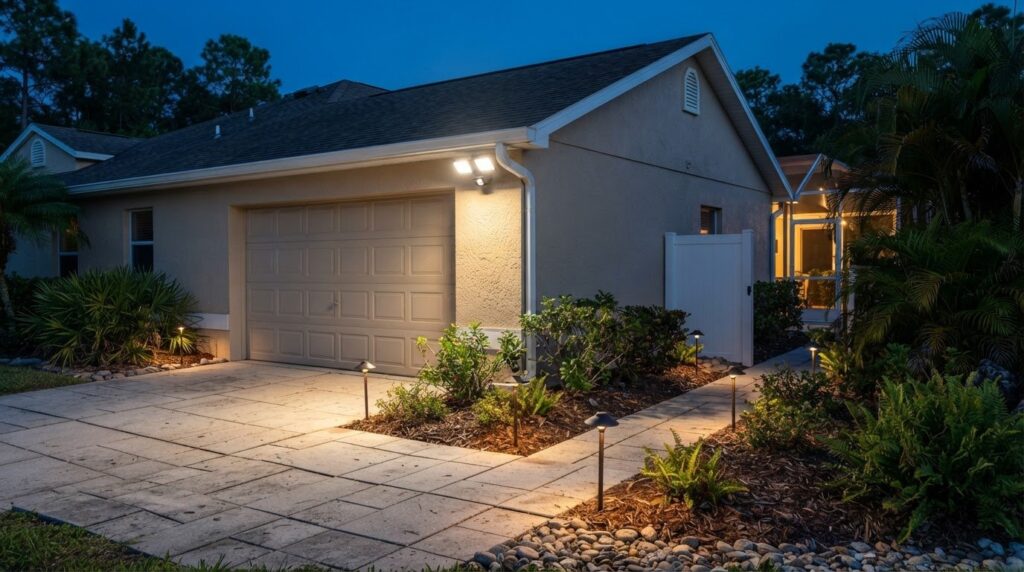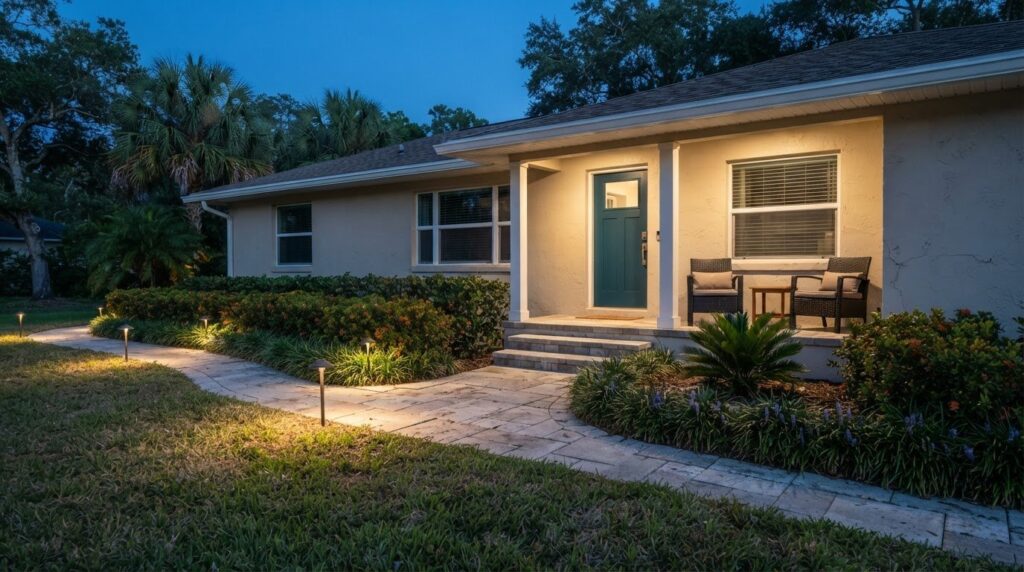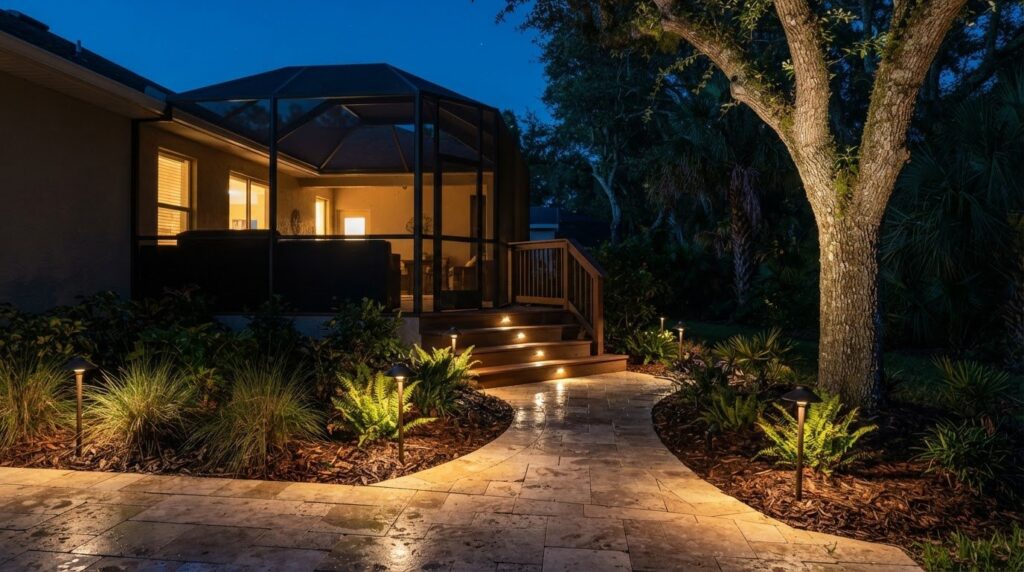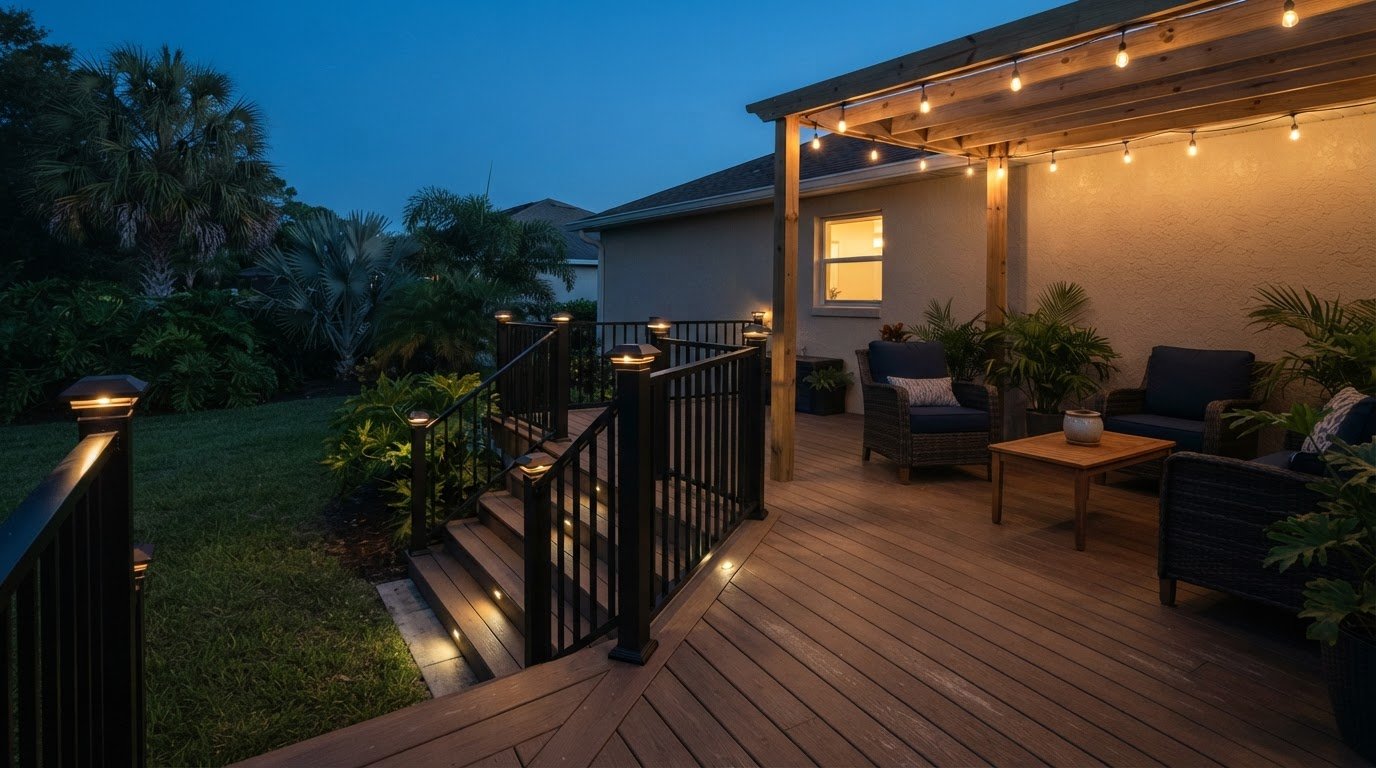
A well-planned lighting scheme does more than brighten a deck; it brings the whole outdoor space into balance. The most versatile deck and patio lighting ideas layer practical illumination at railings, steps, and walkways with softer light around seating areas, pergolas, and other focal points.
Consider each fixture in relation to the whole space rather than choosing lights one at a time. A coordinated deck lighting kit can create a unified look, while built-in fixtures subtly define edges and guide movement after dark. The right approach depends on the layout, the atmosphere you want, and how you use the space.
Explore railing and post-cap lights, stair and recessed fixtures, walkway lighting, and pergola arrangements. You’ll also see how complete lighting kits bring different fixtures together and how a professional lighting plan can make the finished space feel comfortable and cohesive.
Key Takeaways
- Match railing and post-cap fixtures to the deck’s edges, then use recessed lights where a discreet glow suits the surface.
- Riser lights can make stair edges easier to see, while lanterns and motion-sensor fixtures offer different ways to add light where it’s needed.
- Plan walkway lighting for even coverage, and consider downward-facing fixtures to soften glare.
- Layer pergola and string lighting with other fixtures to balance useful visibility and a welcoming atmosphere.
- When considering a complete kit, start with the areas you want to illuminate and how the lights should work together.
Table of Contents
1. Deck railing, post cap, stair, and recessed lighting
Railing fixtures define a deck’s edge and add a composed glow after dusk. A professional plan places light where people move, pause, and gather. For example, post caps can mark the perimeter, while recessed fixtures guide feet along stairs. Each fixture serves a distinct purpose without crowding the view.
Solar-powered post-cap lights offer a wiring-free option for deck perimeters. Positioned on railing posts, they make the boundary visible and give the lighting scheme a consistent rhythm. Low-voltage LED post-cap lights provide another way to create a coordinated perimeter. Professionals plan fixture placement around the deck’s layout.
Under-rail fixtures create a discreet line of light along the railing. Rope lighting can provide a similar continuous effect beneath a rail or along an edge. Both options emphasize the deck’s shape rather than drawing attention to individual bulbs. A professional coordinates the lighting with seating and access points.
Recessed fixtures sit within a deck surface, railing, or area near seating. Their flush placement keeps the design restrained, and recessed deck lights require little maintenance. Around stairs, riser lights can help make each step visible. A professional plans their positions to illuminate the route without distracting from the overall atmosphere.
Professionals start by identifying stairs, changes in level, and the main walkway. They then balance practical visibility with softer light near seating and railing edges. For example, post caps can define the perimeter while recessed lights guide movement. This layered approach supports safety and atmosphere without relying on one bright fixture.
Installation cost depends on the deck’s layout, fixture selection, wiring needs, and project complexity. Landscape By Design Of Palmetto provides an estimate after a quote request, based on those project details.
For weather protection, match each fixture’s stated IP rating and outdoor-use labeling to its location. Exposed railing posts and recessed areas may face different conditions. Fixtures labeled weatherproof, weather-resistant, or suitable for outdoor use are options for outdoor placement.
Maintenance depends on fixture type and placement. Professionals can keep lenses clear, inspect housings and connections, and replace a light when it no longer works. Recessed fixtures need little maintenance, while exposed post-cap lights may need attention after weather or debris affects their surfaces.
When weighing deck and patio lighting ideas, consider how each fixture contributes to the same route and atmosphere. A plan combining post caps, under-rail lighting, and stair fixtures can define boundaries, illuminate movement, and preserve a calm appearance.
2. Stair riser lights, lanterns, and motion-sensor lights
Riser lights illuminate the vertical face of a stair, making step edges easier to see after dark. A professional can plan their positions along the stair run and coordinate their glow with nearby rail or pathway fixtures. On a short set of deck stairs, carefully placed riser lights can define the route without flooding the space with bright light.
Motion-sensor lights suit entrances and pathways used at irregular times. They switch on when movement is detected, lighting the area as someone approaches rather than staying bright continuously. A professional can position them to cover a route or landing, helping the lighting respond to movement while preserving a quieter atmosphere elsewhere.
Portable lanterns offer flexible decorative lighting for steps, side tables, or hooks. Moving one from a dining table to a nearby seating area can shift the mood without changing fixed fixtures. Lanterns can also create an inviting pool of light beside a pathway. Keep them out of reach of children and pets, or choose LED alternatives.
String lights add a soft overhead layer, while lanterns bring smaller points of light closer to guests. Together, they can distinguish a gathering area from the routes leading to it. For example, string lights above a seating zone and a lantern on a side table create a welcoming focal point without making every corner equally bright.
Candles add a quieter decorative accent, but placement matters. Battery-powered candles are an alternative for windy outdoor spaces. Flameless candles are also recommended near drapes and around children or pets. Never leave open-flame outdoor candles unattended. A professional lighting plan can favor safer alternatives where supervision or exposure is a concern.
For a cohesive arrangement, professionals consider how each fixture serves the space: riser lights define stairs, motion sensors respond to movement, and portable lanterns add atmosphere where people gather. They can also coordinate string lights with fixed fixtures so pathways remain legible while seating areas feel relaxed. The result is a layered setting, not a collection of competing bright spots.
These landscape lighting solutions can bring stair visibility, flexible accents, and a welcoming atmosphere into one considered plan. A professional can shape the placement around the deck’s routes and gathering spaces, then select fixture types that work together visually and practically.
3. Built-in deck and walkway lights
A well-lit route makes a deck easier to navigate after evening arrives. Professionals map the path from the house to stairs, seating, and garden entrances, then position fixtures to illuminate those transitions. For example, a walkway connecting a back door with a stair landing needs visible guidance along its full route. Built-in lights can extend the deck’s functional hours while keeping the design integrated with its surface.
Path lights work well along open walkways and deck edges. Even spacing creates a steady visual rhythm, while fixtures on both sides can define a broader route. Downward-facing path lights reduce harsh glare and can illuminate nearby plants or garden beds. Balance their placement with nearby seating so the path stays clear without making the whole deck too bright.
In-deck lights offer a low-profile option for walkways. Installed within the deck surface, they can guide visitors around the space after dark without introducing tall fixtures along the route. A professional plans their positions around the walking line, stair approaches, and changes in direction. For example, a turn between a dining area and steps may benefit from a clear sequence of recessed lights.
Built-in lighting can also connect separate areas. A route from a deck to a garden gate should feel continuous, not end abruptly at the deck edge. Coordinate deck fixtures with path lights beyond the deck, using even placement to keep the transition clear. Downward illumination near planting beds can add definition without drawing attention away from the main route.
Fixture direction and location shape the experience as much as the fixture itself. Downward-facing lights help limit glare, while well-placed path fixtures can reveal steps, edges, and nearby landscaping. Consider sightlines from both seated and standing positions. This helps keep recessed lights useful along the walkway and comfortable near a table or lounge area.
For a functional, attractive result, plan lighting around how people actually move through the space. Identify the main route first, then coordinate in-deck lights, path fixtures, and stair approaches. Give each light a clear purpose: guide movement, define an edge, or illuminate a garden feature. The finished arrangement should feel connected across the deck and adjoining pathways.
4. Deck string lights and pergola lighting
String lights bring a gentle overhead glow to pergolas, covered patios, and open deck seating. Bistro-style bulbs can trace a pergola’s beams or outline a seating area, defining the space without making every fixture equally prominent. Choose weather-resistant LED string lights intended for outdoor use, and account for weather exposure in the lighting plan.
For a cozy mood, warm white light between 2700 and 3000 K can soften the setting. Professionals consider where people sit, walk, and dine before choosing the arrangement. For example, lights above a table can create a welcoming focal point, while a more subtle line along the pergola perimeter preserves visibility across the rest of the deck.
Layering gives each light a purpose. Ambient string lights establish the overall mood, task lighting supports activities such as dining, and accent lights draw attention to a pergola beam or nearby planting. A professional can balance these layers so the seating area feels inviting while pathways remain easy to see.
Outdoor lighting safety starts with choosing fixtures labeled for outdoor use and planning installation to follow applicable electrical codes. A professional considers weather exposure and the placement of powered lights, then coordinates string lighting with other fixtures. Local requirements depend on the project, so avoid treating a decorative arrangement as a substitute for safe installation.
Glare can make a table or walkway uncomfortable, so professionals consider bulb direction and sightlines. Downward-facing light helps reduce harsh glare. Keep cords and fixtures out of walking routes to avoid creating obstacles, and use flameless alternatives where open candles could be left unattended. Aim light toward the deck rather than spilling it beyond the perimeter.
Smart outdoor lighting systems can schedule lights, adjust brightness, and offer color options through a smartphone. A timer can coordinate string lights with evening use, while dimming can shift a pergola from brighter dining light to a softer atmosphere. Controls work best when each layer has a clear function.
For a polished arrangement, professionals coordinate the pergola’s shape, the seating layout, and the routes across the deck. A run of bistro lights can define the dining zone, while separate fixtures maintain visibility near stairs and pathways. This layered approach keeps the outdoor space functional, calm, and visually connected.
Outdoor lighting can improve nighttime visibility and create a welcoming atmosphere through careful layering. When planning a pergola, think of the light as a composition rather than a row of bulbs: each source should add comfort without competing with others. A softly lit seating zone can feel distinct from the surrounding deck while still belonging to the same outdoor setting.
Before settling on a layout, consider how the space is used after dark and whether the lighting feels balanced from different seats and approaches. The goal is not to brighten every surface equally, but to make the arrangement coherent and useful. Reassess the effect from the table, nearby seating, and the path into the area to keep the pergola inviting and movement clear.
5. Complete deck lighting kits
A complete deck lighting kit can bring several fixture types into one coordinated plan. Its value lies in how the lights work together, not simply in the number of pieces. A professional starts by mapping the deck’s perimeter, stairs, walkways, and gathering areas, then matches each location with a suitable lighting role.
For example, post caps can define the perimeter, recessed lights can guide movement, and string lights can soften a seating area. A kit or coordinated selection should support these different functions without leaving a route dark or overwhelming the deck with brightness. Account for weather exposure and choose fixtures rated for outdoor use.
Before selecting components, identify the project’s priorities. A deck used for evening dining may need clear light near the table and softer illumination around the seating area. A route to the stairs may call for built-in guidance instead. This planning step turns separate fixtures into a deliberate composition.
Light output and color affect the result. One described outdoor string-light option provides 150 lumens per bulb, with 10 bulbs on a 44-foot string. Its listed useful luminous flux is 1350 lumens, while total luminous flux is 1500 lumens. These specifications illustrate why installers consider both a fixture’s output and where its light will fall.
Some string lights offer adjustable white color temperatures from 1000K to 10000K. That range allows a different appearance across settings, though a professional considers the intended atmosphere before choosing a setting. Warm white light between 2700 and 3000 K is recommended for a cozy outdoor mood. A consistent tone can help connect pergola lighting with nearby fixtures.
Energy use also matters when selecting components. LED bulbs are energy-efficient and long-lasting, making them an option for a plan designed for regular use. Consider where LED fixtures will highlight deck features, illuminate paths, or provide ambient light, rather than relying on one fixture type everywhere.
A versatile kit should suit the deck’s actual layout and allow useful layers. During planning, the professional can assess whether the proposed fixtures cover the perimeter, steps, and seating area, and whether recessed lights complement other sources. They also consider how the system will hold up to weather and how its individual lights will appear together.
For a cohesive result, plan your deck lighting layout with each area and fixture working as part of the whole. A thoughtful selection balances visibility, energy-conscious lighting, and atmosphere without treating a kit as a one-size-fits-all solution.
Landscape By Design Of Palmetto: Landscape Lighting
Landscape By Design Of Palmetto provides landscape lighting for homeowners planning a complete deck or patio scheme in Palmetto, Parrish, Bradenton, and Sarasota. Turn to the team when you want railing, stair, walkway, or pergola fixtures coordinated with the surrounding landscape. A thoughtful plan considers how people move through the space, where they gather, and which features deserve emphasis after dark.
Landscape design can connect lighting choices with the setting, while hardscapes and retaining walls shape the areas fixtures illuminate. This coordinated approach brings structure and atmosphere to outdoor spaces without treating each light as a separate decision. Share which areas you want to illuminate and how you use them in the evening.
Contact Landscape By Design Of Palmetto to discuss landscape lighting for your outdoor space.
Shape an Outdoor Space That Grows With You
A good lighting plan should feel at home in the landscape and remain adaptable as the space evolves. Let your deck’s purpose guide the next decision: a quieter retreat, a welcoming dining area, or a more connected transition between home and garden. Thoughtful deck and patio lighting ideas can support that vision while keeping the finished setting cohesive.
Landscape By Design Of Palmetto can coordinate lighting with the broader setting through landscape design, hardscapes and retaining walls, or irrigation and sprinkler systems. Considering these elements together helps align the lighting with the structure, planting, and the way people use the space.
Contact Landscape By Design Of Palmetto to discuss a lighting plan for your outdoor space. A considered next step can bring clarity to the design and help shape an inviting place to enjoy.
Frequently Asked Questions
What are popular deck and patio lighting ideas and styles?
Popular styles include understated built-in fixtures, decorative lanterns, and overhead string lights. The best combination depends on the mood and use of each zone. For instance, a relaxed dining area might pair a subtle overhead glow with a lantern on a side table, while a more structured deck could use integrated lights to complement its lines. Repeating a fixture finish or light tone helps the design feel intentional.
What types of outdoor lighting work best for decks and patios?
The right fixtures depend on what each area needs: visibility, atmosphere, or a focal point. A dining table benefits from comfortable light above or nearby, while an entry route needs clear guidance. For a compact patio, a few coordinated sources can serve both purposes without filling the space with fixtures. A professional can shape the layout around the deck’s proportions, surface, and evening activities.
What are the best low-voltage and solar lighting options for decks and patios?
Solar post-cap lights suit deck perimeters where avoiding wiring is a priority. Solar garden lights collect sunlight through panels and illuminate at dusk without wiring. Low-voltage LED post-cap lights are another option for a defined perimeter. Choose based on the project layout and desired arrangement. A professional can coordinate these preferences with nearby stairs, seating, and paths.
What outdoor lighting safety rules and electrical codes apply to decks and patios?
Choose fixtures labeled weatherproof, weather-resistant, or suitable for outdoor use, and match their stated IP rating to their exposure. Don’t leave open-flame candles unattended. Keep lanterns out of reach of children and pets, or use LED alternatives.
How much does it cost to install deck or patio lighting?
The estimate depends on the layout, fixture selection, wiring needs, and installation complexity.
How do you choose weatherproof deck and patio lights by IP rating?
Match each fixture’s stated IP rating and outdoor-use labeling to its location, since exposed railing posts and recessed areas can face different weather conditions. Choose fixtures labeled weatherproof, weather-resistant, or suitable for outdoor use.