Uneven watering is often a system issue, not a lawn problem. A sprinkler system audit in Bradenton examines how each zone distributes water, whether heads are blocked or misaligned, and whether the watering schedule suits the landscape. The findings show where adjustments may be enough and where repairs may be needed.
It’s frustrating to see dry patches beside soggy ground, especially when the sprinklers appear to be running as usual. This guide explains what an audit examines, how to decide when to schedule one, and what to expect from the report. You’ll also learn how repair estimates relate to the work identified and how zone count and repair scope can shape pricing, so the next steps feel clear and considered.
Key Takeaways
- Use an audit report to distinguish adjustments from repairs and understand which findings should be addressed first.
- Schedule inspections when watering becomes uneven or landscape conditions change, and use seasonal reviews to keep schedules aligned with weather.
- Look for clues such as pooling, persistently dry areas, clogged heads, and low pressure to identify where a system may be underperforming.
- Distribution testing shows how consistently water reaches different parts of a zone, helping pinpoint coverage gaps.
- Zone count and the scope of inspection and repairs shape an estimate, so a detailed assessment helps clarify what the work involves.
Table of Contents
Audit report, repair priorities, and estimates
A useful irrigation audit turns observations into a practical work plan. A sprinkler system audit in Bradenton should identify the affected zone or component, describe the issue, and explain how it affects coverage. For example, a report might distinguish a clogged head from a zone-wide pressure concern. One may call for a localized repair, while the other could require broader troubleshooting.
Clear findings make decisions easier. An audit can connect a dry patch to a specific head, note pooling in a low area, or show that water is reaching pavement instead of planting beds. Each observation should lead to a proposed action, such as cleaning, adjusting, or repairing a component. When findings and recommended work are presented together, property owners can see why each item appears in an estimate.
Repair priorities generally depend on how each issue affects system performance. A problem that prevents a zone from watering its intended area may take priority over a cosmetic adjustment. A leaking or misdirected head can waste water and leave nearby plants unevenly watered. Grouping findings by zone helps separate focused corrections from improvements that can be planned alongside other landscape work.
- Coverage: Which areas receive too little or misplaced water?
- Cause: Is the finding limited to a head, or shared across a zone?
- Action: Does the recommendation call for adjustment, cleaning, or repair?
- Sequence: Which work restores useful coverage before refinements?
An estimate should turn recommendations into clearly defined tasks. Its scope may depend on how many zones need inspection, the number and condition of affected components, and whether troubleshooting extends beyond one head. A written breakdown shows what each proposed repair addresses. The price depends on the case and is provided after a quote request. Zone count, inspection scope, and repair needs all affect the estimate. A sprinkler system audit in Bradenton helps explain these factors by connecting proposed work to observed conditions.
A Florida farm audit illustrates why reports connect measurements with decisions, rather than promise identical results for every property. Its recommendations projected an approximately 56% reduction in annual water use. The audit estimated annual use could fall from more than 171 million gallons to less than 75.5 million gallons. Those figures describe that farm, not a typical Bradenton home. For a residential system, the report’s value lies in showing where water is misdirected, what should be corrected, and how each proposed repair supports more even coverage.
For a residential system, use the findings to decide which corrections are needed and what to include in the estimate. If the property is governed by an HOA, approval may also affect scheduling. The report and proposed scope can clarify what is being requested before repairs begin.
Landscape By Design Of Palmetto notes that approved HOA irrigation repairs can be scheduled efficiently once permissions are secured. That timing applies to approved HOA repairs; it does not replace the need to identify affected components and confirm recommended work. Keeping the diagnosis, approval, and repair scope connected helps owners follow the process from a coverage problem to a repair plan.
Audit frequency and seasonal inspections
For a Bradenton lawn, schedule an irrigation audit when coverage changes, repairs are made, or watering conditions shift. Seasonal reviews can help align run times with rainfall and the landscape’s needs.
Required Inspection Intervals
Fire-protection sprinklers, fire alarms, and backflow devices are separate from landscape irrigation. Their inspection schedules do not determine when to audit a lawn sprinkler system, which is assessed for watering performance rather than fire-code compliance.
The timing of a landscape audit depends on practical signs such as new dry areas, pooling, altered planting beds, or a system change. These conditions can warrant a review without waiting for a fixed calendar interval. Do not infer fire-system requirements from lawn irrigation checks, or vice versa.
Audit Scheduling and Completion
Scheduling starts with the property’s concern, such as uneven watering, a recent repair, or changed landscaping. The audit then reviews the irrigation zones and observes coverage while the system runs. The findings can show where an adjustment or repair may improve water distribution.
After inspection, the findings guide next steps. A dry strip along one bed, for example, may point to a localized coverage issue; pooling can prompt a closer look at application rate or site conditions. A follow-up review can assess whether completed work resolved the original symptom.
Seasonal Inspection Timing
Seasonal checks are useful when rainfall patterns or planting conditions change. In Bradenton, schedules may need adjustment during frequent rain and dry stretches rather than staying unchanged throughout the year. A review compares how each zone waters with current landscape conditions.
Local watering limits also affect scheduling. City of Bradenton Utilities customers are subject to one lawn-watering day per week through March 31, 2027, under a regional water shortage order. For properties under one acre, permitted lawn-watering windows are 12:01 a.m. to 4 a.m. or 8 p.m. to 11:59 p.m. Address endings determine the assigned weekday, so scheduling should account for the applicable day as well as the time window.
Use seasonal inspections to assess whether the programmed schedule still fits the property, not simply to increase run time. Frequent rainfall may call for shorter watering periods; a dry stretch may require a different adjustment. Low-volume watering for plants and shrubs follows separate local timing from lawn irrigation. An audit helps distinguish those landscape needs and identify zones that warrant attention. For a closer look at irrigation and sprinkler systems, consider how zone performance and seasonal conditions shape the review.
White Diamond Landscape recommends adjusting irrigation schedules in Bradenton by reducing run times during frequent rainfall and increasing them during dry stretches. This keeps a seasonal review focused on current conditions instead of treating an old setting as permanent. Compare the schedule with observed coverage and adjust it to the property’s conditions. Reassessing after a change helps determine whether the revised run times better suit the landscape.
Common sprinkler system problems
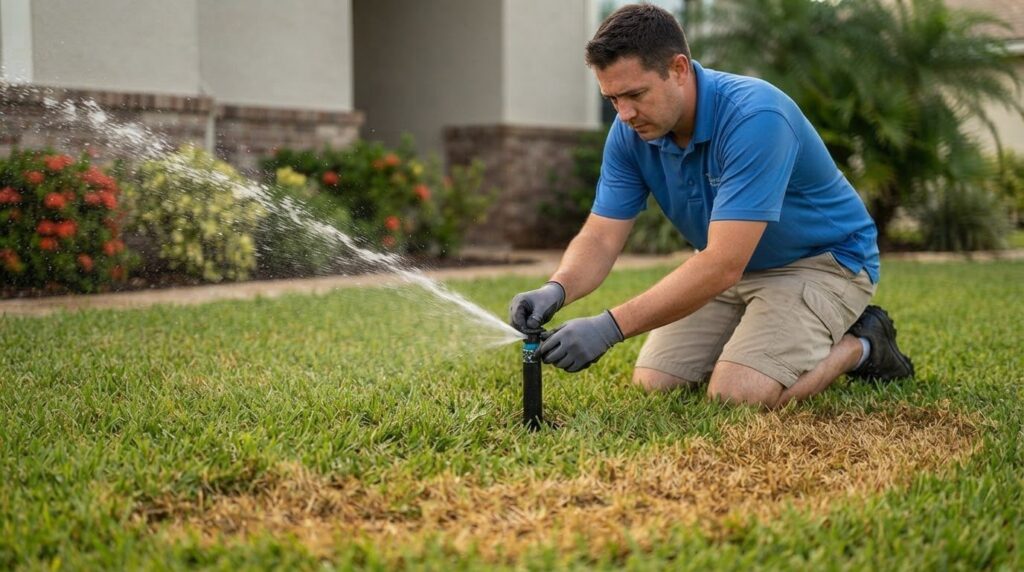
Uneven coverage often shows up as dry turf beside damp soil. In Bradenton, dry irrigation zones can result from clogged heads, low pressure, or incorrect spacing. Because each cause creates a different pattern, an effective inspection traces the symptom through the affected zone.
Start by noting the location and shape of the dry area. A narrow strip along a lawn edge may mean a head is not reaching its intended area. A larger dry section across one zone can point to a pressure issue or several obstructed heads. An audit observes the zone in operation and compares head performance with the landscape it serves.
Pooling presents different clues. In Bradenton, irrigation can cause pooling when water is applied faster than the soil can absorb it or when grading directs water into low spots. A puddle near the base of a slope may reflect the terrain rather than a faulty head. The inspection considers where water collects and how the zone applies it.
- Clogged head: Look for a head that fails to distribute water across its intended area.
- Low pressure: Compare how heads operate across the affected zone.
- Incorrect spacing: Note gaps between the areas reached by adjacent heads.
- Pooling: Consider both application rate and low spots in the grading.
These symptoms can overlap. A dry patch and pooling in the same zone may mean water is being distributed unevenly, not that the entire landscape needs more watering. Increasing run time without identifying the cause can leave the low area wetter while the dry section remains stressed. An audit records the pattern before recommending adjustments.
Fire-protection sprinklers are separate from lawn irrigation. A neglected fire sprinkler may not perform as intended during a fire, creating a serious safety risk. Bradenton lawn-watering penalties concern watering restrictions, not fire-system maintenance.
For a residential landscape audit in Bradenton, choose a company that inspects landscape irrigation and sprinkler systems. Fire-protection contractors work on a different system, so a lawn audit does not assess building fire sprinklers. Keeping the distinction clear helps match the inspection to the problem.
During an inspection, the affected zone is observed while operating, and visible head performance is compared with dry or wet areas. For example, a dry band between heads suggests a coverage gap; water collecting at a low point calls for attention to both grading and application. The findings help distinguish a localized component issue from a broader zone concern.
Documenting each symptom by zone makes repair decisions more precise. One obstructed head calls for a different response than low pressure across several heads. Bradenton’s landscape conditions, head placement, soil absorption, and grading all influence uneven watering. Identifying the cause first helps target the correction instead of changing the whole schedule.
Distribution uniformity testing
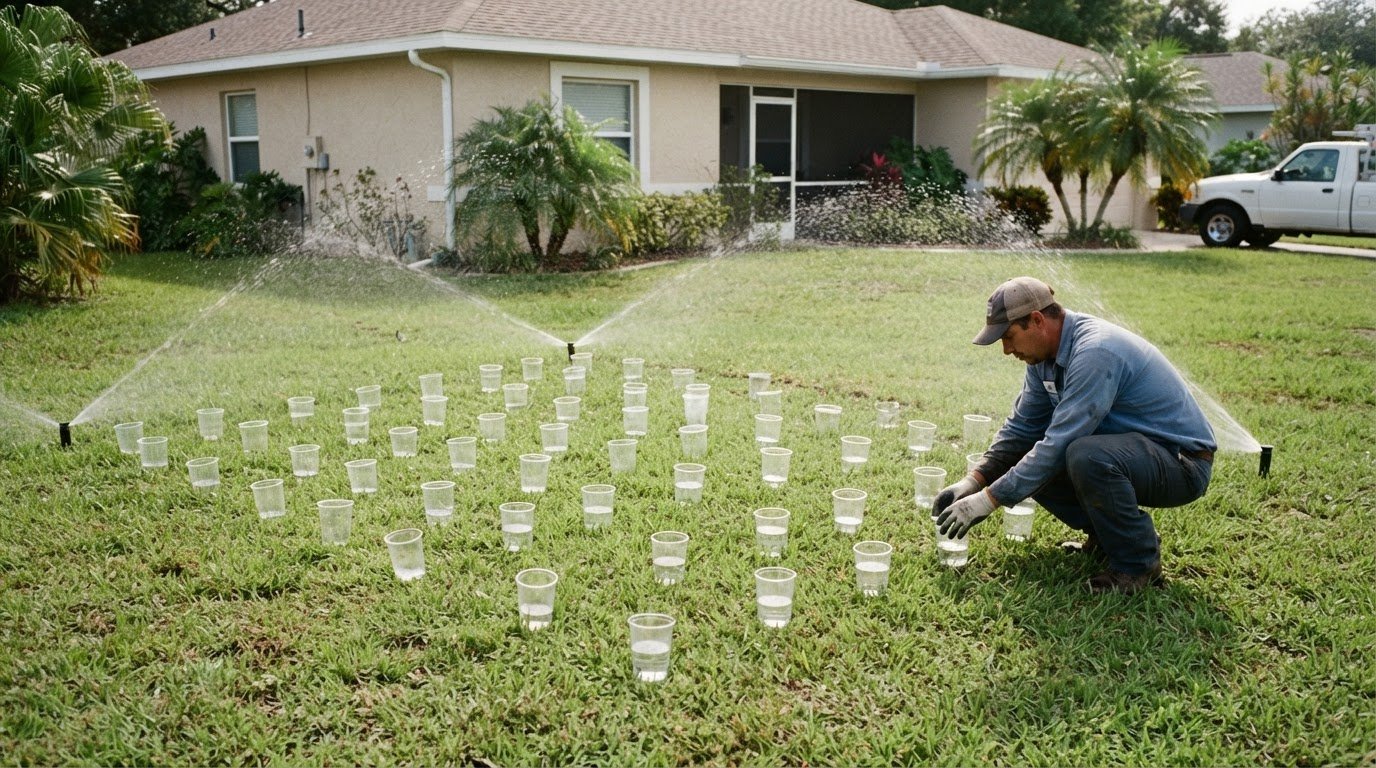
Distribution uniformity testing measures how evenly an overhead irrigation zone applies water. In a catch-can test, containers collect water at different points while the zone runs. Comparing the amounts shows whether some areas receive less water than others. For a Bradenton lawn, this helps distinguish uneven delivery from a schedule that simply runs too briefly.
The test starts by selecting an area served by one zone. Catch cans are placed across its coverage, including between sprinkler heads and near the edges. The zone runs, and then the collected water is compared across containers. A dry container beside fuller ones can reveal a coverage gap that visual observation alone might miss.
A Florida farm audit provides a documented example of the method at scale. It evaluated overhead irrigation across a 150-acre farm using 50 catch cans. The measured distribution uniformity was 0.82. That result describes the audited farm and its setup, not a target or expected score for a Bradenton home.
For residential testing, the value comes from comparing locations within the same zone. If several cans collect similar amounts, delivery is more consistent across those test points. If the amounts differ sharply, the pattern helps locate where distribution changes. Interpret results alongside head placement, operating conditions, and the landscape served.
- Choose the zone: Isolate the area being evaluated so other zones don’t affect the test.
- Place collection cans: Include central, edge, and between-head locations.
- Run the zone: Keep the test conditions consistent across the selected area.
- Compare collections: Look for low or uneven amounts that indicate coverage differences.
Catch-can readings support diagnosis, but they do not identify every cause on their own. Low collection near one head may prompt a closer inspection of its operation or placement. A broader pattern across several cans may point to a zone-level issue. The test guides further investigation instead of treating every dry patch as a watering-time problem.
Distribution uniformity also helps clarify repair priorities. If measurements reveal an isolated gap, attention can focus on the affected part of the zone. If coverage varies widely across the area, the review can consider several heads and their spacing together. This makes the findings more specific about where coverage differs and what follow-up inspection may address.
For a Bradenton property, repeatable testing provides a clearer comparison after adjustments or repairs. Testing the same zone at comparable collection locations can show whether water reaches the landscape more evenly afterward. Results apply to the tested zone and conditions, so one area’s measurement should not be treated as a score for the whole irrigation system.
Full audit pricing by zone
An irrigation audit estimate depends on the system’s layout and the work included. Zone count matters because each zone adds an area to inspect, operate, and assess. A property with several distinct planting areas may need a broader review than one with a simple layout. The estimate should clarify whether it covers inspection alone or proposed repairs as well.
Zone count is only one factor. The condition of each zone, the number of heads involved, and the time needed to understand uneven coverage can shape the scope. One broken head may call for a localized repair. Several zones with inconsistent operation may require more troubleshooting to identify the cause.
Review the audit and repair work as separate items in an estimate. The audit identifies system conditions and recommends next steps; repair line items describe work beyond the inspection. This distinction shows which costs relate to assessment and which address a specific finding. For example, an obstructed head may be listed for attention separately from a zone that needs further diagnosis.
Useful estimate details include:
- Zones covered: Identify which parts of the property the inspection includes.
- Inspection scope: Clarify whether the work includes operating and observing each listed zone.
- Findings: Connect proposed work to a specific observed condition.
- Repair scope: Distinguish adjustments or repairs from the audit itself.
- Follow-up: Note whether a later review is part of the proposed work.
These details make different scopes easier to understand without relying on a generic per-zone assumption. Two properties with the same number of zones may differ in head condition, layout, and troubleshooting needs. A zone serving only lawn may require a different inspection from one covering both lawn and planting beds. The estimate should reflect the system being assessed.
The price depends on the case and is provided after a quote request. Relevant factors include zone count, inspection scope, system condition, and identified repair needs. A clear scope shows what the estimate covers before you decide how to proceed. It also distinguishes a broken component from the cost of assessing the wider irrigation system.
For a focused estimate, describe the property’s uneven-watering symptoms and the areas affected. Dry patches across one zone, pooling near a low point, or a head that no longer operates can help define the inspection. To request an irrigation audit estimate, share those concerns and the zones you want assessed.
Landscape By Design Of Palmetto: Irrigation and Sprinkler Systems
Landscape By Design Of Palmetto provides irrigation and sprinkler system services for properties with uneven watering, inconsistent zone coverage, or repair needs identified during an audit. Turn to the team when findings point to adjustments or repairs, or when landscape changes affect how water should reach planted areas.
A clear assessment connects system performance with the broader landscape. For example, revised planting beds may call for a fresh look at how existing zones serve the property. Addressing irrigation function and landscape design together can support a cohesive outdoor setting, with balanced coverage and thoughtfully planned planting areas.
For a considered next step toward more reliable irrigation, contact Landscape By Design Of Palmetto.
Give Your Landscape a More Considered Next Step
A sprinkler system audit in Bradenton can start a more intentional relationship between your irrigation system and the landscape it supports. Turn the findings into a clear plan: address the areas affecting coverage, then consider how future planting or outdoor changes may affect the system. This keeps irrigation decisions connected to how you want your property to look and function.
Landscape By Design Of Palmetto can help when audit findings call for irrigation work or landscape changes affect watering needs. Its landscape design and hardscape services can also support a coordinated outdoor vision, considering practical performance and appearance together.
Share the uneven-watering concerns and the areas you’d like assessed. Contact Landscape By Design Of Palmetto to discuss an appropriate next step for your property. With a clear plan in place, you can move toward a more balanced, thoughtfully cared-for landscape.
Frequently Asked Questions
What does a sprinkler system audit include in Bradenton, Florida?
A Bradenton landscape irrigation audit evaluates how the system serves the property, not fire-protection equipment. It involves operating relevant zones, observing head performance and coverage, and noting visible issues such as dry areas or pooling. Changes to planting beds, grading, or lawn boundaries also affect the assessment. The findings help determine whether adjustments, repairs, or further diagnosis may be appropriate for the landscape.
How much does a sprinkler system audit cost in Bradenton?
The price depends on the case and is provided after a quote request. The estimate reflects the inspection scope, zones included, system condition, and any repair work identified. For example, reviewing a straightforward layout differs from assessing multiple areas with separate coverage concerns. Keep the audit assessment distinct from optional repairs in the estimate, so you can see what each proposed task addresses before deciding how to proceed.
What documents and records should be provided after a sprinkler system audit?
Keep a written record of the audit date, zones examined, observations, and recommended next steps. A useful property file also includes the estimate, with proposed repairs linked to relevant findings. If work is completed later, record the repair and any controller adjustments. These notes give future inspections a clear reference point, especially after landscaping changes or if the same watering concern returns.