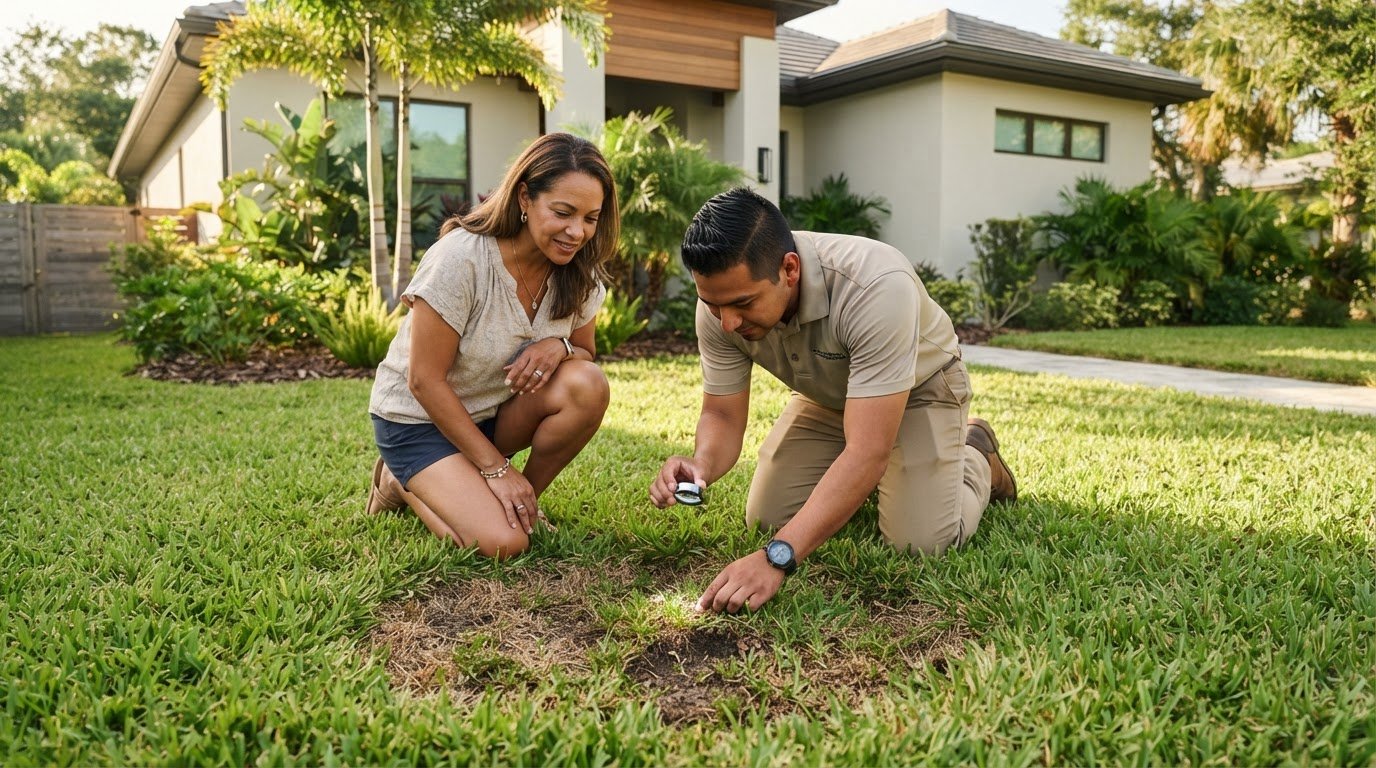
What if the brown patches in your Bradenton lawn aren’t a sign of drought? Pest damage can look like irrigation trouble or disease, and treating the wrong problem may add stress without helping your turf. Effective lawn pest control Bradenton homeowners can rely on starts with looking for evidence, not spraying by default.
When a lawn loses its even, healthy appearance, it’s natural to want a quick answer. But weather, watering, turf type, and everyday lawn care can all influence what you see. This guide explains how to inspect a changing lawn, compare possible causes, and decide when professional pest management makes sense. It also covers why accurate identification matters, including as Florida watches for the recently detected pasture mealybug, and how pest management can fit into care for your property.
Key Takeaways
- Brown patches and thinning turf have several possible causes. Look for patterns and signs of pest activity before choosing a response.
- Effective lawn pest control Bradenton begins with identifying the problem and considering turf type, site conditions, and weather.
- Track changes and review irrigation patterns to help distinguish possible pest damage from general turf stress.
- Regular observation and a measured response are more useful than treating every blemish by default.
- Outdoor pest management can complement irrigation and broader property care as part of a considered landscape plan.
Table of Contents
- Lawn Pest Control in Bradenton Starts with Reading the Damage
- Common Florida Lawn Pests and the Clues They Leave
- Lawn Pest Control or Routine Lawn Care: How to Tell What Your Bradenton Yard Needs
- Bradenton Lawn Pest Prevention Begins with Consistent Observation
- Protect Your Bradenton Landscape with a Thoughtful Pest-Control Plan
Lawn Pest Control in Bradenton Starts with Reading the Damage
A lawn’s appearance can change for many reasons, and not every brown patch calls for pest treatment. Lawn pest control Bradenton homeowners can approach thoughtfully begins by asking whether there is evidence of an active pest, then matching the response to what they find. Look beyond grass colour: note the patch’s shape and location, the condition of the blades, and whether the affected area is changing.
Bradenton weather and the conditions in an individual yard can make visual diagnosis difficult. Watering patterns, sun exposure, turf type, foot traffic, and disease may all cause similar-looking stress. The general principles of Pest control start with understanding the problem before choosing a response, and the same approach applies to lawns.
Diagnosis should come before treatment: the same patch of stressed turf can have different causes, and each calls for a different response.
Which lawn changes deserve a closer look?
Localized thinning, ragged-looking blades, or patches that gradually expand are reasons to inspect more closely, not proof of insects. Look at the boundary between healthy and affected turf. Is the damage concentrated in one spot, or are there several affected areas? If you can safely inspect grass near a patch’s edge, look for visible insects or signs of feeding, but don’t rely on a single clue.
Record where a change first appeared and how it develops. A dated photo taken from the same angle can help show whether the patch is stable, spreading, or appearing elsewhere. A close-up can document what you see, but it may not reveal the cause. Identification depends on the full pattern and the lawn’s conditions, not one symptom.
Could irrigation, weather, or disease look similar?
Yes. Uneven watering may leave dry-looking areas where sprinkler coverage is inconsistent, while heat or intense sun can stress exposed turf. Repeated foot traffic may thin grass along a path or gathering spot. Disease can also cause discolouration or irregular patches. These are possibilities to consider, not diagnoses. Pest activity and other forms of stress can overlap, and more than one factor may affect the same lawn.
Review recent irrigation patterns before treating. Are some areas missed, receiving less water, or staying wet longer than others? Check whether the damage follows a sprinkler zone, a sunny edge, or a route people regularly walk. If coverage is in question, understanding irrigation system installation in Palmetto can help put the layout and distribution of water in context. Landscape By Design Of Palmetto installs irrigation and sprinkler systems to support landscape care, but symptoms still need to be interpreted in light of the site.
If the cause remains uncertain or the damage continues to spread, a professional assessment can bring the visible clues and the lawn’s conditions together. A measured diagnosis helps avoid unnecessary treatment and directs attention to the issue the turf actually faces.
Common Florida Lawn Pests and the Clues They Leave
Several insects can damage Florida turf, but yellowing or thinning grass doesn’t identify the cause on its own. Chinch bugs, sod webworms, and mole crickets are examples to consider in Bradenton. Which possibilities fit depends on the lawn’s grass, site conditions, and time of year. Treat these as starting points for inspection, not as a diagnosis or treatment plan.
A pest clue can guide your inspection, but identifying the organism and considering the lawn’s conditions are both important to a sound diagnosis. That distinction matters for lawn pest control Bradenton homeowners want to approach carefully. Different pests leave different signs, and look-alike symptoms may call for another response.
Chinch bugs and patchy turf damage
Southern chinch bugs are associated with damage to St. Augustinegrass. Feeding can cause grass to yellow and turn brown, sometimes forming irregular patches that may expand. Sunny, stressed areas can be more vulnerable, but drought and other turf problems can create similar discolouration. A patch’s shape or colour alone can’t confirm chinch bugs. Inspect the affected turf and its edges for insects before considering treatment.
Pay attention to the grass species and where the damage appears. If the lawn is St. Augustinegrass and the affected area is changing, those details can help focus an inspection, but they don’t establish the cause. Don’t assume that brown turf means chinch bugs, or apply a treatment based only on a photograph.
Sod webworms, mole crickets, and other possible culprits
Sod webworm larvae feed on grass blades, so chewed or ragged-looking leaves may raise suspicion. Mole crickets can disturb turf as they move through the soil, leaving raised or loosened areas. These signs can be subtle, and other factors may produce a similar appearance. Look across the lawn for a pattern rather than treating one damaged spot as conclusive evidence.
A closer inspection is more useful than guessing from a patch. Note whether blades look chewed, the soil appears disturbed, or damage is concentrated in particular areas. Where practical, look for the insect itself and consider whether the turf type and surrounding conditions fit the suspected pest. If you can’t identify a pest confidently, wait until the cause is clearer before choosing a pest-specific treatment.
- Chinch bugs: Yellowing or browning patches, particularly in St. Augustinegrass, warrant closer inspection but can also reflect other stress.
- Sod webworms: Chewed or ragged blades may be a clue to feeding, not confirmation of larvae.
- Mole crickets: Raised or loosened turf may suggest soil disturbance. Inspect before drawing conclusions.
If a concern persists, a careful pest inspection can help shape a response around the conditions on your property. Landscape By Design Of Palmetto provides outdoor pest control as part of landscape care in Palmetto, Parrish, Bradenton, and Sarasota.
Lawn Pest Control or Routine Lawn Care: How to Tell What Your Bradenton Yard Needs
A damaged lawn doesn’t automatically need pesticide treatment. Uneven colour or thinning can follow pest activity, inconsistent watering, weather stress, or routine wear. For lawn pest control Bradenton homeowners can approach with care, compare the damage pattern with recent lawn conditions before deciding what kind of help makes sense. Pest management and routine care may address different parts of the same problem.
Use the table as a guide to what to observe next, not as a diagnosis. More than one factor can contribute. For example, stressed turf and pest activity may occur in the same area.
| What you notice | Possible direction | Useful next observation |
|---|---|---|
| Repeated or localized damage that continues to change | Possible pest activity, among other causes | Record where it appears and look for insect or feeding evidence without handling unknown insects. |
| Contrasting patches that follow sprinkler coverage | Possible uneven watering | Observe whether affected areas align with sprinkler zones or missed coverage. |
| General thinning or discolouration after weather changes, foot traffic, or lawn work | Possible turf stress or maintenance issue | Note recent conditions and whether the pattern follows exposed or frequently used areas. |
| Symptoms that don’t fit one clear pattern | Several causes may overlap | Continue documenting changes and consider a professional assessment. |
Clues that point toward pest activity
Repeated damage in a concentrated area, or a patch that keeps changing despite consistent care, deserves a closer inspection. Note when symptoms first appeared, where they’re spreading, and whether you can see feeding signs or insects. Don’t handle insects you can’t identify. A written description or photo can help document what you’ve observed. If the signs remain unclear, a professional assessment can help distinguish pest activity from other causes.
Clues that suggest a watering or maintenance issue
Sprinkler coverage can leave a distinct contrast: one section looks stressed while nearby turf remains healthier, especially if the pattern corresponds with a zone or an area that water may not reach. Recent rainfall, a change in irrigation settings, mowing, planting, or other lawn work can also provide useful context. Write down what changed and when, then compare it with the location of the damage.
Broader landscape choices matter, too. Florida-friendly landscaping principles encourage care that responds to site conditions rather than treating every patch the same way. If the evidence points toward irrigation, review coverage and system performance before assuming insects are responsible. If symptoms persist, overlap, or continue to spread, a professional assessment can help clarify the cause and guide a measured next step. The goal is to respond to the lawn in front of you, not to treat an assumption.
Bradenton Lawn Pest Prevention Begins with Consistent Observation
Prevention isn’t a promise of pest-free turf. It’s a steady way to notice change, understand what may be contributing to it, and avoid reacting to a guess. In Bradenton, rainfall, irrigation patterns, exposure, and routine lawn care can all shape how turf looks. Keeping a simple record makes those details easier to consider before choosing a response.
Monitoring gives you a clearer basis for deciding whether a lawn needs treatment, an irrigation adjustment, or another kind of care. Follow a consistent sequence: inspect, document, review watering, then decide what to do next.
A simple routine for spotting changes early
Walk the lawn and look for new patches, damaged blades, or areas where growth appears different from nearby turf. Note each location and date, then record recent rainfall, irrigation adjustments, and relevant lawn work. Clear photos taken from a similar angle can show how a patch changes over time, but they can’t confirm which pest, if any, is responsible.
- Inspect: Check the same areas as you move around the property, and note fresh changes rather than relying on memory.
- Document: Record when and where symptoms appear, along with recent weather, watering changes, or maintenance.
- Review irrigation: Consider whether the pattern corresponds with sprinkler coverage or a recent change in how the system runs.
- Choose a response: If the cause is still uncertain, gather more observations or seek an assessment before selecting pest treatment.
This routine can help you respond to changing conditions without relying on a fixed treatment calendar. Balanced care may help turf withstand stress, but it can’t guarantee pests won’t appear. The aim is to notice what’s happening and respond proportionately, not to treat the calendar or every cosmetic change.
When professional lawn pest management makes sense
Consider professional help if damage continues to spread, returns after seeming to settle, or remains difficult to identify. An assessment can consider visible signs alongside the property’s turf and irrigation conditions, helping align the next step with the observed problem. This is especially useful when symptoms could point to more than one cause.
Landscape By Design Of Palmetto provides outdoor pest control as part of property care in Bradenton and nearby communities. If ongoing changes have left you unsure what your lawn needs, explore outdoor pest control support as a considered next step for your landscape.
Protect Your Bradenton Landscape with a Thoughtful Pest-Control Plan
A lawn is part of a larger living environment. Turf, planted beds, irrigation, and the home’s interior all shape how a property is used and cared for. A considered pest-control plan starts with the conditions observed on the property, then connects them to the appropriate support without assuming every lawn problem has the same cause.
Landscape By Design Of Palmetto provides pest control for outdoor landscapes and home interiors. Taking a whole-property view can help homeowners consider outdoor and indoor concerns together while keeping the response focused on the issue at hand. A lawn pest concern, for example, should be considered alongside the landscape’s condition and watering patterns, not treated as proof that every part of the property needs the same intervention.
A coordinated approach to outdoor and indoor pest concerns
The landscape and home are connected spaces, but their pest concerns may call for different considerations. Outdoor pest management can sit alongside landscape design and irrigation care as part of attentive property stewardship. Irrigation services support landscape care, while pest control addresses pest concerns. Neither should be treated as a substitute for identifying the source of visible turf damage. For a broader view of property-wide support, explore the guide to comprehensive pest control in Palmetto.
For lawn pest control Bradenton homeowners can approach with confidence, the plan should reflect what’s actually observed: the affected areas, visible signs, irrigation conditions, and the property’s needs. This measured approach avoids assuming that a single treatment or routine suits every yard in Bradenton, Palmetto, Parrish, or Sarasota.
Plan the next step for your Bradenton lawn
Before arranging support, gather a few useful details. Note which areas are affected, what has changed, and whether symptoms are spreading or returning. Include recent lawn-care changes, such as irrigation adjustments or maintenance, and bring dated photographs if they help show how the area has changed. These details make it easier to describe the property and the concern clearly.
- Mark the location and approximate spread of affected turf.
- Describe visible changes in the grass or surrounding landscape.
- Note recent weather, watering adjustments, and lawn work.
- Share what you have observed without assuming a particular pest is responsible.
When the cause is uncertain, the next step need not be rushed. A thoughtful assessment can relate the visible concern to the conditions around it and help shape a response that fits the property. Landscape By Design Of Palmetto brings pest management together with broader landscape care for outdoor and indoor pest concerns.
Explore pest control services and consider what support best fits your property’s needs.
Give Your Lawn a Thoughtful Next Step
A healthier landscape begins with choices that fit the property, not a reflex to treat every change in the turf. Keep observing how your lawn responds, and let what you learn guide the next decision. If the cause remains uncertain or the damage continues, a considered assessment can help bring clarity without rushing into unnecessary treatment.
For lawn pest control Bradenton homeowners can approach as part of whole-property care, Landscape By Design Of Palmetto is a locally owned, licensed landscaping firm serving Florida’s Gulf Coast. Its pest-control services address outdoor landscapes and home interiors, with attention to the needs of properties in Bradenton, Palmetto, Parrish, and Sarasota.
When you’re ready to take a measured next step, explore pest control services.
Frequently Asked Questions
Can lawn pests cause brown patches in a Bradenton yard?
Yes, lawn pests can contribute to brown patches, but colour alone doesn’t reveal the cause. In a Bradenton yard, dry sprinkler coverage, heat exposure, disease, and wear can create similar changes. Note whether the brown area follows a sprinkler zone, a sunny edge, or a path through the yard. For lawn pest control Bradenton homeowners should treat the pattern as a reason to investigate, not proof that insects are responsible.
How can I tell whether my lawn has chinch bugs?
Look for a combination of clues, including stressed patches in St. Augustinegrass and evidence of insects in or near the affected turf. Neither browning nor grass type alone confirms chinch bugs. Check which grass grows in the damaged area and whether symptoms are changing, then have the insects identified if you’re uncertain. Avoid handling unfamiliar insects or relying on a close-up photo as the sole basis for treatment.
When are lawn pests most active in Bradenton?
There isn’t one reliable activity calendar for every lawn pest in Bradenton. Different species respond to different conditions, and local weather, turf type, and the setting of a particular yard can affect when signs become noticeable. Rather than assuming insects are active at a particular time of year, watch for new damage and confirm the pest involved. The same cautious approach applies to lawns in nearby Palmetto, Parrish, and Sarasota.
Can overwatering make lawn pest problems worse?
Overwatering doesn’t automatically create an insect infestation, but it can contribute to turf stress and conditions that resemble pest damage. Persistently soggy ground or grass that stays wet may also raise concerns beyond insects, including disease. Check whether water pools or one part of the lawn stays damp longer than the rest. Adjusting irrigation without identifying the cause may not resolve a separate pest issue, so consider the whole pattern.
Should I treat my lawn as soon as I see insects?
No. Seeing an insect doesn’t necessarily mean it’s causing damage or needs to be treated. First identify what it is, where it appears, and whether the affected turf shows continuing harm. Some insects may simply be passing through, while others call for a more considered response. Avoid applying a pesticide based on a guess. The appropriate action depends on the pest and conditions in the affected area.
Can lawn pest damage recover without treatment?
Sometimes turf can recover if the source of stress has passed and the grass remains capable of growing. Recovery depends on the extent of damage, the condition of the turf, and whether the underlying cause is still present. A patch that stops worsening may call for continued observation, while spreading or recurring damage deserves closer attention. Don’t assume recovery means the pest is gone. Look for fresh signs before deciding what to do.
Does lawn pest control also address insects inside the home?
Yes. Landscape By Design Of Palmetto provides pest control for outdoor landscapes and home interiors, so homeowners can seek support for concerns in both settings. A lawn problem and an indoor insect sighting may be separate issues, however, and shouldn’t be treated as evidence of the same pest. The company serves local communities including Bradenton, Palmetto, Parrish, and Sarasota.
How often should I inspect my lawn for pest damage?
Build lawn checks into regular property care rather than relying on a fixed pest-treatment calendar. A quick look during routine yard work can help you notice fresh discolouration, thinning, or changes near sprinkler coverage. Take another look after a noticeable change in weather or irrigation, especially if a previously healthy area begins to decline. If a pattern appears, keep dated notes so you can compare changes over time.