More watering isn’t always the answer. Solving soggy lawn issues in Palmetto can start with pausing irrigation for three to five days while the ground dries. After grass germinates, switch to deep, infrequent watering. If water still lingers, compacted soil, low spots, or runoff may be the cause.
A lawn that stays wet after rain can be hard to enjoy, and the grass may look thin or weak. The right fix depends on where water collects and how it moves across the property. Start by identifying the cause, rather than masking the symptoms.
This guide covers core aeration, top-dressing with compost or sand, French drains, dry creek beds, permeable paths, and irrigation adjustments. Learn which options may suit common drainage problems in Palmetto and when a coordinated landscape plan may help restore balance.
Key Takeaways
- Start by identifying whether sogginess comes from compacted soil, low spots, runoff, or excess irrigation; the cause determines the right fix.
- Core aeration can help compacted ground absorb water, but it won’t correct a lawn’s grading problem.
- French drains and dry creek beds can redirect excess water when the landscape provides a suitable route and outlet.
- Use compost and sand thoughtfully: the right top-dressing depends on the soil, and sand can worsen drainage in heavy clay.
- Review irrigation before adding drainage features; adjusting watering may help the lawn dry and reveal whether a larger landscape solution is needed.
Table of Contents
Core aeration
Core aeration removes small soil plugs, opening channels for water and air. For homeowners solving soggy lawn issues in Palmetto, it may help when compaction slows absorption, but it won’t correct a depression or change the lawn’s grade.
Aerating Compacted Soil
Use core aeration where compacted soil restricts water movement, such as repeatedly wet areas or strips receiving regular foot traffic. Push a soil probe into damp ground first. Healthy soil should let it penetrate 6 to 8 inches with moderate pressure. If it stops sooner, compaction may limit root growth and drainage. Avoid aerating saturated ground, which can smear soil instead of creating open channels.
- Check whether water lingers because of compaction or a low spot. Dig a test hole 12 inches deep and 4 to 12 inches wide, then fill it with water. Ideally, the water drains from the test hole relatively quickly. Water remaining for up to 3 hours indicates heavy, saturated, poorly draining soil. Inspect the hole’s soil profile for layers, clay, rock, or a perched water table before choosing a treatment.
Using Advanced Aeration
Choose a core aerator with hollow tines spaced 6 or fewer inches apart. Work when soil is moist enough for the tines to enter at least 1 inch, but avoid waterlogged ground. Make steady passes across compacted sections, covering the affected area evenly. Leave the plugs on the lawn afterward; rain can dissolve them back into the soil.
- Check the grass base for thatch before aerating. A thick thatch layer can hold water and obstruct drainage, while core aeration opens the soil beneath it. Dethatching removes the dense surface layer; aeration addresses compaction below. If both are present, treat each appropriately. Dethatching alone won’t loosen compacted soil, and aeration alone won’t remove excessive thatch.
- For clay-heavy lawns, core aeration once or twice a year may help soil drain faster after rain. Focus on problem areas instead of assuming the whole lawn needs the same treatment. Afterward, see whether puddles clear and the grass recovers. If water still gathers in the same depression, the grade may be the issue. Aeration can improve soil structure, but it cannot reshape the lawn or redirect surface runoff.
- Use the results to guide your next step in solving soggy lawn issues in Palmetto. If water drains more readily after aeration, compaction was likely a factor. If puddles remain in one fixed spot, a low area or runoff path may need attention instead. This distinction helps avoid repeating aeration when the landscape’s shape, rather than compacted soil, is trapping water.
French drains
Match the drainage system to the water’s source and route across the property. A French drain works only if there is a suitable lower outlet.
Identifying Drainage Problems
After rain, note where water gathers and how long it stays. A low spot or lawn sloping toward a house points to grading; slow drainage across a wider area can indicate compacted soil. In Palmetto, sandy soil often drains well, but flat coastal terrain and a high water table can cause water to back up during heavy rain. Persistent saturation deprives roots of oxygen, and standing water can attract mosquitoes. St. Augustine grass can weaken in prolonged wet conditions, so changing grass varieties won’t fix the underlying drainage issue.
Clearing Paths and Redirecting Downspouts
Before adding a system, clear leaves and debris from surface channels, drain openings, and other existing paths. Check downspout outlets during rainfall, then direct runoff away from the house along a trench that slopes away from the foundation. If water still pools, note whether it comes from the roof, an uphill boundary, or a low area. This pattern helps distinguish concentrated runoff from broader drainage problems.
Choosing Drainage Systems
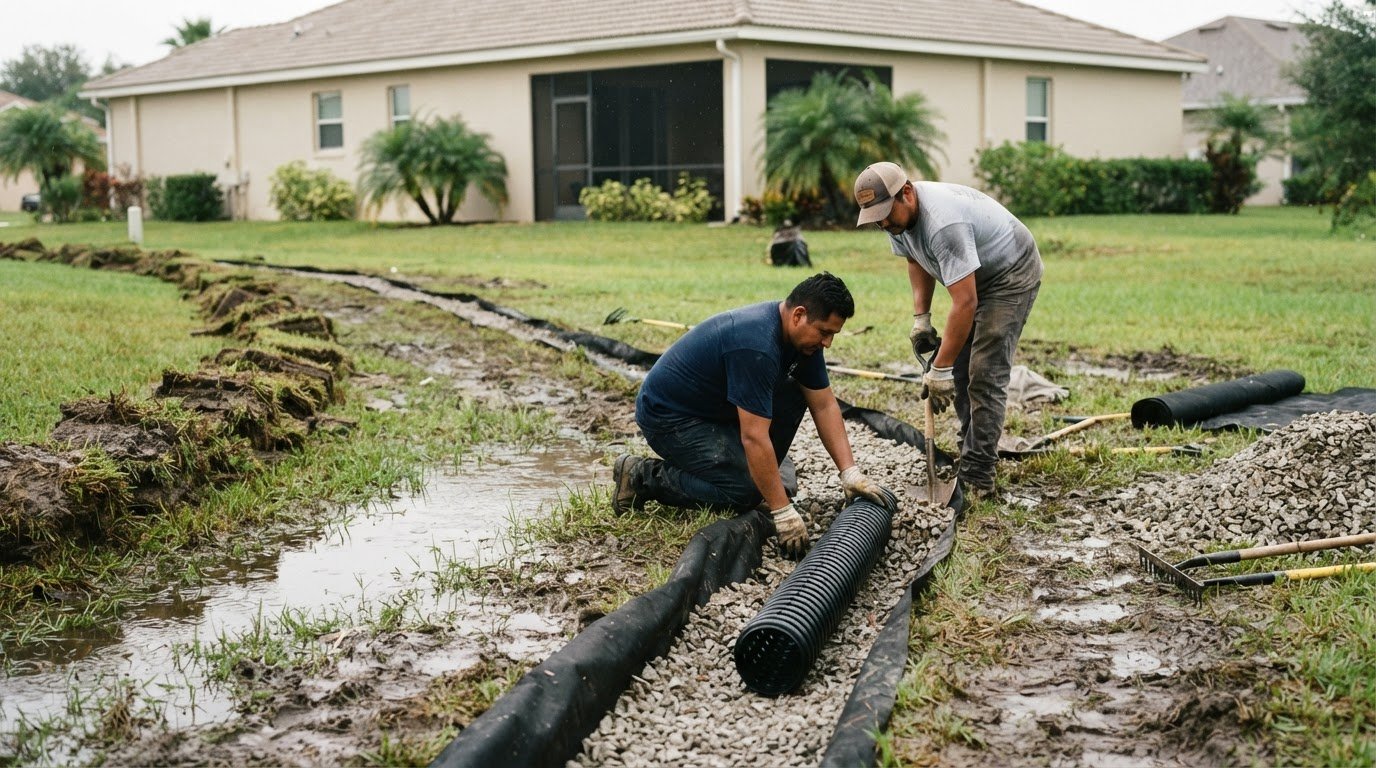
A French drain may suit water collecting in or seeping into a low lawn area. It consists of a gravel-filled trench, often with perforated pipe, that carries water toward a lower outlet. Without a lower area nearby, water won’t flow away through the system. A trench drain can intercept surface flow, while a catch basin collects runoff at a pooling point. Choose a system based on water volume, location, and discharge route.
Checking Local Drainage Requirements and Costs
Before changing an outlet, identify where the water will discharge and whether the work affects neighboring land or a shared drainage path. Whether permits apply to yard drainage work or discharge depends on the project and destination; don’t assume every installation follows the same rule. Lawn drainage repair costs in Palmetto depend on the case and are given after a quote request; factors include the drainage method, excavation, materials, and the outlet route.
Choose a French drain, trench drain, or catch basin only after tracing the runoff path. If excess watering contributes to pooling, irrigation and sprinkler systems can be adjusted to avoid adding water the lawn cannot absorb.
A French drain is an underground pipe system that collects water and redirects it elsewhere, such as to a street, rain garden, or area near a tree. Most use perforated plastic pipe set in a gravel-filled trench that slopes toward an exit. Installation involves digging the trench, laying the pipe, and backfilling with gravel. For large volumes, a drainage plan may include trench drains, catch basins, and sump pumps.
Top-dressing with compost and sand
Top-dressing can improve soil structure or fill a small lawn depression, but the material must suit the soil. Choose compost, sand, or a blend based on the problem you’re addressing.
- Identify the area before spreading anything. A shallow depression caused by settling or foot traffic may benefit from gradual filling, while compacted soil needs more than surface dressing. Compost can make heavy clay more porous, but adding sand to clay may worsen drainage. Match the material to the soil rather than assuming every soggy patch needs the same blend.
Applying Sand Top-Dressing
Use sand only when the soil and lawn can benefit from it; don’t apply it alone over heavy clay. After aeration, spread no more than half an inch of sand-and-compost top-dressing. Keep the layer thin and even so grass blades remain exposed. Sand can improve permeability, but an unsuitable layer may worsen existing drainage problems.
- Fill a small depression by marking the affected area about six inches beyond its edges on every side. Add topsoil or compost to raise the low spot, then keep the new surface level with the surrounding lawn. For a repair that needs to settle gradually, apply 1/2 inch or less of soil mix as a top dressing each week. Avoid burying grass under a thick layer.
Combining Sand and Compost
Blend compost with horticultural sand in a 1-to-1 ratio when a balanced top-dressing suits the soil. Apply the mixture after aerating, allowing it to work into the openings rather than forming a deep blanket. Coarse sand supports permeability, while compost supports root development. Keep the finished dressing even, and don’t use the blend to disguise a persistent grading problem.
- Limit organic matter to a thin layer; adding more than 1 inch can smother grass. Compost can improve soil structure and support roots, but it won’t redirect runoff from a lawn that slopes toward a house. If water repeatedly gathers in the same depression after filling, reassess the grade before adding more material. A series of light applications can build the surface without covering healthy grass.
- Observe the treated area after rain and adjust the next application accordingly. If compost improves the surface but water remains trapped below, the underlying soil or drainage route may still limit absorption. Keep the grass visible after each pass, and avoid repeated sand applications to clay. This measured approach protects the turf while improving the soil where the problem begins.
Dry creek beds and permeable pathways
Use a surface route when excess runoff crosses the lawn instead of soaking in. A dry creek bed or shallow swale can guide pooling water toward a suitable outlet.
Creating Dry Creek Beds
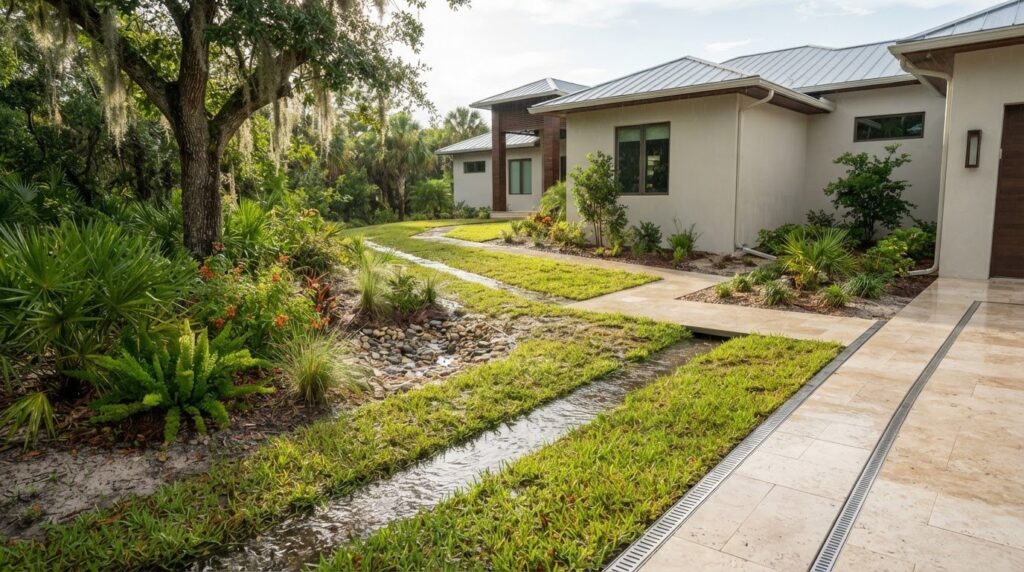
Trace water’s route across the ground after rain, then shape a downhill channel along its path. Line it with landscape fabric and landscaping rocks to create a dry creek bed. Keep the slope gentle and consistent so water can flow through. Don’t direct runoff toward a house or another area already affected by poor drainage.
- Choose the outlet before shaping the channel. Depending on the site, a dry creek bed can direct excess water toward a storm drain, garden bed, or property edge. For example, runoff from an uphill boundary may follow a rock-lined channel to a suitable lower outlet. Without a consistent downward slope, water may collect in the channel instead of flowing away.
Adding Shallow Swales
Shape a shallow swale when a broad, open route suits the lawn better than a rock-lined feature. Follow the natural water flow and maintain a gentle, consistent slope toward the selected outlet. A swale can move surface runoff past a saturated patch without a deep trench. Check that its path won’t shift pooling toward a neighboring area or the house.
- Observe the ground during rainfall before deciding where a swale should run. Water moving across a paved edge, for example, may need a channel to catch runoff before it spreads into the lawn. The route should connect the wet area to an outlet, not end at another low point. If water backs up at the end, revise the path rather than deepening a channel without a clear destination.
- Consider permeable materials for paths where runoff from a solid surface adds to lawn pooling. A surface that lets rain pass through can reduce the amount shed directly onto nearby grass. Consider how the path connects to the ground and existing drainage routes. A permeable section won’t solve a saturated area if water has nowhere to go afterward, so keep the outlet and surrounding landscape in view.
- After the next rain, review the full route from where water collects to its outlet. Look for new pooling beside the creek bed, along a swale, or at a path’s edge. If the channel directs runoff toward a garden bed, confirm that water follows the intended route instead of spilling onto the lawn. This helps show whether the surface solution suits the site or needs redesign.
Adjusting irrigation
During Florida’s summer rainy season, prevent irrigation from adding to stormwater by pausing scheduled watering whenever the lawn is already wet. After grass germinates, use deep, infrequent watering instead of daily light cycles.
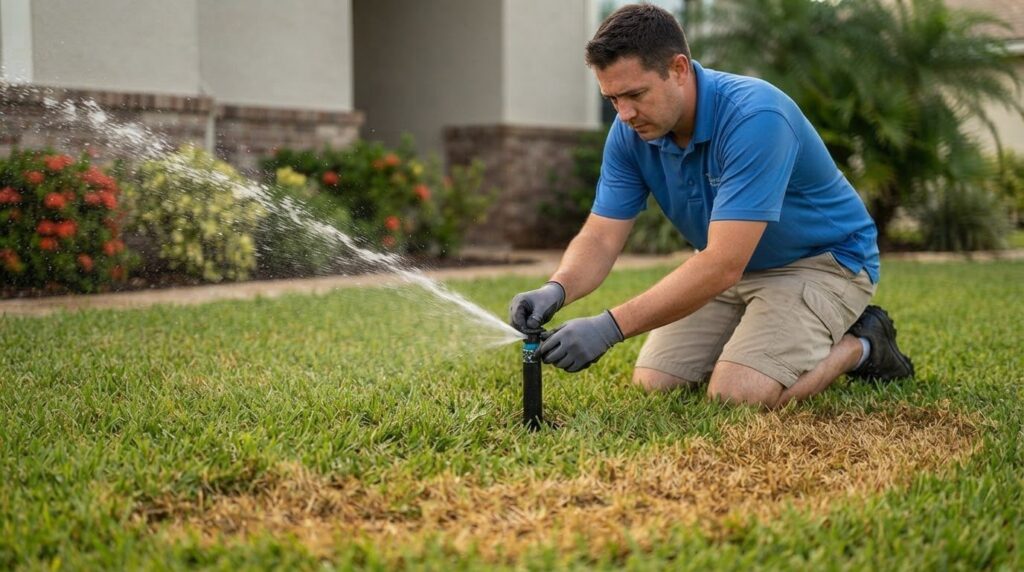
- Pause the sprinkler schedule when rain leaves the ground soggy. Let a wet lawn dry for at least three to five days before watering again. Check the grass and soil, not just the irrigation timer: puddles or saturated ground show that the landscape doesn’t need another cycle.
- Watch each sprinkler zone while it runs and note where the water lands. A head aimed at pavement, a fence, or one low patch can waste water and contribute to pooling. Adjust the spray direction to reach the intended lawn area, then see whether puddles form in the same place after watering.
- After grass germinates, replace frequent, light watering with deeper, less frequent irrigation. Daily, brief cycles can keep the surface moist without addressing deeper root needs. Match each cycle to the lawn’s condition, and pause watering when rainfall has supplied moisture. This reduces unnecessary water use while showing whether poor drainage persists.
- Distinguish irrigation patterns from rain-driven runoff before choosing another fix. If the same strip gets wet only after a sprinkler cycle, inspect its coverage and timing. If water collects after rain despite paused irrigation, grading, soil, or runoff across the property may be involved. Tracking the difference can prevent unnecessary changes to the watering schedule.
- Use a rain gauge or observe rainfall at the property, then adjust the controller instead of relying on a fixed routine. A shaded garden edge may stay damp longer than an exposed lawn, so one schedule may not suit every zone. Keep the system responsive to changing moisture, especially during repeated summer showers.
- Before heavy rain or a hurricane, suspend scheduled irrigation if the soil is already moist, then reassess after the rainfall ends. This won’t control runoff from the wider landscape, but it avoids adding sprinkler water to saturated ground. Persistent puddles after irrigation stops point to a drainage issue, not just a timer problem.
- When recurring wet patches trace back to uneven sprinkler coverage or an unsuitable schedule, schedule an irrigation system adjustment to align watering with the lawn’s moisture needs. If puddles remain after the system is paused, treat irrigation and drainage as separate parts of the problem.
Landscape By Design Of Palmetto
Landscape By Design Of Palmetto can help develop a coordinated landscape response when soggy areas persist despite irrigation adjustments or surface drainage changes. Landscape Design considers how water moves through the outdoor space, while Landscape Construction and Hardscapes and Retaining Walls can bring a considered plan to life. Irrigation and Sprinkler Systems can also address watering patterns that contribute to excess moisture.
This may be the right next step when recurring puddles, uneven ground, or runoff paths interfere with how you use the property. A cohesive approach can address function and appearance together, rather than treating each wet patch as an isolated problem. Contact Landscape By Design Of Palmetto to discuss your lawn’s drainage concerns and landscape goals.
Shape a Lawn That Handles Rain
Make the next rainfall useful information. Notice where water first gathers, which parts of the yard stay wet longest, and whether the damp area changes after irrigation is paused. These patterns can clarify whether you need a targeted adjustment or a more coordinated landscape plan. Solving soggy lawn issues in Palmetto means addressing how the property receives, moves, and absorbs water while keeping everyday use in view. The result should support healthy ground and a more inviting outdoor space.
A drainage improvement should feel integrated with the rest of the outdoor space, not like an isolated repair. Consider how paths, planting areas, and outdoor living spaces can work with the natural movement of water. When you’re ready to explore an approach tailored to your property, contact Landscape By Design Of Palmetto. A well-considered next step can help bring greater balance to the landscape and make the yard more comfortable to enjoy through changing weather.
Frequently Asked Questions
How do I install a French drain or catch basin to fix a soggy lawn?
First, identify where water enters the lawn and where it can safely exit. A French drain needs a lower outlet; a catch basin suits a specific collection point, such as a recurring puddle near a patio. Plan the route around structures and existing landscape features, and ensure the outlet won’t send water back toward the wet area. If the property lacks a suitable outlet, a drain alone won’t solve the problem.
When should I hire a drainage or landscaping contractor for a soggy lawn in Palmetto?
Bring in a landscape professional when water pools against the house, persists after basic changes, or calls for a drain or major regrading. A drainage issue affecting multiple properties or involving stormwater rules also warrants professional attention. Extensive fungal damage can signal deeper soil problems. For example, recurring water beside a foundation is more than a turf concern because it may put the structure at risk.
What plants and grass tolerate wet soil in Palmetto, Florida?
Bermudagrass is a warm-season grass that tolerates soggy conditions better than many lawn grasses. For a rain garden that receives runoff, consider moisture-tolerant native plants such as sedge, cardinal flower, and swamp hibiscus. Place them where water gathers periodically, rather than treating them as a fix for lawn-wide drainage problems. The right planting depends on whether the area stays wet or receives occasional runoff.
Where can I safely direct lawn drainage in Palmetto without flooding neighbors or waterways?
Plan an outlet that keeps runoff from spilling onto a neighbor’s property or flowing toward a waterway. An onsite rain garden or suitable garden area may receive redirected water if it can handle the flow without creating new pooling. Trace the route during rain and consider where excess water goes beyond the outlet. Local stormwater requirements may affect discharge choices, so don’t assume a street or property edge is automatically suitable.
Do Manatee County or Palmetto rules require permits for yard drainage work or discharge?
Permit requirements depend on the project and where the water will discharge. Before proceeding, identify the outlet and whether the work affects neighboring land or a shared drainage path.