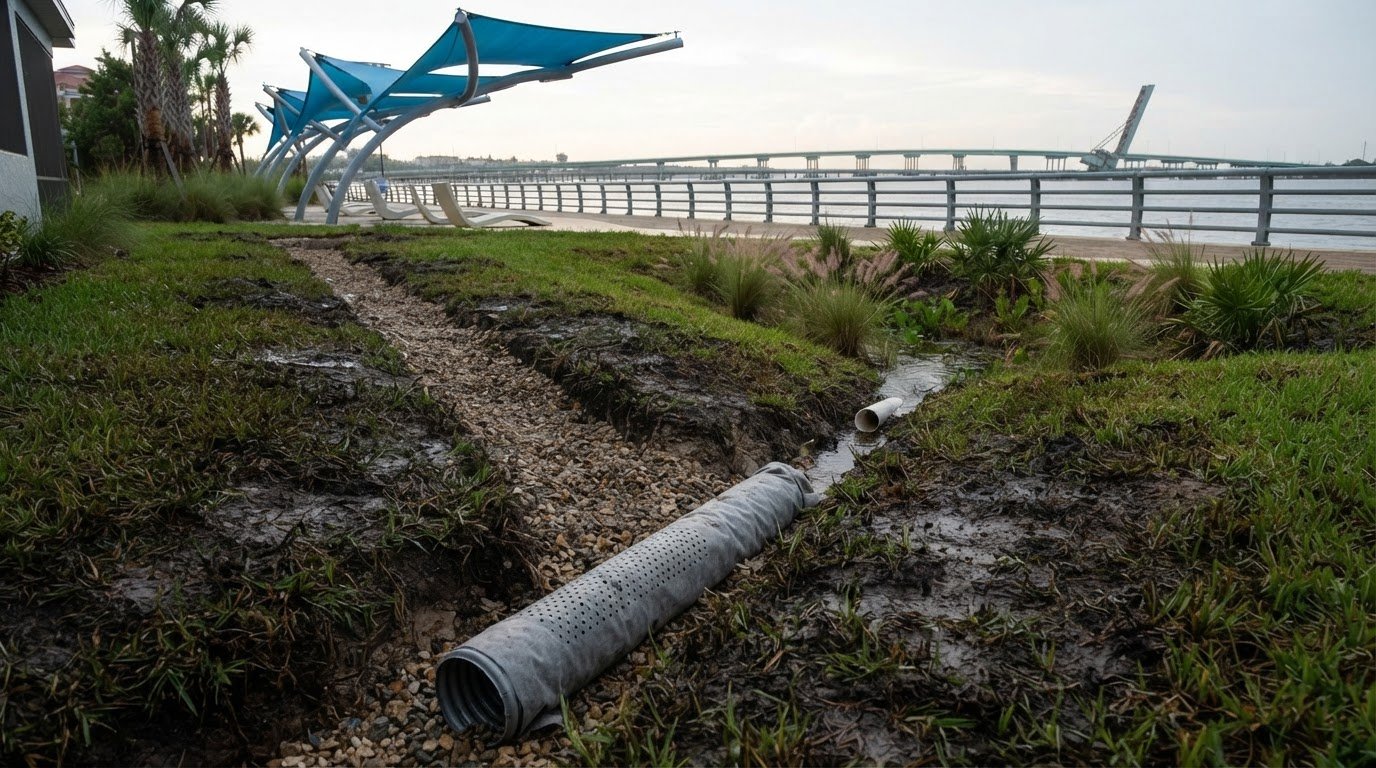
A familiar waterfront landmark can explain a place, but it can’t dictate how every yard drains. French drain installation in Bradenton begins with the conditions on the individual property, including where water collects and how the ground slopes. The city’s 1.5-mile Riverwalk offers a point of reference for Bradenton’s setting, not a template for residential drainage.
It makes sense to connect drainage concerns with local weather and location. Bradenton averages 56.28 inches of precipitation annually in the 1991-2020 climate normals, so understanding how water moves across a property is part of planning a considered landscape.
This article explains what a French drain does, how Bradenton’s location and the Riverwalk relate to the local context, and which site conditions matter when considering this approach. You’ll come away with a clearer sense of how drainage can fit into a landscape while preserving its function, character, and calm.
Key Takeaways
- Understand how a French drain collects and redirects water, and which parts of a property’s layout shape its design.
- Learn which site conditions influence installation pricing, from the route and length of the drain to the work involved.
- See why local rules and site details matter when planning drainage in Bradenton and Manatee County.
- Identify what makes a suitable discharge location and how to consider water flow across the property.
- Compare French drains with trench drains, dry wells, and other approaches to better match a solution to the drainage problem.
Table of Contents
- 3. What is a French drain and how does it work?
- 4. What factors affect French drain installation prices in Bradenton?
- 5. Bradenton & Manatee French Drain Regulations
- 4. Where should a French drain discharge water on a Bradenton property
- 5. How does a French drain compare with a trench drain, dry well, or other drainage solution
- Landscape By Design Of Palmetto
3. What is a French drain and how does it work?
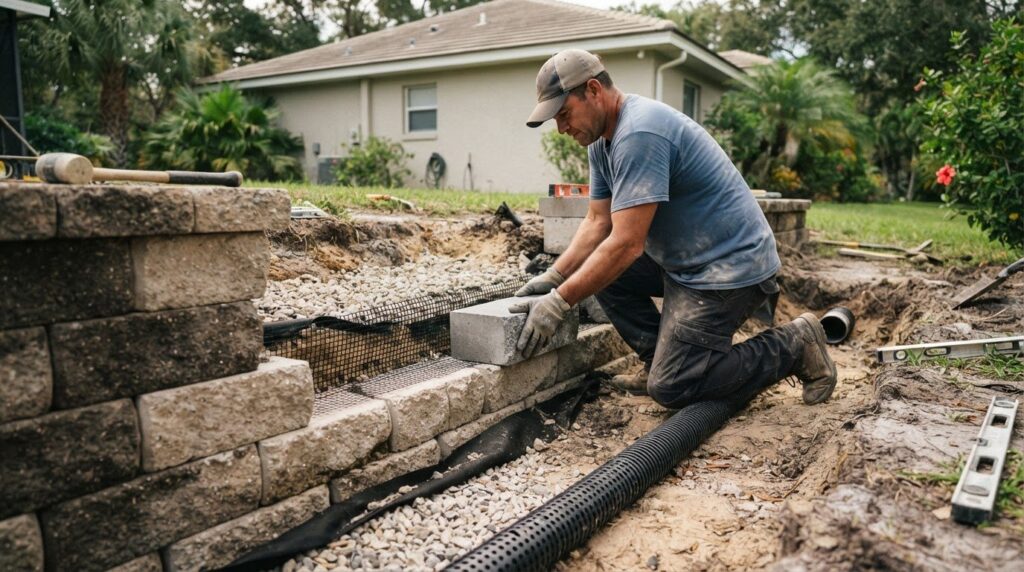
A French drain is a gravel-filled channel that collects subsurface water and guides it away. A perforated pipe sits within the gravel, allowing water to enter along the trench. The pipe then carries it toward a suitable outlet. Unlike a trench drain, which captures water at the surface, this system addresses moisture moving through the ground.
Picture a Bradenton lawn where rainwater repeatedly gathers beside a patio. A French drain can intercept water moving through the soil before it spreads toward the hardscape. Gravel creates an open path into the pipe, while filter fabric can help limit soil entering the drainage bed. The route and outlet determine how well the system serves that yard.
Water moves through the system in stages. It reaches the gravel-filled trench, passes through the pipe’s perforations, then follows the pipe to its outlet. The pipe needs a suitable slope so gravity can move the water. If the outlet sits too high or the route cannot direct the flow appropriately, the drain may not solve the pooling problem.
Bradenton’s local setting makes site conditions worth understanding. The city’s elevation is 16 feet, and its 1991-2020 climate normals show 56.28 inches of annual precipitation. Those figures describe the wider area, not the slope or soil of a particular property. A design still needs to account for where water collects, how the ground falls, and where the water can go.
Rainfall also varies through the year in Bradenton. The 1991-2020 climate normals record 9.03 inches in June, 8.91 inches in July, and 10.07 inches in August. A drain’s role is to manage water moving through the ground, not to make every surface impervious to heavy rain. For example, a low lawn corner may need a different drainage route than a wet strip beside a home.
Bradenton’s 1.5-mile Riverwalk provides a familiar local landmark, but it doesn’t determine drainage design on nearby private lots. Each property has its own elevations, planting areas, hardscape, and water flow. French drain installation in Bradenton therefore begins with tracing the water’s path, identifying where it gathers, and planning a route toward an appropriate discharge point. The finished system works as part of the site, not as a standalone trench.
4. What factors affect French drain installation prices in Bradenton?
The price depends on the project and is provided after a quote request. Key cost factors include the drain’s route, excavation conditions, materials, site access, and restoration. A short, direct route through open lawn, for example, differs from one that crosses established planting beds and paved areas. The design and work required determine the estimate.
Route length and layout shape the excavation work. A drain for one persistently wet corner may need less trenching than a route that follows a long side yard and bends around a patio. Turns can affect the layout and installation time. A clear plan identifies where drainage begins, how the route fits the property, and where water can discharge.
Ground conditions also affect the work. Dense roots, compacted soil, or existing hardscape can make excavation more involved than digging through clear, accessible ground. A trench near a mature tree’s root zone, for instance, calls for careful planning to protect the landscape. The material to remove and the effort needed to protect surrounding features both affect project scope.
Access matters, too. Work may be more straightforward when equipment and materials can reach the trench directly than when they must pass through a narrow gate or around a finished courtyard. Existing irrigation lines, lighting, and other features also influence the route. A thoughtful layout accounts for them before excavation begins.
Material choices contribute to the estimate. The pipe, drainage aggregate, and filter fabric should suit the system design and site conditions. A route collecting water across a broad area may need more material than a focused run beside one garden bed. The design should match the drainage need without adding unnecessary length or components.
Surface restoration is another consideration. A trench through turf needs different finishing work from one crossing decorative stone, planting, or a paved walkway. In a Bradenton yard, restoring the edge of a garden bed may take more care than working in open lawn. The estimate reflects both installation and the finishing needed to integrate the route into the property.
For a useful estimate, the project scope should define the problem area, route, access, existing features, and intended discharge point. These details help distinguish essential work from optional landscape changes. If drainage planning connects with a broader outdoor redesign, coordinated landscape planning can help align the route with the property’s layout and finished appearance.
5. Bradenton & Manatee French Drain Regulations
For French drain installation in Bradenton, permit requirements depend on the property’s jurisdiction and the proposed work. The project name alone does not settle the question. First distinguish a property within the City of Bradenton from one in unincorporated Manatee County. Then describe the full scope, including excavation, connected improvements, and the planned discharge point. These details determine which local review, if any, applies.
A small drainage trench in an existing yard differs in scope from work that changes grading or connects to other site features. A route beside a lawn, for example, may raise different considerations from excavation near a retaining wall or paved area. The drain’s relationship to the landscape matters as much as the pipe and gravel. A clear project description helps identify relevant questions before work begins.
Plan the discharge point carefully. Directing water to a suitable area on the same property presents a different site plan from sending runoff toward a street, drainage facility, or neighboring parcel. Do not assume water can be redirected across a property boundary. Document the intended destination along with the drain route so local requirements can be assessed against the actual proposal.
Existing infrastructure can also affect the review. A trench near irrigation lines, utility services, a driveway, or a retaining wall raises practical coordination questions. A route designed to avoid a sprinkler line, for example, differs from one that requires changes to existing hardscape. Include nearby features when defining the project. A simple sketch showing the house, trench, property edges, and outlet can clarify the scope.
Before excavation, organize four details: the property’s city or county jurisdiction, the proposed trench route, nearby structures or systems, and the discharge location. Be specific. “Drainage in the backyard” gives less useful context than “a trench along the east garden edge, ending within the property.” This helps identify whether local permitting or other review applies without assuming every French drain follows the same rule.
Assess Bradenton and Manatee County projects by location and scope, not with a blanket yes-or-no answer. A drain that changes grading, approaches a boundary, or connects with other drainage features warrants closer attention than a contained landscape adjustment. Record the project details before work starts and use the applicable local review process to resolve requirements for that property. The planned route and discharge point are central to the assessment.
4. Where should a French drain discharge water on a Bradenton property
A French drain should discharge where water can move away without creating another drainage problem. On a Bradenton property, that might be a suitable lower area within the same lot, provided the water can flow there and the ground can receive it. The outlet’s position matters as much as the trench route. A low lawn area, for example, may be more suitable than a spot beside a home or patio.
Start by tracing the ground’s natural slope from the proposed outlet. Water needs a path away from the area being drained, not back toward a foundation, walkway, or planting bed. If a side yard slopes toward the house, an outlet there could return water to the problem area. Account for nearby structures and the direction water will travel after leaving the pipe.
Property boundaries require particular care. An outlet near a fence can send water toward a neighboring yard, especially if the ground slopes across the boundary. A better layout directs flow to a suitable area on the property and avoids concentrating it beside a neighbor’s home or garden. For example, a route ending near the middle of a landscaped lawn may be preferable to one discharging at the fence line.
Consider the receiving surface, too. Loose soil, turf, planting beds, and pavement handle water differently. A concentrated outlet onto bare soil may create a channel or wash away mulch, while pavement may carry water toward a doorway or garage. The design can direct water to a stable, landscaped area that disperses it without undermining a path or saturating plants.
Keep the outlet accessible for inspection and maintenance. If it is hidden under dense shrubs or behind a fixed feature, leaves and soil can make it harder to tell whether water is leaving the pipe. A visible termination near an open garden edge provides a practical endpoint. Keep it clear of walkways where standing water could disrupt everyday use.
Before finalizing a Bradenton drainage plan, map the trench, outlet, property edge, and nearby features such as a driveway or irrigation system. Consider how water behaves during heavy rain, not only on a dry afternoon. An outlet that seems clear in dry weather may be overwhelmed when the receiving area is saturated. A good location completes the flow path, protects the landscape, and avoids shifting the original pooling problem elsewhere.
A French drain outlet should be planned for collected surface water, not treated as a solution for a sewer failure. In Bradenton, the initial estimated wastewater discharge from the damaged sewer force main exceeded 300,000 gallons. Keeping the distinction clear helps ensure that an outlet plan addresses the property’s drainage path without confusing it with wastewater infrastructure.
Manatee County crews stopped the discharge at the damaged sewer main Tuesday evening. For property drainage, focus on where water from the trench will go, whether that receiving area can handle it, and whether flow could affect nearby structures or neighboring land. If the problem appears connected to a damaged sewer main rather than ordinary surface pooling, the French drain outlet is not the appropriate remedy; the source of the discharge needs to be addressed separately.
5. How does a French drain compare with a trench drain, dry well, or other drainage solution
The right drainage method depends on where water appears and how it needs to move. A French drain addresses subsurface water, while a trench drain captures runoff at the surface. A dry well stores water underground so it can disperse into surrounding soil. These systems solve different problems, so matching the method to the location matters more than choosing a familiar name.
Consider a Bradenton patio where rainwater runs across pavers and collects at the edge. A trench drain with a grated channel can intercept this visible surface flow. It suits paved areas where water follows a defined path. A French drain is more relevant when the ground stays wet below the surface, such as a lawn strip that remains soggy after rain.
A dry well works differently: it receives water and temporarily stores it underground, allowing it to seep into the surrounding soil. Its effectiveness depends on the site’s ability to absorb water. A dry well might suit downspout runoff that needs a contained destination, while a French drain can collect water along a broader underground route. The outlet and soil conditions help determine which approach fits.
Other options can address simpler patterns. Regrading adjusts the surface so runoff moves away from a low spot or structure. Extending a downspout carries roof runoff farther from the building. If a shallow puddle forms near a roof outlet, correcting the discharge point may be more direct than installing a buried system. If water collects across a wider lawn, regrading alone may not address subsurface moisture.
Some properties benefit from combining methods. A trench drain could capture water at a driveway edge and direct it toward an appropriate drainage route. A French drain might address a separate saturated planting area. Combining systems requires a coordinated plan, so one outlet does not simply transfer the original problem to another part of the yard.
To compare options, first identify whether water runs across a surface, seeps through soil, or arrives from a roof outlet. Then locate where it gathers, note nearby hardscape and planting, and determine a suitable destination. Those observations distinguish a trench drain’s surface collection from a French drain’s subsurface collection or a dry well’s underground storage. For a coordinated approach to drainage and outdoor layout, plan your landscape design around the property’s water patterns.
Additional wastewater overflows occurred at other locations in the collection system while crews managed wastewater flows. This is a distinct issue from choosing a yard drainage method. A French drain, trench drain, or dry well addresses a property’s water pattern, while the reported overflows concern wastewater in a collection system. The report does not establish that a particular yard drainage choice caused the overflows or would resolve them. Keep the water source and intended destination clear when comparing options, and avoid treating a surface or subsurface yard drainage system as a solution to a wastewater collection problem.
Landscape By Design Of Palmetto
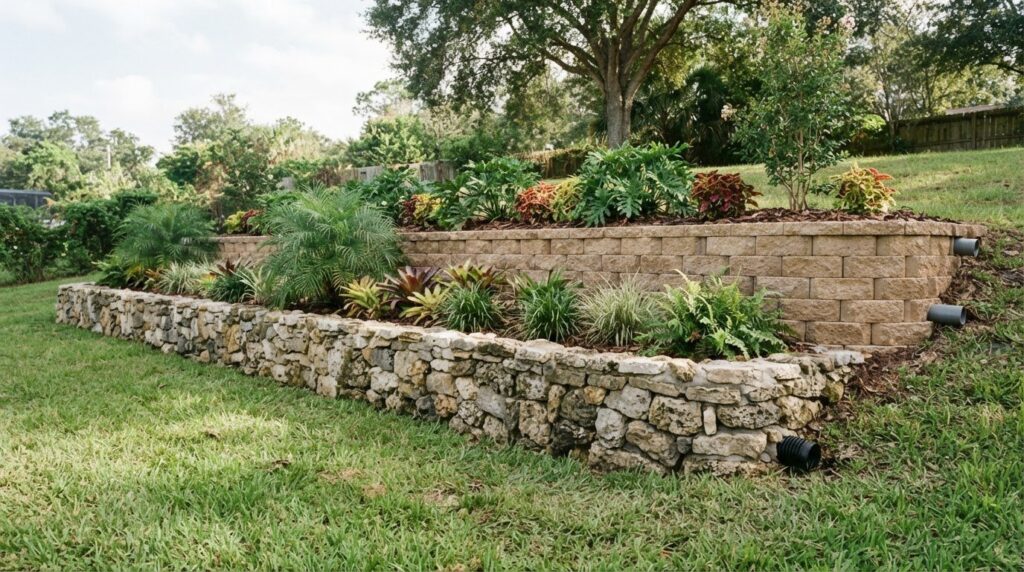
Landscape By Design Of Palmetto can help you consider drainage as part of your wider outdoor design in Palmetto, Parrish, Bradenton, and Sarasota. If you’re weighing a French drain against another approach, the surrounding grade, planting, and hardscape all matter. Landscape Design can shape a cohesive plan, while Hardscapes and Retaining Walls can address how built features relate to the property. This perspective is useful when drainage overlaps with a patio, garden, or uneven area. Contact Landscape By Design Of Palmetto to discuss bringing your landscape plans together.
Shape a Landscape That Works With Water
A considered French drain installation in Bradenton should address more than one wet patch. The route and destination can affect how you use nearby lawns, garden beds, paths, and gathering spaces. Treat drainage as part of the overall landscape design so practical decisions and the finished setting work together.
Landscape By Design Of Palmetto can bring these considerations into a cohesive outdoor plan for properties in Palmetto, Parrish, Bradenton, and Sarasota. Landscape Design, Hardscapes and Retaining Walls, and Irrigation and Sprinkler Systems address different elements of a property. Their relationship matters when planning changes around drainage, planting, and built features.
Ready to consider the next step for your property? Contact Landscape By Design Of Palmetto to discuss your landscape plans and move toward a more thoughtfully designed outdoor space.
Frequently Asked Questions
How do Bradenton soil conditions, groundwater, and rainfall affect French drain design?
Soil absorption, groundwater depth, and rainfall patterns shape the drain’s route, depth, and discharge plan. Soil that absorbs water slowly can keep a receiving area saturated, while a high groundwater level can limit how much water the ground accepts. Bradenton averages 113.6 days per year with at least 0.01 inches of precipitation, based on 1991-2020 climate normals. For example, a low garden bed that stays wet after rain needs a different plan from a brief puddle on compacted soil.
What are the steps for installing a French drain?
Trace where water collects, plan a route with a suitable slope to an appropriate outlet, then install a gravel-filled trench with perforated pipe. Filter fabric can help limit soil entering the drainage bed.
What are common French drain problems and maintenance needs in Florida?
An unsuitable slope or an outlet that sits too high can prevent water from moving through the drain. Filter fabric can help limit soil entering the drainage bed, and a French drain manages subsurface water rather than all surface pooling during heavy rain.