A beautiful front yard begins below the surface, not with the showiest plant. A front yard makeover in Parrish works best when design and installation are planned together: prepare beds for healthy roots, choose plants suited to heat and open sun, and consider drainage and irrigation from the start. Parrish’s intense sun, sandy soils, and heavy summer storms make these choices especially important.
It’s natural to want a welcoming entrance that looks polished without becoming difficult to maintain. A well-planned landscape brings planting, hardscape features, and practical irrigation into balance while accounting for your property’s shape and the way rain moves across it.
This guide explains what a thoughtful makeover can include, how site conditions shape the design, and what to consider when choosing plants and materials. It also follows the project from initial ideas through installation, helping you make decisions with a clearer picture of the finished landscape.
Key Takeaways
- Plan the front yard as a complete composition, balancing planting beds, paths, hardscape features, lighting, and irrigation.
- Account for Parrish’s intense sun, sandy soils, heavy summer storms, and drainage patterns when shaping the design.
- Choose Florida-friendly plants and palms suited to heat and open sun, while considering how irrigation coverage and seasonal rain affect placement.
- Prepare landscape beds to support root health and long-term plant growth rather than focusing only on the finished appearance.
- Bring design and installation together to create a cohesive entrance that responds to your property’s layout and outdoor needs.
Table of Contents
Landscape design for custom outdoor spaces
A custom front yard begins with a plan for the whole property. A front yard makeover in Parrish should connect the entrance, planting areas, paths, and lighting in one composition. Each element needs to suit the home’s architecture and the site’s natural conditions. That balance makes the finished space feel intentional, not assembled in separate stages.
Start by mapping the home, driveway, entry path, existing trees, and planting beds. Note the ground’s slope and where rainwater travels. On larger or sloped Parrish lots, drainage patterns should inform the plan. These observations guide bed placement, hardscape layout, and irrigation coverage before installation, helping new features work with the way water moves across the yard.
Manatee County landscaping, irrigation, and tree permit requirements depend on the proposed work and the property’s jurisdiction. Planting, irrigation installation, and tree alterations are different project scopes. Identify the planned activities and determine which local reviews apply before work begins.
For drought-tolerant landscaping, consider Florida-friendly plants and palms suited to heat and open sun. Their placement should also reflect the site’s sandy soil, drainage, and irrigation coverage. Group plants according to their growing conditions instead of treating every bed as identical.
For Florida heat, rain, and sandy soil, choose open-sun plants and prepare beds to support healthy roots. Set planting zones according to sunlight and account for heavy summer storms when arranging the site. Match irrigation coverage to the layout. Paths and hardscape features can define the entrance while leaving room for planting and water flow.
Florida-Friendly Landscaping rebate programs in Manatee County depend on whether a current program offers incentives and which practices qualify. Before including a rebate in your project plans, review the program’s eligible work and application requirements.
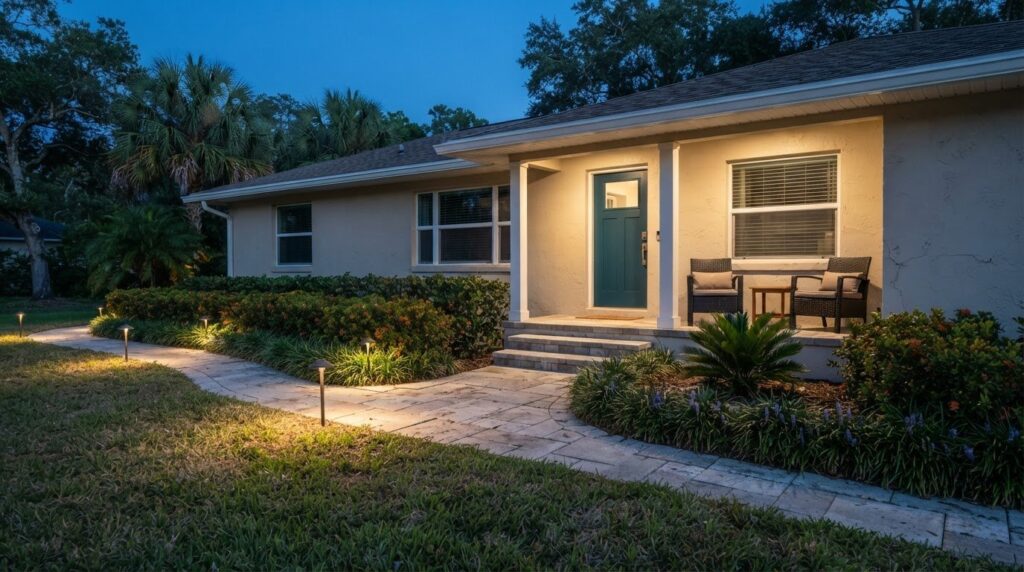
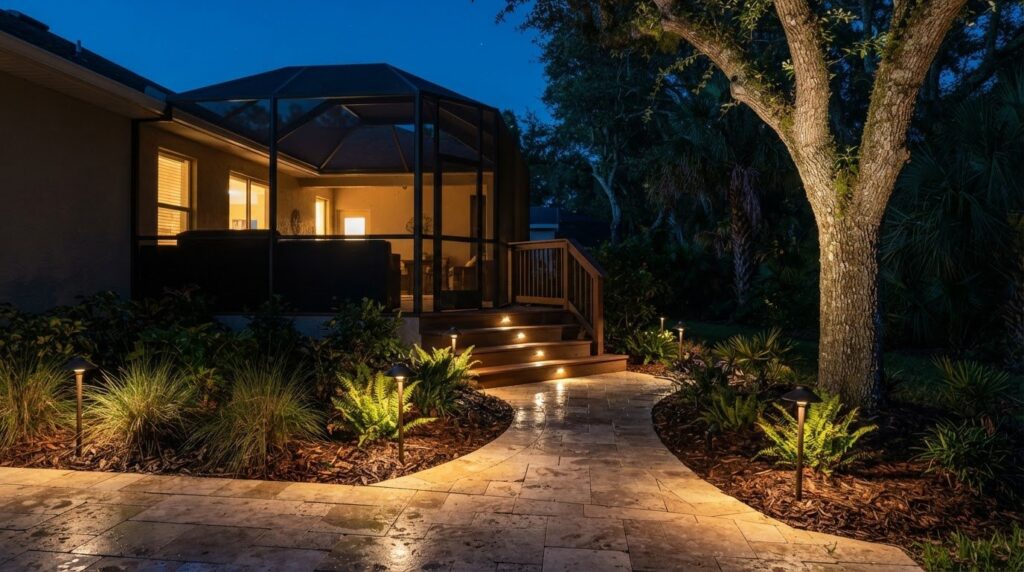
Design and installation work best as connected stages. First, translate your priorities into a site plan showing beds, circulation, and hardscape placement. Prepare planting areas for healthy roots and long-term growth, then coordinate irrigation coverage with the selected planting zones rather than adding it as an afterthought. Landscape lighting can also be integrated to highlight paths and focal areas after dark.
For a cohesive result, make decisions in sequence: assess the site, define its functional zones, select suitable plants, and coordinate installation. This gives each feature a purpose. The entry stays welcoming, planting beds suit Parrish conditions, and the overall design reflects the home rather than following a generic template.
Landscaping service in Parrish and nearby communities
Front yards in Parrish range from compact entry gardens to broad new-construction lots. Begin by identifying your priorities: a defined walkway, planting around the entry, or a more complete landscape composition. On larger or sloped lots, drainage patterns also shape where beds and hardscape features belong. A site-specific plan helps each part of the design fit the home and its setting.
When comparing sod, native plants, mulch, and artificial turf, look beyond material prices. The project area, preparation needs, planting density, irrigation coverage, and future upkeep all affect the comparison. Sod creates continuous lawn coverage, while plant beds and mulch serve different landscape purposes. Artificial turf has its own installation and maintenance considerations, so compare options by intended use and full project scope.
For homes in communities with an HOA, front-yard plans may need to follow the community’s design rules. Review the applicable covenants and approval process before choosing visible features such as lawn alternatives, planting beds, edging, or lighting. This helps align the proposed layout with neighborhood expectations before installation is planned.
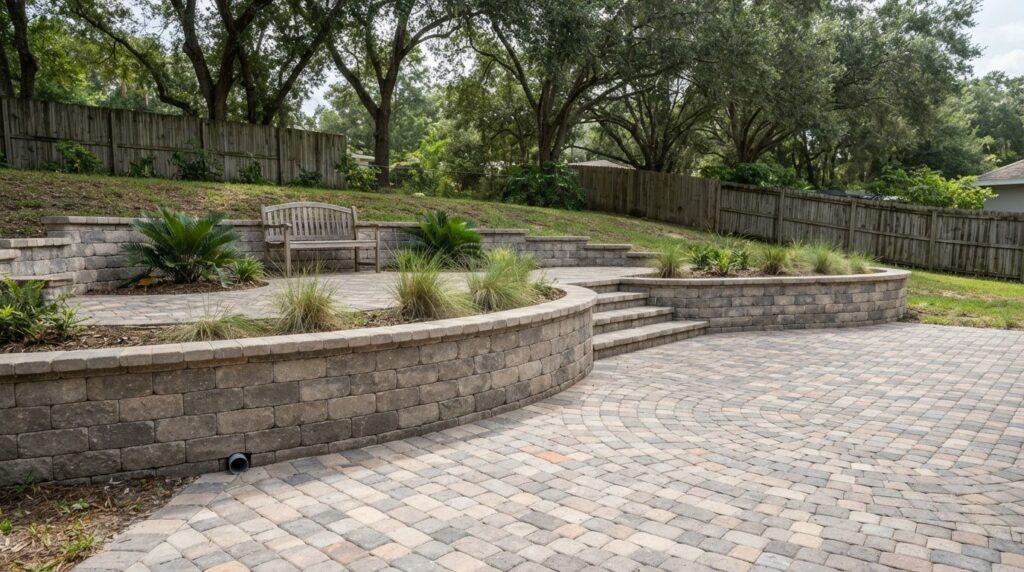
Drainage deserves attention on sloped or broad Parrish lots. Observe where rainwater travels and collects, then incorporate those patterns into bed placement and the site layout. For example, a planting bed should not obstruct an existing flow path. Planning drainage alongside landscape construction keeps new features suited to the property’s conditions.
New construction often starts with an open site and few established landscape features. On a larger lot, divide the plan into zones: the main entrance, driveway edge, foundation planting, and open lawn. Each zone can serve a distinct purpose while maintaining a consistent design. A site plan also coordinates planting and hardscape placement before individual elements are installed.
Landscape and lanai lighting can connect the front approach with outdoor living areas. Start with the route people use, such as the walkway from the drive to the entrance. Then consider focused illumination near steps or architectural details, with softer light near a lanai. A coordinated layout gives each fixture a purpose without making the composition feel crowded.
Phased landscaping can organize a larger project into practical stages. One phase might establish the entry path and foundational planting; another could add lawn areas, lighting, or more beds. Set the overall layout first so later work follows the same design instead of competing with earlier choices. This approach can help organize a new home’s yard when it needs several distinct landscape elements.
For a project that needs coordinated planning across planting, hardscape, and lighting, consider planning a complete front yard landscape around the property’s layout and priorities.
Project consultation and installation process
A clear installation sequence turns a front-yard concept into coordinated work. Begin with a site walk to record the existing lawn, palms, planting beds, driveway, and entry path. Note which features will stay or be replaced, and where new sod or mulch belongs. These decisions guide preparation and keep installation aligned with the intended design.
During consultation, explain how you use the yard. You may want an open lawn, a defined route to the front door, and planting near the foundation. The plan should identify those priorities and connect them to the property’s layout. A project drawing or written scope can clarify work areas, materials, and installation order before work begins.
Preparation comes before visible planting. Clear the designated area, remove unwanted growth, and shape the ground for the planned surface. If the design includes sod, prepare an even base that is ready for installation. Check how the prepared area meets walkways and bed edges. A neat transition at the driveway or front path helps the finished lawn look deliberate.
Sod installation depends on a prepared, well-shaped area and careful placement. Lay pieces close together across the planned lawn, avoiding gaps and overlapping edges. Fit the sod around curves and borders, then inspect seams and transitions. If the design includes planting beds, keep their edges distinct from the lawn. That separation gives the sod a clean outline and preserves room for mulch or plants.
Palm installation or replacement calls for deliberate placement within the overall composition. Consider the palm’s position beside the entry, along a driveway, or within an existing bed. Prepare the selected area and account for nearby paths, lawn, and planting. For a replacement, plan how the cleared space will connect with surrounding features. A palm should feel like part of the design, not an isolated addition.
Mulch finishes planting beds and defines their edges. First, shape each bed to follow the design and distinguish it from lawn or paving. Then spread mulch evenly across the prepared area, keeping the bed’s outline clear. For example, a curved bed near the entry can soften a straight walkway while framing foundation planting. Mulch should complement the layout, not hide unfinished edging.
Installation order matters. Complete site preparation and grading before placing sod, palms, or mulch. Install larger landscape elements before finishing smaller bed details, so later work doesn’t disturb completed areas. Then review the front approach from the driveway and entry path. Check that lawn edges, palm placement, and mulched beds form a coherent composition.
Close the project with a walkthrough of the completed scope. Compare the installed features with the agreed layout, paying attention to transitions between sod, planting beds, and hardscape. This final review helps identify any areas that need a finishing adjustment before the project is complete.
Front yard landscaping ideas for homes in Parrish, Florida
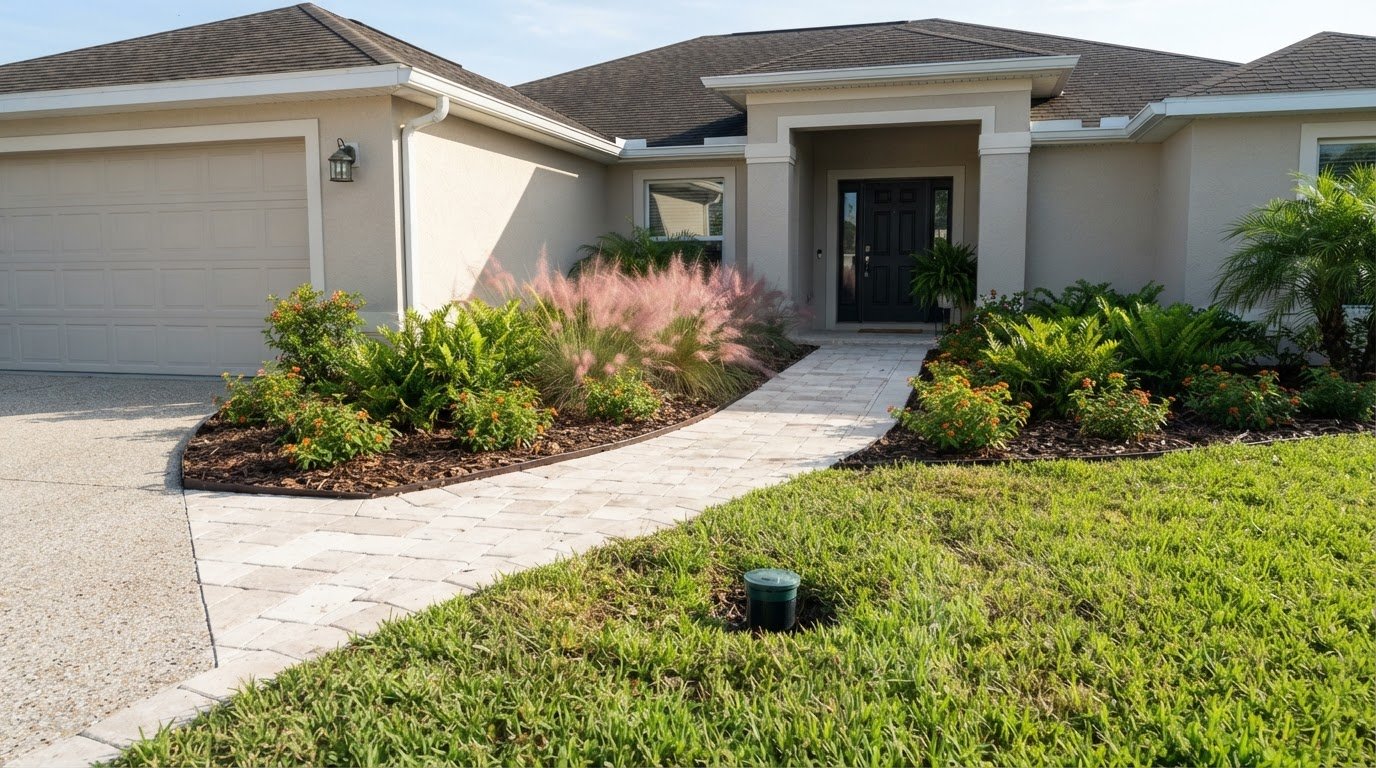
Shape the entrance around the way people approach the home. A curved path can soften a broad lawn, while a straight walkway creates a formal line toward the front door. Frame either route with planting beds that follow its direction. This visually connects the driveway, walkway, and entry without crowding the house frontage.
Let the home’s architecture guide the layout. A low-profile home may suit broad, layered beds, while a taller entry can benefit from vertical accents. Repeat a palm or similar upright form near the driveway and entry to create rhythm. Balance those accents with lower planting so the front elevation remains visible from the street.
Define useful edges with hardscape details. A stone or paved border can separate a planting bed from lawn and give a walkway a finished outline. A small landing near the front door, for example, creates a clear transition between path and entry. Keep its shape consistent with nearby lines, such as the driveway edge or porch steps.
Build visual depth by arranging plants in layers. Place low groundcover at the front of a bed, medium-height plants behind it, and taller forms closer to the house. Vary leaf shapes and textures to add interest without relying on unrelated colors. Repeating a few plant groupings across the frontage helps separate areas feel connected.
Make a small frontage feel composed through restraint. Choose one focal feature, such as a specimen palm or distinctive entry bed, and leave open space around it. A crowded arrangement can obscure the front door and compete with architectural details. Use a limited palette and repeat its forms beside the walkway or driveway for a deliberate finish.
For a wider lot, divide the view into clear visual zones. A planting bed near the entry can anchor the home, while a separate border softens the driveway. Keep the transition between those areas open enough to preserve a broad view of the façade. Repeated edging or plant groupings can unify the zones without making them identical.
Consider the view from both the street and the front door. From the street, check whether the entry is easy to identify and focal plants frame rather than hide it. From the doorway, notice whether the path leads naturally toward the driveway. Adjust bed shapes and feature placement from both viewpoints to refine the composition.
Best Florida-friendly plants for a Parrish front yard
Plant selection in Parrish should begin with exposure, soil, and water. The area has intense sun, sandy soils, and heavy summer storms. Choose Florida-friendly plants and palms suited to heat and open sun, then match each selection to its intended position, such as an exposed driveway edge or sheltered foundation bed. This avoids treating every part of the yard as if it had identical growing conditions.
Start by dividing the front yard into planting zones. A sun-exposed bed near the driveway needs plants suited to open conditions. A foundation bed may have different light and drainage patterns. For each zone, consider how water moves during seasonal rain and whether irrigation reaches it. This site-by-site approach makes plant placement more deliberate than choosing varieties by appearance alone.
For a composed look, group plants with similar needs together. Place sun-tolerant choices in the most exposed bed, then repeat selected forms near the entrance or walkway. Palms can add height where open sun allows, while lower plants soften the edges beside paths. Repeating a planting pattern ties separate beds together without making every area look identical.
Drainage matters as much as sun exposure. Before finalizing a planting location, consider whether stormwater passes through, collects in, or drains away from the bed. Don’t place a plant solely because it suits the design sketch; its location should also fit the lot’s water movement. Coordinate that choice with irrigation coverage to account for both seasonal rainfall and planned watering.
Prepare each bed for healthy roots and long-term growth. Clear the planting area, shape the bed, and prepare its soil before installation. Arrange plants according to their mature form and available space instead of crowding them for immediate fullness. For example, a layered foundation bed can place lower plants near the front and taller palms farther back, leaving the home’s features visible.
Use these practical checks when narrowing plant choices:
- Exposure: Match sun-loving Florida-friendly plants to open, bright areas.
- Water movement: Place plants with drainage patterns in mind, especially near sloped areas.
- Irrigation: Align planting zones with the system’s coverage.
- Composition: Repeat a few plant forms across beds for a unified entrance.
A successful planting plan balances suitability with visual structure. In Parrish, heat tolerance alone isn’t enough; drainage and irrigation coverage also influence placement. Consider each plant’s role, from framing the entry to softening a walkway or anchoring a bed. For a front yard planting plan designed around these conditions, plan your Florida-friendly landscape as part of the complete outdoor composition.
Landscape By Design Of Palmetto
Landscape By Design Of Palmetto helps turn front-yard plans into cohesive outdoor spaces in Parrish, Palmetto, Bradenton, and Sarasota. Landscape Design shapes planting areas and paths around your property, while Landscape Construction brings planned elements together. Hardscapes and Retaining Walls define transitions, Irrigation and Sprinkler Systems support planting areas, and Landscape Lighting complements the entry after dark.
When you’re ready to turn ideas into a coordinated design, or give existing yard features a more unified direction, share your priorities, preferred features, and any site concerns. That gives the project a clear starting point. Contact Landscape By Design Of Palmetto to discuss your front yard plans.
Shape the Entrance You Want to Come Home To
A front yard makeover in Parrish can do more than refresh the view from the street. It can create a welcoming approach that feels connected to your home and suits the way you use your property. Decide which details matter most to you, whether that’s a clearer entry, more defined landscaping, or a cohesive look across the front of your home.
Landscape By Design Of Palmetto can help develop that vision through Landscape Design, then bring the setting together with Hardscapes and Retaining Walls or Irrigation and Sprinkler Systems where they suit the project. A considered plan gives each element a role and helps the finished landscape feel cohesive. Contact Landscape By Design Of Palmetto to discuss your front yard plans and take the next step toward an entrance that feels distinctly yours.
Frequently Asked Questions
What should I look for in Parrish, FL landscaping contractors and front yard makeover reviews?
Look for a clear design process, relevant project feedback, and services that match your goals. Landscape By Design Of Palmetto has a 4.7 customer rating from 21 Google reviews. The company serves homeowners in Parrish, Palmetto, Bradenton, and Sarasota. Reviews can help you understand customers’ experiences, while a discussion about your property clarifies how landscape design, hardscapes, irrigation, or lighting might fit your plans.
What are the steps and timeline for planning a front yard renovation in Parrish?
A front yard renovation begins with discussing your priorities and assessing the property, followed by design decisions and installation planning. Once installation starts, smaller yards typically take 2-3 days; larger or more complex projects may take up to a week or longer. The timeline depends on project size and scope. For a front yard makeover in Parrish, plan for design choices and site preparation before installation begins.