Sunken pavers don’t automatically need replacing. Paver patio repair in Bradenton can often restore the surface by lifting and resetting affected pavers, correcting the base, and replenishing the joint sand. Replacement makes more sense when pavers are too damaged to reuse or the underlying problem calls for more extensive work.
A dip is more than a visual flaw: uneven pavers may create a trip hazard or leave water pooling where it shouldn’t. It’s reasonable to wonder whether a repair will last, especially when soil movement, erosion, runoff, or poor compaction may be contributing to the settlement.
This guide explains how to distinguish repairable settling from damage that calls for replacement, and how the base condition shapes the decision. You’ll also learn how releveling can improve drainage and footing, what affects a close paver match, and what a careful repair process involves in Bradenton.
Key Takeaways
- Sunken pavers can often be lifted and reset when they remain in usable condition; replacement is more appropriate when the pavers themselves are too damaged to reuse.
- Lasting repairs address the base beneath a dip, not just the visible joints, and may involve rebuilding and compacting the base before relaying the pavers.
- Settlement linked to soil movement, erosion, runoff, or poor compaction can cause uneven surfaces, pooling water, and trip hazards.
- Releveling can improve drainage and footing, while matching older brick-style pavers depends on details such as color, texture, size, and weathering.
- Understanding the cause and extent of settlement helps determine whether a localized repair or broader replacement is the more suitable approach.
Table of Contents
Contractor reviews and project experiences
Reviews are most useful when they describe the work, not just show the finished surface. For paver patio repairs in Bradenton, look for details about whether the crew lifted settled pavers, corrected the base, and restored the joints. Those steps reveal more about the repair than a general claim of quality. A useful project account explains what changed and why.
Project size and layout shape the work involved. A compact rectangular patio with one settled corner may need a localized reset. A broad surface with curves, borders, steps, or several low spots takes more careful lifting and relaying. Matching the existing pattern matters: moving a few rows can affect the lines beyond the repair area. The material, access, and extent of settlement also influence the plan.
Pricing depends on the project’s size, layout, paver material, access, and the amount of base correction, and is given after a quote request. A small repair may involve fewer pavers, while widespread settlement can require lifting a larger area and rebuilding its support. Reviews that explain the repair’s scope help readers understand why projects differ, without relying on a generic price comparison.
Smaller residential paver projects in Bradenton are often completed in a few days. Timing depends on the repair area, the condition of the base, and whether the existing pavers can be reused. Florida rain can interrupt the work because wet conditions prevent proper compaction. When heavy rain arrives, pausing allows the base to be prepared under workable conditions rather than covered prematurely.
Before-and-after photos can show whether a repair addressed more than appearance. A useful project description might show a sunken patio edge lifted, its base corrected, and the pavers reset to meet the surrounding surface. Cleaning removes surface debris, but won’t correct settlement by itself. Reviews mentioning structural work, drainage adjustments, or joint restoration offer clearer evidence of the project’s scope.
For Florida patios, choose joint sand suited to the paver joints and installation, and follow its product directions. Sealing repaired pavers isn’t required, but it can help stabilize joint sand and protect the surface. The choice depends on the paver material, existing finish, and desired appearance, so treat sand and sealer as separate decisions.
When comparing project experiences, distinguish a surface refresh from a base repair. Fresh joint sand may improve the appearance of stable pavers, but it won’t correct a settled foundation. A well-documented repair explains the sequence: assess the affected area, lift pavers carefully, correct the support, relay the pattern, and finish the joints. That account links the visible result to the work beneath it.
Base preparation and compaction
A durable repair starts beneath the pavers, where settlement, erosion, and uneven support can compromise the finished surface. In Manatee County, correcting and compacting the base helps address conditions that allow pavers to sink.
Base Correction
Base correction means addressing the support beneath affected pavers before relaying them. The work can include lifting the area, rebuilding its base, and adjusting the slope so the surface sits evenly. Check whether the repair addresses the underlying dip, not just the visible joints. Re-sanding alone may conceal a sunken base temporarily, but the dip can return.
Florida rain, erosion, tree roots, and irrigation runoff can contribute to settlement. Each cause points to a different condition beneath the surface. Runoff, for example, may wash supporting material away, while roots can disturb paver alignment. Correcting the base requires attention to the affected area and its relationship to the surrounding patio, walkway, or driveway. Relaying pavers without addressing the support can leave the uneven section unresolved.
Base Inspection and Compaction
During an inspection, the repair area is opened so the base condition can be assessed directly. Loose or displaced material, erosion, and changes in slope help explain why pavers settled. Pavers that start sinking a year or two after installation may indicate a compaction problem. Inspection also helps determine whether the work should stay localized or extend into adjoining pavers.
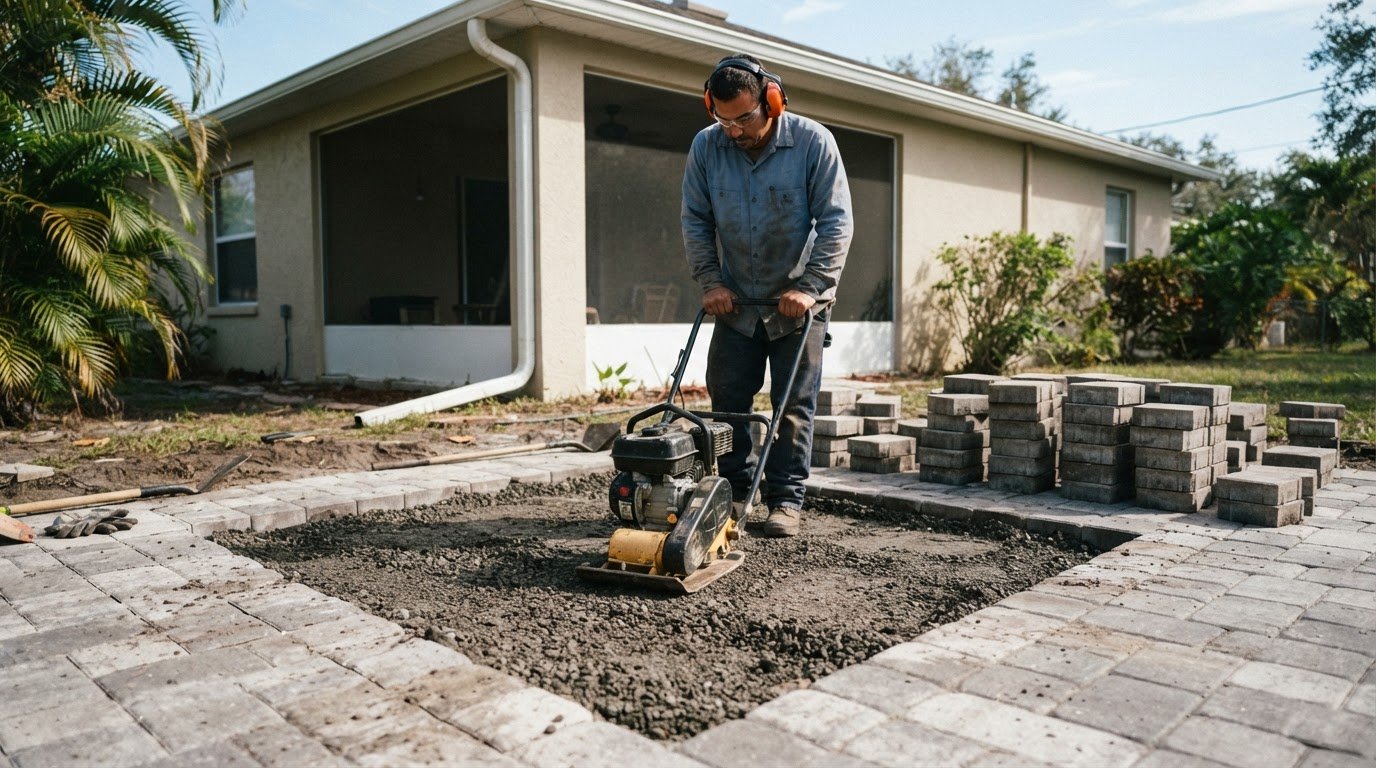
Compaction should be built in lifts rather than treated as a final pass. The recommended approach is to compact the base in lifts to 95% Proctor over a geotextile separation layer. That layer separates the base from the soil below. In a Bradenton installation, a 4-inch total base system consists of 2 inches of compacted base sand and 2 inches of concrete paver, with depth adjusted for site conditions.
Figures and general guidelines describe a system, not a universal repair prescription. The right correction depends on the exposed base, site conditions, and level needed to meet surrounding pavers. A patio corner beside a settled edge may need a different correction than a broad low area crossing a driveway. The completed surface should sit evenly and follow a corrected slope, rather than simply filling the visible dip.
During a repair, the sequence matters: inspect the exposed base, rebuild and compact it, correct the slope, then relay the pavers. New joint sand stabilizes the reset surface. Wet conditions prevent proper compaction, so heavy rain can pause paver work. This protects the quality of the base preparation that supports the finished surface.
Bradenton soil and fill-related paver settlement
Bradenton pavers can become uneven as soil settles, weather affects the ground, or everyday use shifts the surface. Don’t infer permit requirements from the word “repair” alone. Requirements depend on the project scope and address, so confirm them with the relevant local building officials before work begins.
Leveling Shifted Pavers
Leveling begins by identifying where the surface has moved and how far the uneven area extends. A low strip across a walkway may need a different repair area than a settled corner beside a pool deck. The pattern of movement can help distinguish isolated shifting from broader soil settlement. The aim is to restore a consistent surface without disturbing stable pavers unnecessarily.
Builder fill can settle after installation and contribute to uneven pavers. That timing may help explain why a newly completed patio later develops a dip, though the location and extent of settlement still matter. A low spot beside a concrete edge, for example, may require attention to the transition as well as the pavers themselves.
Settlement can change how water moves across a patio. If a depression holds water after rain, the repair plan should consider drainage as well as the level of the pavers. Soil movement, weather, and everyday wear can each contribute to shifting or cracks. Looking at the surrounding surface helps reveal whether the problem is localized or continuing across a larger area.
Repairing Settled Pavers
Repairing settled pavers can involve lifting the affected units, rebuilding the base, leveling the support, and reinstalling the pavers. This approach can preserve usable material while correcting the surface beneath it. The work depends on whether settlement is limited to a small patch or has spread into adjoining rows, edges, or a walkway.
A complete repair follows the movement rather than treating only the visible dip. The affected pavers are lifted, the support is corrected, and the units are reset to meet the surrounding surface. Reusing the original pavers can help maintain the existing pattern. If units are cracked or can’t be reset cleanly, the repair may need suitable replacements.
Consider a pool deck where a low area meets a walkway. Correcting only the lowest pavers could leave an abrupt transition or direct water toward the adjoining path. A coordinated repair considers both surfaces, their meeting point, and the drainage route. This broader view helps determine whether a localized reset will address the settlement or more of the affected area needs attention.
Properties in Bradenton and Sarasota can have different site conditions, so the address alone doesn’t diagnose settlement. The shape of the dip, nearby concrete, and water movement all inform the repair approach. When a settled area returns after surface adjustments, the underlying soil or support may still need correction. Restore the pavers by addressing the cause, then relaying the surface evenly.
Repair-related tripping hazards and drainage issues
Uneven pavers can turn a graceful outdoor surface into a daily obstacle. A raised brick paver edge may catch a toe, while a settled low spot can collect water. The repair should address both the change in height and the cause beneath it. Restoring only the visible surface may leave the same hazard or drainage problem in place.
Paver lippage above about 1/8 inch is identified as a trip hazard. Lippage means the height difference between neighboring pavers. A walkway with one raised edge needs a different assessment than a broad patio with several uneven transitions. The repair area should be evaluated in relation to adjoining pavers, doorways, steps, and the path people use across the space. That view helps define the scope and supports a more even finish.
Settlement can change the route water follows across a patio. A shallow depression near a wall or seating area may hold water, while a low edge can direct runoff elsewhere on the property. Releveling can correct drainage problems caused by settling when it restores the surface’s slope. The work should consider where water gathers now and where it should flow after the repair, rather than simply raising one paver.
Reducing trip hazards starts with locating the uneven transition and identifying whether nearby pavers have shifted too. The affected units can be lifted, the support corrected, and the pavers reset to align with the surrounding surface. If one brick paver sits higher than its neighbor, resetting only that unit may not solve a wider dip. The repair area should follow the pattern of movement, not just the most obvious edge.
A paver repair can also benefit from a final review of the joints and surface alignment. Joint sand helps stabilize reset pavers, while sealing is a separate finishing choice. Sealing repaired pavers isn’t required, though it can help stabilize sand and protect the surface. Cleaning and sealing don’t correct a settled base, so address the underlying cause before these finishing steps.
An estimate depends on the affected area, paver material, access, and the extent of base correction, and pricing is provided after a quote request. A localized outdoor repair differs from work involving several connected areas or a complicated layout. Those details shape the scope, sequence, and materials needed. A clear estimate should describe the repair area and work involved, so the proposed solution matches the observed settling and drainage concerns.
After the reset, the surface should have consistent transitions and a deliberate drainage path. The final review connects appearance with function: stable footing, aligned pavers, and water moving away from low spots. If settlement returns, the underlying support or drainage conditions may still need attention. Addressing those factors helps the repaired area work as part of the whole patio.
Matching brick-style pavers on older homes
For an older home, a repair should respect the patio’s original pattern. Matching brick-style pavers means comparing color, surface texture, shape, and laying pattern. A close match can help a repaired area sit naturally beside weathered pavers. The practical solution depends on the existing material and the condition of the surrounding surfaces.
Start by assessing the pavers already in place. Note whether their color varies, their edges are worn, or their surfaces show fading. An older patio may have subtle differences across one area, so a clean replacement can stand out. A repair plan should consider the whole visible pattern, not just the sunken section.
Existing pavers may be reusable if they remain intact. Lifting and sorting the original units during repair can preserve the established pattern and reduce the contrast of a localized reset. Cracked or badly worn units may not be suitable for reuse. Their condition helps determine whether the repair can rely mainly on existing material or needs carefully selected replacements.
Layout matters as much as appearance. A running bond pattern, for example, has staggered joints, while a border may frame the patio in a different orientation. Resetting pavers in the wrong direction can interrupt those lines, even when their color looks similar. A thoughtful repair follows the existing arrangement and aligns the transition with nearby rows and borders.
Weathering also affects how a match looks. A new paver beside an older one may appear brighter or cleaner, even with a similar color. Cleaning can help reveal the underlying tones of the existing surface, but it won’t make different materials identical. On patios, pool decks, or adjoining walkways, consider the repair boundary from the viewpoints people actually use.
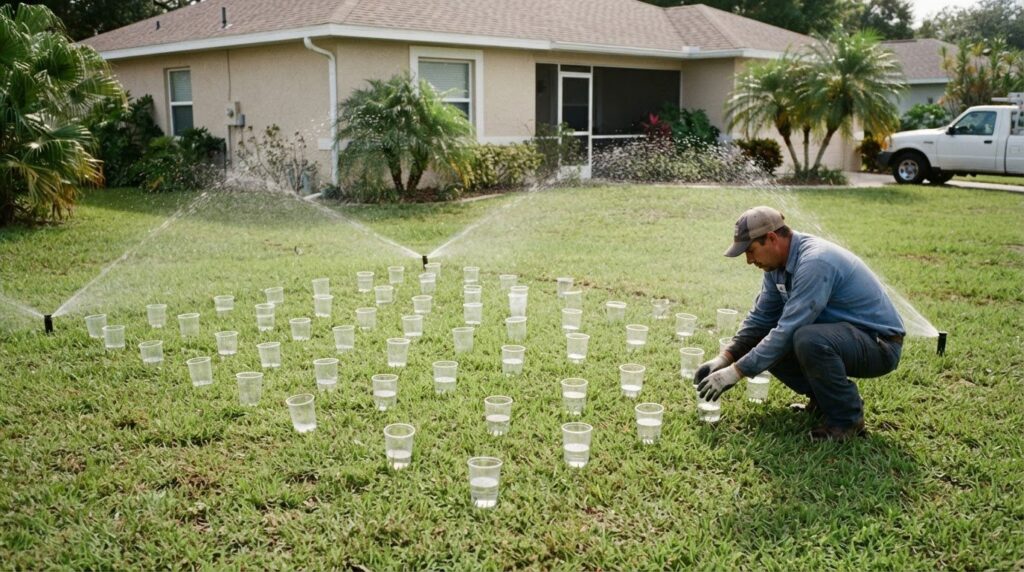
Nearby conditions can affect settlement and future alignment. In Manatee County, irrigation runoff is one potential cause of pavers shifting or sinking. If water from a sprinkler system repeatedly reaches the patio edge, the repair should account for that source as well as the paver match. Otherwise, an attractive reset may not resolve the condition affecting the area.
For a cohesive result, identify the pattern, lift usable pavers, correct the affected area, and relay the units to follow the surrounding lines. Evaluate the transition from more than one angle, especially where a patio meets a path or border. This helps balance a close material match with a smooth, consistent surface.
If irrigation runoff may be affecting pavers near the patio, review irrigation and sprinkler system solutions as part of the overall landscape plan. Addressing that connection can support a more considered repair, while the paver layout and existing material guide the visual match.
Landscape By Design Of Palmetto
Landscape By Design Of Palmetto helps homeowners address sunken pavers through hardscaping and landscape construction. Turn to the team when settlement affects more than appearance, such as uneven transitions, disrupted drainage, or a patio edge that no longer aligns with its surroundings. A careful assessment helps determine whether the affected area needs focused repair or broader landscape work.
If irrigation runoff may be contributing to movement, irrigation and sprinkler systems are another relevant part of the property’s landscape. Considering the paved surface, its setting, and nearby water flow helps shape a cohesive plan for the outdoor space.
For guidance on your paver patio, contact Landscape By Design Of Palmetto.
Choose a Repair That Supports the Whole Space
Start by deciding what you want the patio to do for your home: provide an even route outdoors, complement the architecture, or connect naturally with nearby landscape features. That goal can guide the scope of paver patio repair in Bradenton, from a focused correction to a broader design conversation. A thoughtful plan considers how the repaired area will relate to the rest of the property over time.
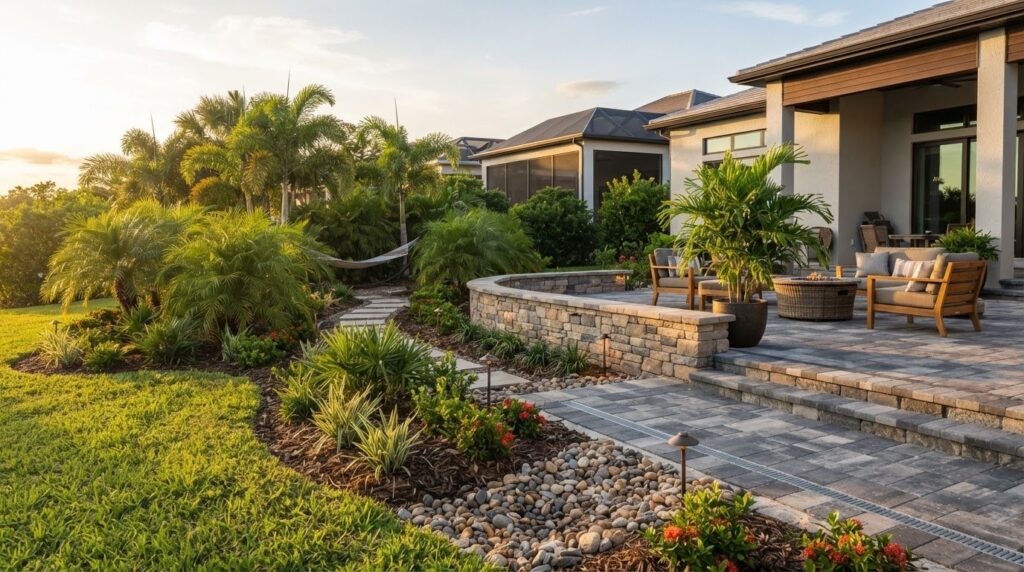
Landscape By Design Of Palmetto can bring the surface and its surroundings into a cohesive plan. The work can connect landscape design with hardscapes and retaining walls, while irrigation and sprinkler systems can address water flow around paved areas. Each element contributes to an outdoor setting that feels considered and functional.
For a next step tailored to your outdoor space, contact Landscape By Design Of Palmetto. A clear conversation about the affected area and your priorities can set the direction for a more settled, welcoming patio.
Frequently Asked Questions
Can sinking pavers be repaired, or do they need to be replaced?
Sinking pavers can often be repaired if they remain intact and reusable. A localized dip beside a patio border, for example, may be reset without replacing the entire surface. Replacement is more appropriate when units are cracked, crumbling, or no longer fit securely into the pattern. The decision depends on the pavers’ condition and whether the affected area can be restored without disturbing stable sections.
Is it cheaper to repair pavers or to have them reinstalled correctly?
A localized repair may involve less work than reinstalling an entire patio, but the base condition matters. If settlement affects a broad area or keeps returning, a more extensive rebuild may be the sounder long-term scope. The comparison should account for how much surface must be lifted, whether pavers can be reused, and how much support needs correction. Pricing depends on the case and is provided after a quote request.
What causes uneven pavers and trip hazards?
Uneven pavers can result from soil settlement, erosion, tree roots, irrigation runoff, or poor compaction beneath the surface. Runoff near a patio edge, for example, can disturb support and create a height difference between neighboring units. A raised edge may catch a foot, while a lower section can collect water. The pattern of movement helps indicate whether the issue is isolated or extends across adjoining pavers.
Why did my pavers start sinking only a year or two after installation?
Pavers that start sinking a year or two after installation may point to a compaction problem. Builder fill in Bradenton commonly settles during the second year after installation, which can also contribute to movement. Assess a dip that appears during this period alongside nearby pavers, edges, and drainage paths. Timing offers a clue, but the location and extent of settlement help define the repair scope.
Will a repair match my existing pavers?
A repair can often preserve the original look by reusing intact pavers and following the existing layout. Exact visual blending depends on the material, color variation, texture, and weathering of the older surface. New units, for instance, may look brighter beside pavers exposed to years of sun and use. Keeping a stable border or pattern intact can make the transition feel more deliberate, even when replacement units differ slightly.
What paver patio repair services are available in Bradenton, Florida?
For paver patio repair in Bradenton, Landscape By Design Of Palmetto’s hardscaping and landscape construction work can address settled or uneven paved areas. The right scope depends on the pavers, surrounding landscape, and condition of the supporting area. If nearby irrigation may contribute to water reaching the patio, irrigation and sprinkler systems can also be part of the broader property plan.
What does paver patio repair cost in Bradenton, Florida?
The cost depends on the repair area, the paver material, access, and the amount of base correction involved. A small section with reusable pavers differs from a larger area requiring more extensive lifting and rebuilding. Pricing is determined for the specific case and provided after a quote request. The useful comparison is the scope of work, not just the visible size of the sunken patch.
What is the average cost to replace or reset patio pavers per square foot?
There isn’t one dependable per-square-foot figure for every reset or replacement, because the work varies beneath the surface. A measured area may still require different amounts of lifting, base correction, and replacement material. Pricing depends on the case and is provided after a quote request. The estimate should reflect the affected area, paver condition, access, and whether the repair is localized or more extensive.