A quarterly pest control service in Sarasota is typically planned around treatments that maintain peak efficacy for 60 to 90 days under Florida conditions. The cost depends on the property, pest pressures, treatment areas, and coverage included, with pricing provided after a quote request.
A predictable schedule can simplify pest management, but quarterly visits aren’t right for every property. The best fit depends on which indoor and outdoor areas need attention and what the pest-control plan covers.
This guide explains how to assess a quarterly pest control service in Sarasota, compare visit schedules, and understand treatment coverage. You’ll learn what to consider for your property and how Landscape By Design Of Palmetto’s pest-control services fit into property care.
Key Takeaways
- Identify the pest concerns and areas that need attention before comparing treatment plans.
- Choose between a one-time visit and recurring service based on whether the issue is isolated or ongoing.
- Understand how property conditions, treatment scope, and coverage shape a quote.
- Compare visit schedules by considering how often the property needs attention, not just the number of visits.
- Review how service coverage applies to your property and location before settling on a plan.
Table of Contents
What does quarterly pest control cost in Sarasota?
A quarterly pest control service in Sarasota is scheduled around treatments that maintain peak efficacy for 60 to 90 days under Florida conditions. The service cost depends on the property, pests targeted, treatment areas, and coverage. Pricing depends on the case and is provided after a quote request.
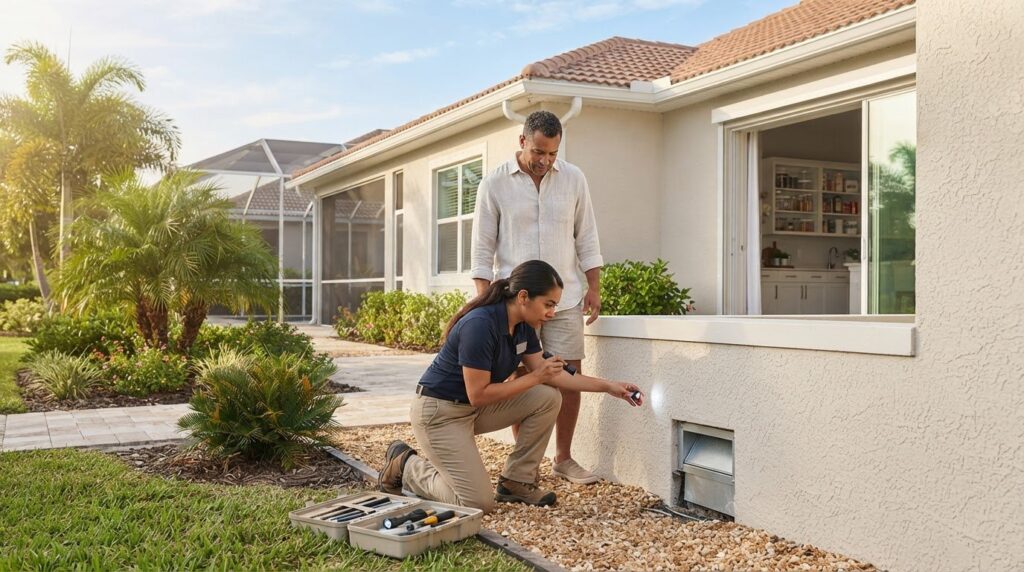
For a useful quote, define the treatment target and the spaces involved. An exterior barrier, indoor pest control, and focused termite attention are different scopes. Property size, visible pest activity, access, and follow-up terms also shape the work. A quote that names these details makes schedule and coverage easier to compare.
Pest concerns vary by property. Mosquitoes can affect outdoor comfort, while signs of termites call for attention to possible wood damage. Ants and other household pests may need treatment in different locations. Don’t assume that exterior treatment covers an indoor infestation or every termite concern.
A six-point approach can clarify what a plan covers:
- Identify the target. Name the pest concern, such as mosquitoes, termites, or indoor infestations.
- Define the areas. Distinguish exterior spaces from rooms that need indoor pest control.
- Include an inspection. Locate activity and conditions that may support recurring pests.
- Clarify the treatment. Match the application area and method to the pest being addressed.
- Set between-visit terms. Establish whether return service is included, what concerns qualify, and whether it costs extra. Don’t assume a return visit is free.
- Plan maintenance. Track new activity and property conditions between scheduled treatments.
To compare reviews and assess a Sarasota provider, look for comments about communication, follow-through, and the specific pest concern. The U.S. Environmental Protection Agency recommends asking for references and contacting several to learn whether customers are satisfied.
Florida requirements can vary depending on the pest-control work and products involved. Review the provider’s stated credentials and treatment information, and make sure the proposed work is clearly described.
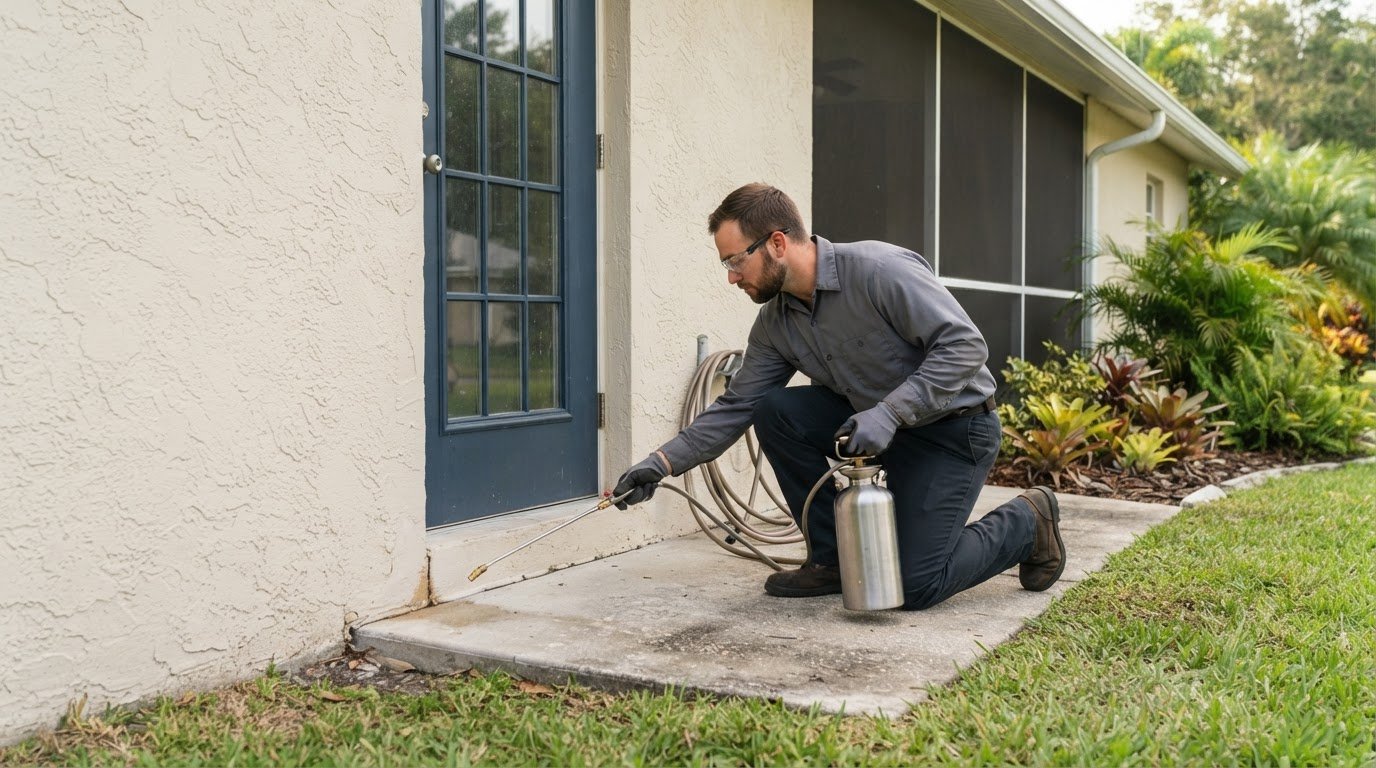
Treatment should match the pest and application site. The U.S. Environmental Protection Agency advises that pesticides not contained in baits or traps should generally be applied only to targeted locations, rather than sprayed across an entire room. Ask how the application addresses the pest and area identified.
Sarasota County mosquito updates can add useful local context, but they don’t replace property-specific pest control. On October 23, 2026, the Florida Department of Health in Sarasota County issued a West Nile Virus advisory; the area of interest had already received adult mosquito treatment. Sarasota County Mosquito Management recommends removing standing water from containers to reduce breeding sites.
Between visits, note new signs of activity and changes around the home, such as water collecting in containers. These observations can help focus the next inspection and treatment on current conditions, rather than relying on a schedule alone.
Choosing between one-time and ongoing pest control
A one-time treatment can address a defined, isolated concern. Recurring service may suit properties where pest activity returns or prevention is a priority. In Florida, weigh the pest, where it appears, and whether the issue continues.
Callbacks and Service Guarantees
A callback addresses concerns that arise after treatment, but free return service isn’t automatic. Review the service terms to see which pests and treatment areas qualify, whether a follow-up is included, and what may require separate work. A satisfaction guarantee is a specific promise, not something to assume. Check its scope and conditions before relying on it.
Comparing Monthly and Quarterly Plans
Monthly service provides more frequent scheduled attention, while quarterly service spaces visits farther apart. A one-time treatment focuses on a particular concern without recurring visits. Match the schedule to the pattern you observe: a contained pest issue may call for targeted treatment, while recurring activity may make planned prevention useful. Rodents, for example, may require attention to entry points as well as current activity.
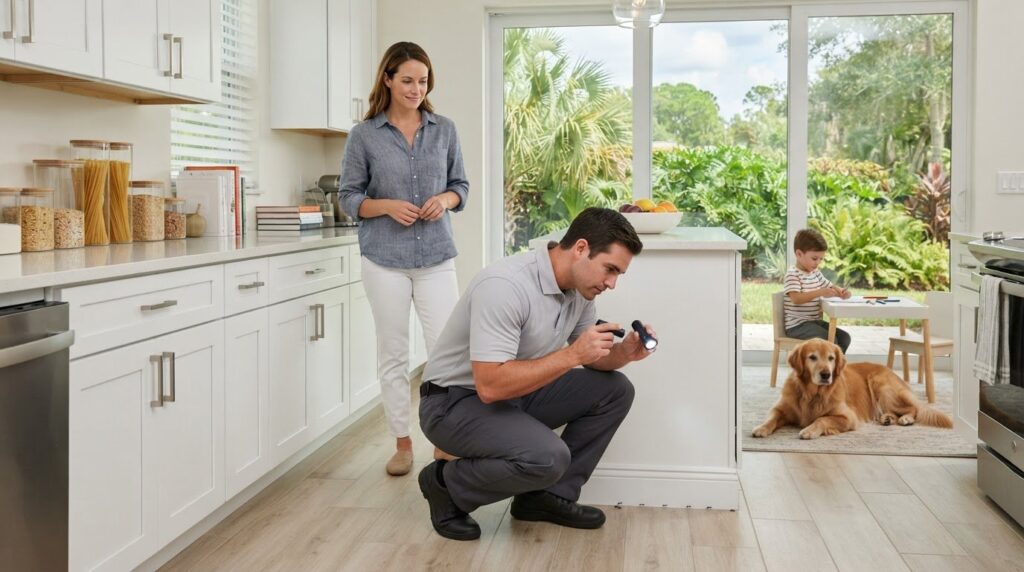
Compare more than visit frequency. Look for the named pests, treatment locations, follow-up terms, and whether indoor concerns are included. An exterior-only treatment, for example, won’t address pests appearing inside a pantry. A clear scope distinguishes routine prevention from treatment focused on an active infestation.
Use these decision points to match the service to your situation:
- One-time: Consider it for a clearly defined, limited concern, such as a brief outbreak in one area.
- Ongoing: Consider recurring visits when activity reappears or prevention needs continued attention.
- Callback: Check whether a return visit covers the same pest and treated area.
- Guarantee: Read the stated conditions, duration, and exclusions rather than relying on the label alone.
Between scheduled visits, record the pest and location, such as ants near a kitchen entry or rodent signs in a garage. Note whether activity is indoors or outdoors and whether it followed a change, such as food being left accessible. These details can distinguish a returning problem from a new one and make follow-up more focused.
For a Sarasota property with recurring concerns, weigh prevention and treatment together. A plan should make its visit rhythm and callback terms clear, rather than leaving you unsure what happens when activity returns. Explore ongoing pest control as one way to consider recurring care for the property.
Pricing factors and quote estimates
A quarterly quote reflects the work included, not simply the calendar interval. Price depends on the case and is provided after a quote request; property size, pest targets, treatment areas, and service scope shape the estimate.
Quarterly Service Pricing
A quarterly service description should spell out the work included at scheduled visits. Compare which pests and areas the plan covers, including whether it addresses indoor concerns, roaches, spiders, or mosquitoes. A plan focused on one pest differs from one addressing several. Check how the treatment scope relates to each pest and location.
Factors in Quote Estimates
Quote estimates reflect the property’s conditions and the work needed. A home with activity in several rooms may require a different scope from one needing exterior attention only. The address also identifies the property being quoted, whether it is in Sarasota or Manatee County. Clear details about target pests and affected areas help define the estimate.
An inspection can help identify entry points, areas of activity, and whether indoor treatment is needed. Roaches in a kitchen and spiders near an exterior entry, for example, call for attention to different locations. Mosquito control involves outdoor areas, so the service description should state whether those areas are included. Each concern should connect to a treatment area.
Use the estimate to compare scope rather than looking for a generic rate. Check whether it spells out:
- Target pests: Specific concerns such as roaches, spiders, or mosquitoes.
- Treatment locations: Indoor rooms, exterior surfaces, or outdoor spaces.
- Visit schedule: The recurring service interval and work planned at visits.
- Between-visit terms: How additional pest concerns are handled and whether they change the quoted scope.
- Included work: Any inspection or follow-up described in the estimate.
Product duration can help explain why application methods and schedule matter, but it doesn’t set a service price by itself. Under Florida conditions, professional pest control products may have residual periods of up to 90 days, while consumer products may last from days to 2-3 weeks. The treatment target, placement, and property conditions still influence the work involved.
For a useful comparison, match each estimate to the same pests and locations. If one includes indoor roach treatment and another lists only exterior work, they don’t describe the same service. Assess whether each scope addresses the stated problem, not just whether the estimate seems simpler.
Before accepting a quarterly estimate, review the written scope line by line. Confirm that the named pests, treatment areas, scheduled visits, and callback terms match the work described. That makes the estimate a clear plan for the property, rather than an unexplained figure.
Quarterly, bi-monthly, and monthly service schedules
In Sarasota, the right service schedule depends on pest activity, prevention needs, and treatment scope. Compare what each visit covers, not just how often it occurs.
Service Schedule Options
A quarterly program spaces treatments across the year; monthly and bi-monthly plans schedule visits more often. “Bi-monthly” can mean twice a month or every two months, so the written schedule should define its meaning. In Florida, exterior treatments may maintain peak efficacy for 60 to 90 days, making treatment timing one factor in choosing a cadence.
Consider the pest pattern, too. Repeated sightings of silverfish or other indoor pests may need a different approach from a contained concern. A clear treatment scope can support peace of mind, but visit frequency alone doesn’t say which pests or areas receive attention.
Scheduling and Provider Availability
When comparing quarterly pest-control options in Sarasota, look for a clear description of the recurring work, including visit frequency, covered pests, and treatment areas. A general pest-control description alone doesn’t explain what each scheduled visit includes.
Check whether scheduling suits your property’s access needs. A household with indoor concerns may need visits coordinated around access to affected rooms, while a property focused on exterior prevention may need a different plan. Clear scheduling helps align each visit with the work described.
Use these checks to assess a proposed service rhythm:
- Define the interval. Confirm what “bi-monthly” means in the program.
- Match cadence to activity. Note whether concerns recur between visits or remain isolated.
- Review coverage. Identify which pests and locations each scheduled treatment addresses.
- Understand scheduling. Check how the local branch communicates upcoming visits and changes.
Before choosing a schedule, record where and when pests appear. A silverfish sighting in a bathroom differs from repeated activity in several rooms. Use those details to consider a plan around the actual concern, rather than choosing monthly service simply because it includes more visits.
Quarterly service may suit a property when its recurring schedule matches the pest concern and treatment plan. More frequent visits may fit a different pattern or prevention goal. Choose a schedule with clearly stated coverage and timing, and a practical way to coordinate appointments in Sarasota.
Pest control service coverage in Sarasota and nearby counties
Coverage starts with the property address, the pest concern, and the areas needing treatment. A Sarasota home and a nearby property may have different scheduling and service details. Being near a county line doesn’t establish whether a particular address is covered. A clear service description connects the property location to the work included.
For Sarasota-area properties, distinguish local mosquito information from treatment at an individual home. Sarasota County Mosquito Management shares surveillance and treatment updates about mosquitoes. Those updates provide county context, while a residential inspection focuses on activity at a specific property. A county update, for example, won’t show whether ants are entering through a kitchen opening.
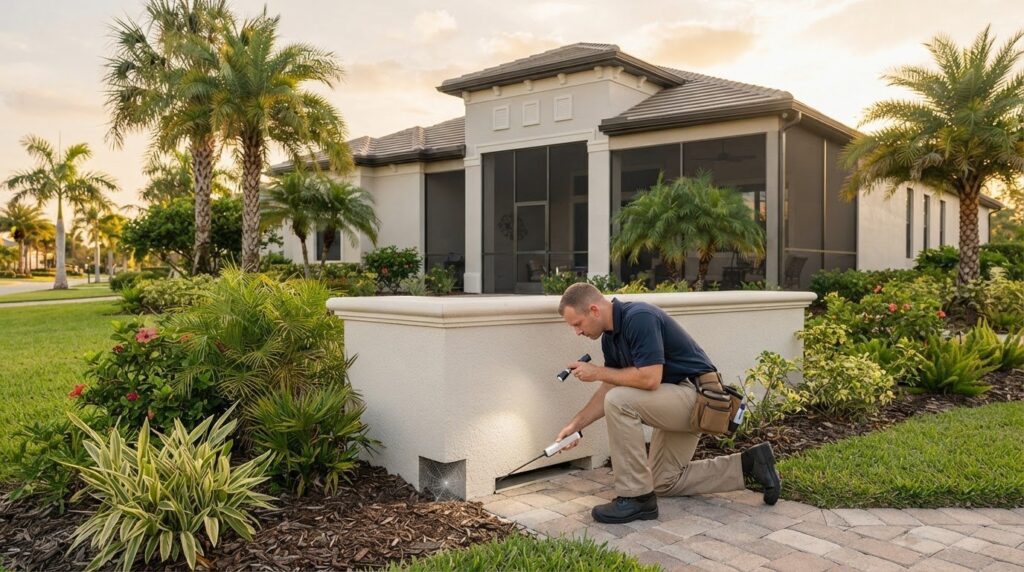
Coverage means more than a service-area map. It also describes which parts of the property receive attention, which pests are addressed, and whether indoor areas are included. Entry points around doors, utility openings, and foundation edges can help identify how pests are getting inside. An inspection connects these signs to the treatment plan.
For a clear coverage discussion, organize the details in this order:
- Give the property location. Identify the street address and county so the service location is clear.
- Name the activity. Describe the pest and where it appears, such as spiders near a porch or roaches inside a cabinet.
- Identify affected spaces. Separate indoor rooms from outdoor areas and note any recurring entry points.
- Define the requested scope. Specify the areas and concerns the treatment should address.
- Review the written coverage. Match the quoted work to the address, pest, and locations described.
Use the same address-first approach for nearby counties. A home near the Sarasota County line may be in another county, so a municipality or neighborhood name may not clarify the service location. Provide the exact address when discussing coverage. This separates location and scheduling details from the treatment scope, without assuming nearby areas are automatically included.
Ask how the inspection records pest activity and entry points, and how the written service description addresses them. If activity appears in a garage and along an exterior wall, for example, both locations should be discussed. An estimate should connect the requested work and areas to its stated scope.
For Sarasota properties, clear coverage means a defined address, identified pest activity, and treatment areas that match the requested work. Request pest control coverage details for the property and concerns you want addressed.
Landscape By Design Of Palmetto
Landscape By Design Of Palmetto helps property owners in Sarasota, Palmetto, Parrish, and Bradenton plan and build outdoor spaces. If pest concerns have drawn attention to water collecting in the yard or areas around the home that need improvement, landscape planning can complement your broader property care.
Landscape Design, Hardscapes and Retaining Walls, Irrigation and Sprinkler Systems, and Landscape Lighting can help create a functional, considered outdoor environment. Each project is shaped around the property’s layout and the homeowner’s goals, bringing practical use and visual harmony together.
For pest-control questions, use this guide to define the pests, locations, and schedule relevant to your property. For outdoor planning or construction, contact Landscape By Design Of Palmetto to discuss your project.
Shape a More Considered Plan for Your Property
Turn pest concerns into a clear plan for your property. A quarterly pest control service in Sarasota may be one part of home care; the surrounding landscape also shapes how outdoor spaces function. Consider how your yard’s layout, drainage, and access fit your wider property goals.
Landscape By Design Of Palmetto can help with Landscape Design, Hardscapes and Retaining Walls, and Irrigation and Sprinkler Systems. These services support a thoughtfully planned outdoor environment, from the structure of the yard to how water moves through it. The right approach starts with your property and the changes you want to make.
If you’re ready to discuss the landscape around your home, contact Landscape By Design Of Palmetto. A considered next step can make your outdoor space feel more cohesive and inviting.
Frequently Asked Questions
Are your pest control treatments safe for pets and children?
Safety depends on the product, its placement, and its directions for use. Before treatment, identify where children and pets spend time, including play areas, food bowls, and sleeping spots. The U.S. Environmental Protection Agency advises that pesticides not contained in baits or traps should generally be applied only to targeted locations. Follow the product label’s instructions for household access and handling after application.
Do you offer one-time treatments or only ongoing service?
Pest control can address a specific concern or be part of a recurring schedule. A one-time visit focuses on a defined issue, while recurring service provides planned attention over time. Landscape By Design Of Palmetto provides pest control, including indoor pest control. The right fit depends on the concern and the service schedule for your property.
Looking for an Exterminator in Sarasota?
Landscape By Design Of Palmetto provides pest control for property owners in Sarasota, Palmetto, Parrish, and Bradenton. Treatments address exterior landscapes and indoor spaces. When requesting service, describe whether pest activity is inside, outdoors, or in both areas. That helps define the treatment locations involved.
What happens if pests come back between my quarterly treatments?
Note the pest, where you see it, and whether it appears in a new location. Record, for example, whether ants return near the same doorway or show up in another room. Share those details with Landscape By Design Of Palmetto, then refer to the written service terms to understand how a callback is handled. Its scope depends on those terms.
What pests are typically covered by quarterly pest control plans in Sarasota?
The service description should identify which pests the treatment addresses. Common concerns in Sarasota homes include ants, roaches, spiders, mosquitoes, and termites, but not every treatment covers all of them. If activity appears in a pantry, garage, or garden, describe that location when discussing service. Different pests and areas can require different treatment scopes.
How much does quarterly pest control cost in Sarasota, Florida?
The cost depends on the property and the treatment scope, and pricing is provided after a quote request. An estimate can account for the address, target pests, treatment areas, and whether the requested work is indoors, outdoors, or both. For example, a request covering several rooms differs in scope from one focused on a single exterior area. Compare estimates by matching the work described.
What is included in a quarterly pest control service visit?
Each visit follows the stated service scope and addresses the pest concerns included in the plan. Treatment may focus on exterior landscape areas, indoor spaces, or both. A visit addressing indoor activity should identify the affected rooms separately from outdoor locations. The service description should clarify which pests and areas are included.
How often should Sarasota homes be treated for ants, roaches, and spiders?
Choose a schedule based on pest activity and the treatment plan, rather than applying one interval to every home. Quarterly visits may suit some properties, while recurring sightings in different areas may call for closer attention to the scope and schedule. Keep notes on where ants, roaches, or spiders appear, such as a kitchen, garage, or entryway, and use those patterns to guide your plan.