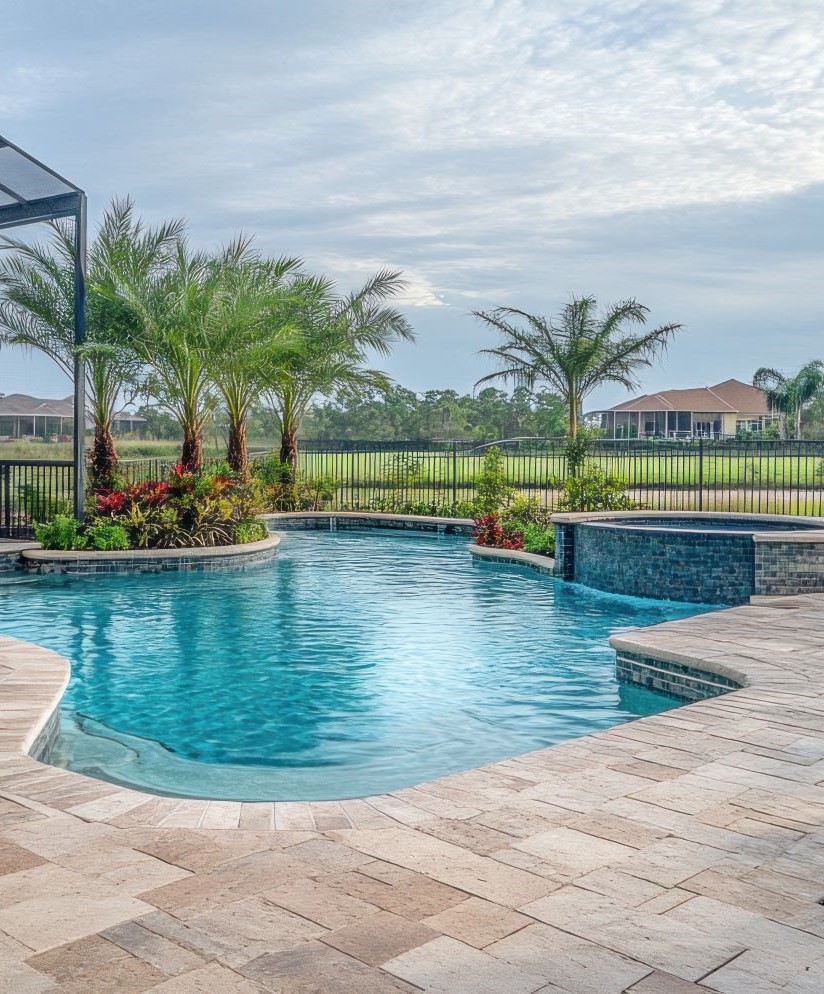
A swimming pool can be the centerpiece of a Florida backyard, but the landscape around it has to work harder than ordinary garden beds. Poolside plants must tolerate reflected heat, bright sun, occasional splashes of chlorinated or salt-treated water, sandy soils, seasonal drought, heavy summer rain, and the practical need for low-litter foliage. The best choices bring texture, color, privacy, and a resort-like feel without constantly dropping leaves, flowers, or berries into the water.
UF/IFAS Extension’s Florida-Friendly Landscaping™ guidance emphasizes matching the right plant to the right place, watering efficiently, mulching, managing pests responsibly, and reducing runoff. Those principles are especially important near pools, where over-irrigation, fertilizer runoff, and messy plantings can quickly create maintenance problems. The following ten Florida-friendly plants are strong candidates for pool areas when they are sited correctly, spaced for mature size, and maintained with good horticultural practices.
1. Coontie
Coontie is a tough, low-growing Florida native cycad with glossy, fern-like foliage that gives pool beds a lush tropical look without becoming unruly. It stays relatively compact, handles full sun to partial shade, and works well as a foundation planting, border, or massed accent around screen enclosures and pool decks. Because it is slow-growing and structured, it creates year-round greenery with less pruning than many tropical shrubs. It is also associated with native plant landscapes and can support wildlife value when used as part of a broader Florida-friendly design.
Poolside tip: Use coontie where you want a clean, architectural edge near walkways or cage foundations. Avoid crowding it against coping so maintenance crews can still access the pool perimeter.
UF/IFAS resource: Gardening Solutions — Florida Native Plants
2. Muhly Grass
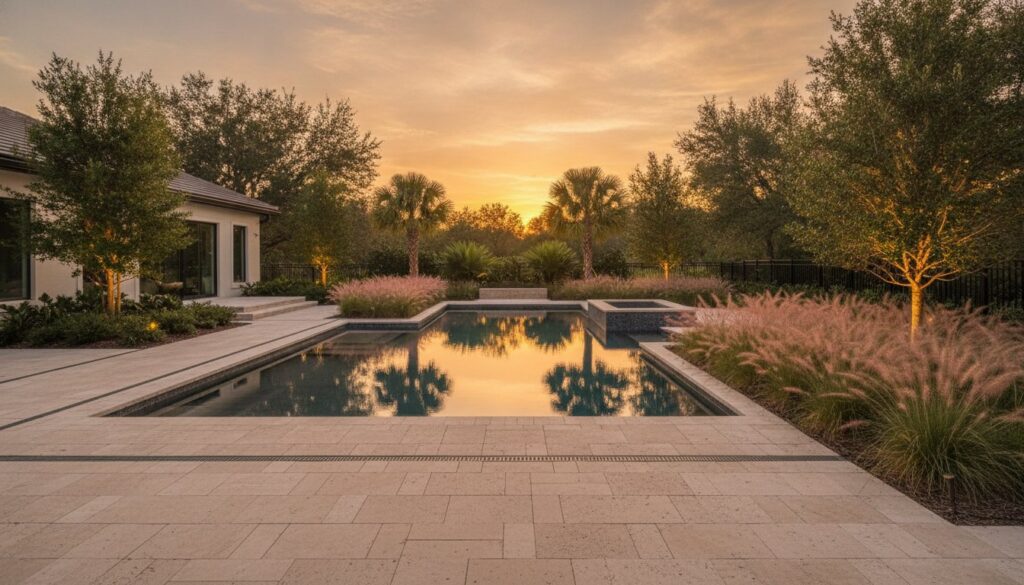
Muhly grass brings movement, softness, and seasonal color to pool landscapes. Its airy pink-to-purple plumes are especially striking in fall, and the narrow foliage provides texture without the heavy debris of large-leaved plants. Once established, muhly grass is drought tolerant, performs well in sunny Florida landscapes, and can be used in clusters to soften hard pool deck edges. It is particularly effective when paired with palms, coontie, or low flowering perennials.
Poolside tip: Plant muhly grass far enough from the water that seasonal seed heads and old foliage are easy to trim before they blow into the pool. Cut back once a year as needed to refresh the clump.
UF/IFAS resource: Gardening Solutions — Florida Native Plants
3. Firebush
Firebush is a colorful Florida native shrub valued for its tubular orange-red flowers and strong performance in hot, sunny conditions. Around pools, it can provide a tropical backdrop, soften fence lines, or create a flowering screen when planted with enough room to mature. It attracts pollinators and hummingbirds, making the pool area feel more alive, yet it can still be maintained as a manageable shrub with selective pruning.
Poolside tip: Site firebush in a bed set back from the pool edge so flowers and leaves are less likely to enter the water. Use it where you want color, privacy, and wildlife appeal rather than right beside skimmers or drains.
UF/IFAS resource: Gardening Solutions — Florida Native Plants
4. Saw Palmetto
Saw palmetto is a rugged Florida native palm-like plant that thrives in heat and sandy soils. Its fan-shaped fronds give poolscapes a coastal, natural look, and its clumping form can anchor corners, screen equipment areas, or add sculptural texture near patios. Silver-leaved forms are especially striking against pavers, stone, and dark pool finishes. Because saw palmetto can become broad and sharp-edged, it is best used where it has room and will not brush against walkways.
Poolside tip: Keep saw palmetto away from narrow traffic paths and seating areas. It is excellent for perimeter beds, natural screens, and low-maintenance zones beyond the immediate splash area.
UF/IFAS resource: Gardening Solutions — Florida Native Plants
5. Beautyberry
Beautyberry is a graceful Florida native shrub known for clusters of vivid purple berries along arching stems. It brings a natural woodland feel to pool landscapes and performs well in partial shade, making it useful near fences, lanais, or the filtered light beneath taller palms. While it is not the cleanest plant for the immediate pool edge because berries and leaves can drop, it works beautifully in beds set back from the water where seasonal interest is desired.
Poolside tip: Use beautyberry in background plantings, not directly over coping. Prune selectively after fruiting to maintain shape and keep stems from leaning into walkways.
UF/IFAS resource: Gardening Solutions — Florida Native Plants
6. Simpson’s Stopper
Simpson’s stopper is a versatile evergreen Florida native that can be grown as a shrub, hedge, or small tree. Its dense foliage makes it useful for privacy around a pool enclosure or property line, and its relatively refined texture suits formal and naturalistic designs alike. It produces small flowers and berries, so placement matters, but its durability and year-round structure make it a strong choice for poolside screening when kept outside the immediate splash zone.
Poolside tip: Use Simpson’s stopper as a living privacy wall along the outer edge of the pool landscape. Allow enough room for airflow and access to fences, screens, and pool equipment.
UF/IFAS resource: UF/IFAS Extension — Lawn and Garden resources
7. Dwarf Clusia
Dwarf clusia is a popular South Florida hedge plant with thick, glossy leaves and a clean, modern appearance. It tolerates heat and bright light, responds well to pruning, and can create a dense privacy screen around pool patios. Its leathery foliage is one reason homeowners like it near hardscape: the plant reads as tropical and polished without the delicate, constant leaf drop associated with some softer shrubs. It is best suited to warm areas of the state and protected microclimates.
Poolside tip: Maintain clusia as a hedge with light, regular pruning rather than severe cuts. Keep fertilizer applications conservative and away from drains or runoff pathways.
UF/IFAS resource: Florida-Friendly Landscaping™ program overview
8. Wild Coffee
Wild coffee is a Florida native shrub that shines in shade to part shade, making it useful for covered lanais, screened pool cages, and beds that receive filtered light. Its glossy leaves provide a lush backdrop, and its compact habit can soften walls, steps, or corners without overwhelming small spaces. It is a good choice when you want a tropical feel but do not have full sun. Like other fruiting shrubs, it should be placed where occasional berries will not become a pool-cleaning issue.
Poolside tip: Place wild coffee in shaded perimeter beds or container groupings away from the coping. It pairs well with coontie, bromeliads, and other shade-tolerant tropical foliage.
UF/IFAS resource: Gardening Solutions — Florida Native Plants
9. Fakahatchee Grass
Fakahatchee grass is a bold native ornamental grass that creates a fountain-like shape and strong vertical texture. It can handle Florida heat and moisture and is excellent for softening large pool decks, blank walls, and enclosure corners. Its scale is larger than muhly grass, so it should be used where there is room for the clump to mature. In the right location, it gives a pool area a natural, resort-style look with relatively simple care.
Poolside tip: Do not place large grasses where blades will lean into the water or block access around the deck. Give Fakahatchee grass generous spacing and trim old foliage periodically.
UF/IFAS resource: Gardening Solutions — Florida Native Plants
10. Peace Lily
Peace lily is best for shaded pool patios, covered lanais, and container plantings rather than exposed full-sun beds. UF/IFAS notes that Spathiphyllum prefers bright, indirect light, well-drained organic soil, regular moisture, and warm tropical temperatures, with outdoor year-round planting suited to the warmest Florida zones. Its glossy foliage and white spathes create a refined, relaxing look near seating areas, especially in decorative pots protected from harsh afternoon sun.
Poolside tip: Use peace lily in containers where water and light can be controlled. Do not place it where pool splash, intense sun, or drying winds will stress the foliage.
UF/IFAS resource: Ask IFAS — Florida Foliage House Plant Care: Spathiphyllum
Poolside Planting Guidelines for Florida Homes
- Prioritize low-litter plants near the water
Keep plants with berries, seed heads, or heavy seasonal leaf drop farther from skimmers and pool returns.
- Use the right plant in the right place
Match each plant to sun exposure, soil moisture, mature size, and cold tolerance rather than choosing by appearance alone.
- Protect the pool from runoff
Avoid fertilizing right before heavy rain, keep fertilizer off hard surfaces, and maintain mulch or planted buffers to reduce nutrient movement toward the pool or stormwater system.
- Plan for maintenance access
Leave room around screen enclosures, pumps, heaters, drains, and service gates so plants do not interfere with pool care.
- Think in layers
Combine structural shrubs, ornamental grasses, palms or palm-like accents, and low ground-layer plants for a finished look that does not rely on high-maintenance annual color.
Final Thoughts
The most successful Florida pool landscapes are beautiful, durable, and easy to maintain. By choosing plants that fit the site—sun or shade, wet or dry, formal or natural—you can create a swimming pool area that feels lush without becoming messy or high maintenance. Start with Florida-Friendly Landscaping™ principles, select plants for mature size and site conditions, and use UF/IFAS Extension resources to fine-tune choices for your region of the state.