Your Guide to Identifying and Managing Palm Tree Health and Nutrition
Florida’s iconic landscape isn’t complete without its majestic palm trees gently swaying. Whether you’re a longtime resident or a new homeowner, keeping palms healthy is essential for curb appeal and supporting the local ecosystem. Sadly, Florida’s palms face threats from various diseases and nutrient deficiencies that can affect their look and longevity. Here’s a summary of common palm tree ailments and nutritional problems in the Sunshine State, how to recognize them, and ways to safeguard your trees.
1. Lethal Yellowing
Lethal Yellowing is a highly destructive disease that impacts palm trees, especially coconut palms. It is caused by a phytoplasma, a bacteria-like organism, and is transmitted by planthopper insects. Initial signs include yellowing leaves, early fruit drop, and flower death. Once a tree is infected, the disease progresses rapidly, often leading to death within a few months. There is no cure currently available, but using antibiotics and removing infected trees can help control the spread.
2. Fusarium Wilt
Fusarium Wilt results from the fungus Fusarium oxysporum and is particularly prevalent in Queen and Canary Island Date Palms. Infected trees typically show one-sided leaf death, with one side of the frond browning, eventually spreading through the entire crown. Since Fusarium Wilt is soil-borne, control efforts are challenging. Essential preventative measures include avoiding root and frond injuries and sterilizing pruning tools.
3. Ganoderma Butt Rot
Ganoderma Butt Rot, caused by Ganoderma zonatum fungus, affects the lower trunk of palms. Infected trees may exhibit overall decline, wilting, and develop a conk or shelf-like fungus near the trunk’s base. Sadly, there is no cure for Ganoderma Butt Rot, so removing and destroying infected palms is the most effective way to prevent its spread.
4. Bud Rot
Bud Rot can result from various pathogens, such as Phytophthora and Thielaviopsis species. It usually affects the palm’s heart or bud, causing soft, decaying tissue and ultimately killing the growing point. Symptoms to watch for include a foul odor and wilting new leaves. Proper drainage and avoiding overwatering are essential strategies for controlling this disease.
5. Leaf Spot Diseases
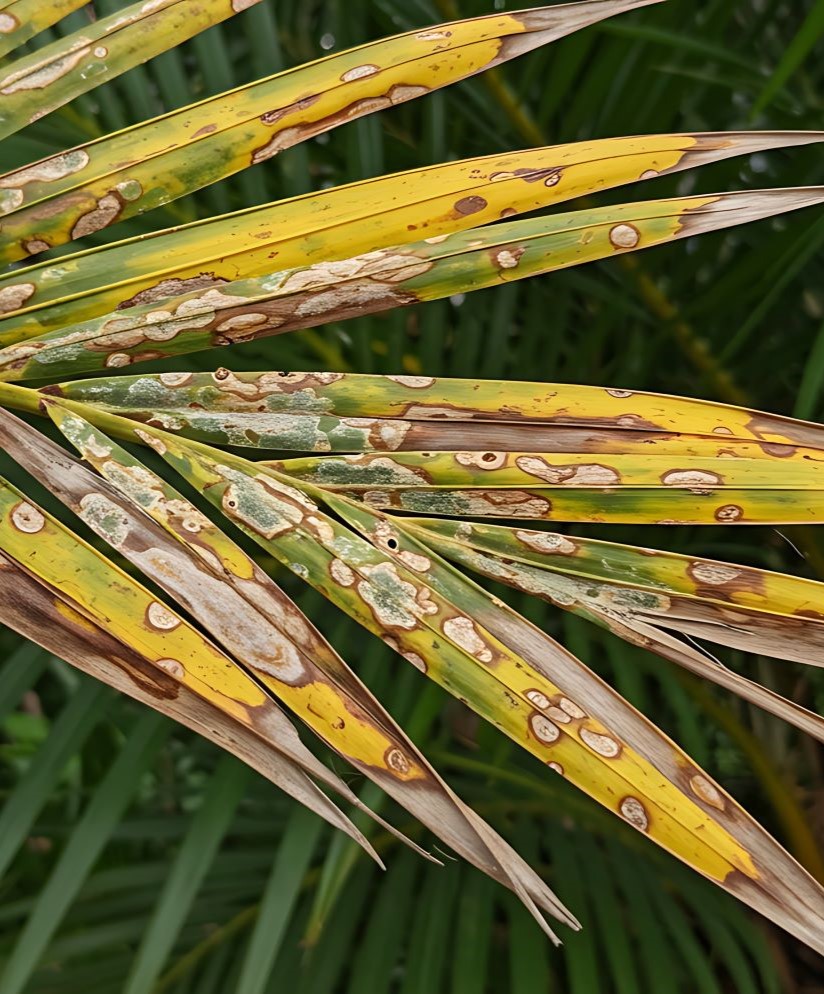
Although typically not deadly, different fungi and bacteria can lead to leaf spots on palm fronds. These spots may be brown, black, or yellow, often surrounded by a halo. Severe cases can result in early leaf drop and overall weakening of the tree. Most leaf spot issues can be controlled by enhancing air circulation, watering correctly, and using fungicides when needed.
6. Nutrient Deficiency
Nutrient deficiencies in palms can cause symptoms like yellowing, stunted growth, and necrotic leaf tips. Common deficiencies include potassium, magnesium, and manganese, each showing distinct patterns of discoloration or deformation. Adequate fertilization is crucial to prevent these problems and promote healthy growth.
Symptoms may appear as yellow or brown tips on older fronds, frizzled edges, or slowed growth. A lack of potassium specifically results in translucent yellow-orange spots and can weaken the tree significantly if not addressed. To prevent and fix deficiencies, apply a slow-release, palm-specific fertilizer that provides all necessary nutrients. Consistent soil testing will help you customize fertilization according to your landscape’s requirements.
Tips for Keeping Your Florida Palms Healthy
- Plant palms in soil that drains well and do not overwater them.
Good drainage prevents water accumulation around roots, reducing root rot and water-related diseases. Overwatering increases palms’ susceptibility to fungal infections.
- Use sterilized pruning tools to avoid spreading diseases.
Cleaning and disinfecting pruning tools before use prevents pathogen spread, keeping palms healthier and reducing disease risk.
- Apply suitable fertilization to ensure trees stay healthy, resilient, and free from nutrient deficiencies.
Using a balanced, slow-release palm fertilizer with all essential nutrients ensures your palms get what they need for optimal growth, preventing issues like yellowing leaves, stunted growth, or frizzled leaf tips.
- Regularly check monitor palms for early indications of disease, pests, and fertilizer problems.
Frequent observation helps catch issues like leaf spots, discoloration, or pests early, improving management and reducing damage to palms.
- If you suspect disease or deficiency, consult a certified arborist or contact your local extension office.
Professional advice ensures accurate diagnosis and treatment, addressing issues early and protecting the long-term health of your palm trees.